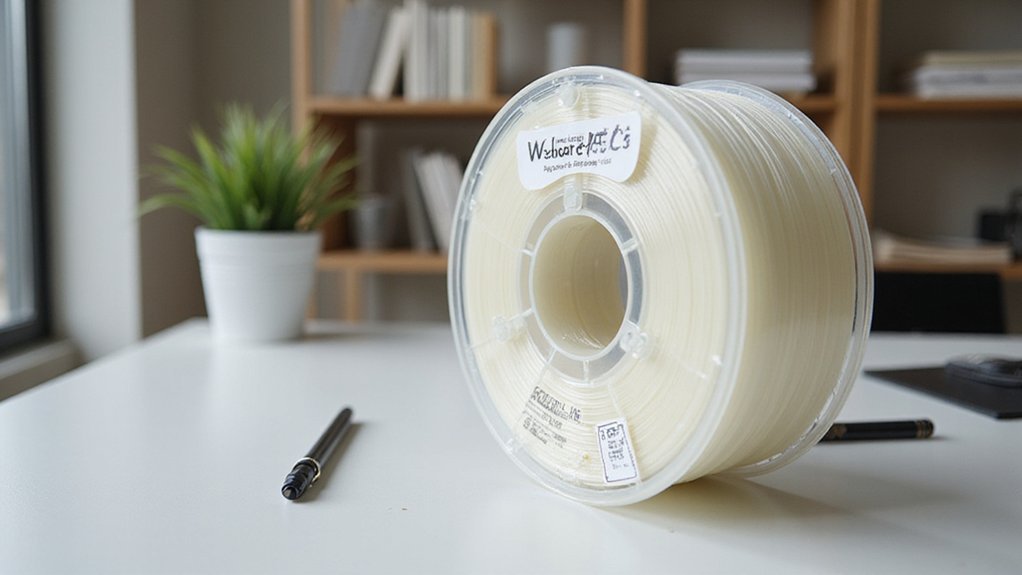
Wondering if PETG filament is safe to use indoors? It’s generally considered relatively safe when handled correctly, but like many materials, it releases tiny particles and VOCs that can cause irritation if ventilation isn’t adequate.
Knowing how to stay safe while enjoying your 3D printing projects will help you avoid potential hazards—details you’ll find right below.
What Is PETG Filament and How Is It Made?
PETG filament is created by modifying polyethylene terephthalate (PET) with glycol during the polymerization process. This glycol addition disrupts the regular molecular packing of PET, reducing its crystallinity and making the resulting filament less brittle. The process produces an amorphous thermoplastic polyester that’s easier to extrude while maintaining strength and flexibility. PETG’s composition includes terephthalic acid, ethylene glycol, and glycol modifiers, all of which contribute to its toughness, impact resistance, and chemical stability. Its melting point is approximately 260°C, and it resists chemicals well, making it suitable for functional and durable 3D printed parts. Additionally, the manufacturing process ensures consistent filament quality and performance suited for various applications, including those requiring chemical resistance and durability. The molecular structure of PETG also plays a crucial role in its excellent adhesion properties and overall print quality.
Is PETG Filament Safe to Use Indoors?
Yes, PETG filament is generally safe to use indoors under normal printing conditions. It does not emit toxic gases like hydrogen cyanide, which can be a concern with some other plastics. Instead, its emissions mainly consist of ultrafine particles, which are less harmful but still require proper ventilation.
The levels of volatile organic compounds (VOCs) from PETG are significantly lower than those from ABS filament. VOC emissions from PETG typically stay below safety thresholds, making it a safer choice for indoor environments. Additionally, PETG produces fewer odorous compounds, reducing the risk of respiratory irritation.
To maximize indoor safety, ensure good airflow during printing by opening windows or using fans. Maintaining proper printing temperatures also minimizes emissions. Choosing high-quality, food-grade PETG without questionable additives further ensures safety. From an environmental perspective, PETG is recyclable. However, it requires proper handling and disposal to reduce ecological impact, so being aware of local recycling options is recommended. Ensuring you’re aware of the filament safety guidelines can help you maintain a safe indoor environment. It is also important to understand the emission levels associated with different filament types to make informed choices about indoor printing.
Are There Health Risks When Printing With PETG?
Printing with PETG can pose health risks if proper precautions aren’t taken. During printing, PETG releases ultrafine particles (UFPs) and volatile organic compounds (VOCs), which can irritate your eyes, nose, and throat, and may cause coughing or dizziness. Poor ventilation significantly increases exposure, especially during extended printing sessions. To reduce these risks, ensure your equipment is calibrated correctly for consistent temperature control, which helps minimize emissions. Storing filament in a sealed, dry container prevents moisture absorption that could lead to increased hazardous emissions. Using an enclosure fitted with HEPA filters and activated carbon filters helps contain particles and VOCs. While PETG emissions are generally lower than those from ABS, some airborne exposure is unavoidable. Printing in a well-ventilated area or a separate room is the most effective way to lower potential health risks. Additionally, understanding the emission levels of different filaments can help you choose safer materials for your projects, especially since proper ventilation practices are essential for minimizing airborne contaminants. Being aware of the air quality during printing can further ensure a safer environment.
Do PETG Fumes and Particles Pose Health Concerns?
PETG fumes and particles can pose health concerns, though they are generally less hazardous than those from more toxic filaments. During printing, PETG releases airborne emissions including volatile organic compounds (VOCs) like ethylbenzene, toluene, and xylene, as well as ultrafine particles (UFPs). While these emissions are typically lower than in harsher materials, they can accumulate in spaces with poor ventilation, leading to respiratory irritation, headaches, or dizziness. The tiny size of UFPs allows them to penetrate deeply into the lungs, where they can cause inflammation and other health issues. Proper ventilation systems can significantly help reduce the buildup of these pollutants, making ventilation an essential consideration for safe printing. Environmentally, these emissions can also degrade indoor air quality over time. Recycling PETG presents additional concerns—contamination and material degradation can impact its sustainability, increasing its overall environmental footprint. Therefore, even with lower toxicity levels, it’s important to ensure proper ventilation during printing and responsible disposal to minimize exposure risks. Additionally, the airborne emissions released can contribute to indoor pollution if not properly managed. Regular maintenance of printing equipment can help minimize the release of ultrafine particles and other pollutants.
How Does PETG Compare to Other Filaments Like ABS and PLA in Safety?
PETG generally poses fewer safety concerns during printing compared to ABS and PLA. It emits very low fumes and odor, making it safer than ABS, which releases styrene—a chemical linked to respiratory issues—especially when printing in poorly ventilated areas. While PLA is considered the safest filament overall because it produces minimal emissions, it still releases small amounts of formaldehyde during printing.
In terms of environmental impact, PETG is less biodegradable than PLA, meaning it takes longer to break down in nature. However, PETG presents fewer recycling challenges than ABS, which is difficult to recycle and often ends up as waste. PETG’s increased durability reduces the likelihood of sudden filament or print failures, decreasing potential safety hazards. Its flame-retardant properties also make it a safer choice in environments where heat is a concern. Additionally, recycling challenges associated with PETG are improving as recycling technologies advance. As more environmentally friendly recycling options become available, PETG is becoming an increasingly sustainable choice. Moreover, ongoing research into safer printing practices continues to improve the overall safety profile of PETG. Overall, PETG offers a balanced safety profile—less toxic than ABS, safer than some other plastics, and with manageable environmental considerations.
What About Additives and Pigments in PETG? Are They Safe?
Additives and pigments in PETG can impact its safety, especially for food-contact use. While raw PETG polymer is typically food-safe, the inclusion of colorants and dyes may reduce that safety margin. Many commercially available filaments contain these additives, which can introduce uncertain safety profiles or contamination risks during manufacturing. The safety of colorants varies; unpigmented or natural PETG usually avoids these concerns, making it a safer option for applications involving food. Certifications from agencies like the FDA ensure that the entire filament formulation, including additives, meets safety standards. However, manufacturing contamination—trace impurities from production facilities—can compromise safety even if the ingredients are deemed safe. Always check filament documentation to verify both the safety of additives and the hygiene practices of the manufacturer. manufacturing contamination can be a hidden risk that affects the overall safety of PETG filament, especially considering production processes that may introduce impurities. Additionally, understanding chemical composition can help assess the potential risks associated with different types of additives used in PETG.
How Can You Minimize Risks When Using PETG?
To minimize health risks when working with PETG, proper safety measures are essential. Ensure your workspace is well-ventilated by open windows or mechanical ventilation systems, and use a HEPA air filter to improve air quality and reduce airborne particles. Keep the print area open or actively ventilated, especially during long printing sessions, to prevent buildup of harmful fumes. Avoid overheating the nozzle beyond the manufacturer’s recommended temperatures, as excessive heat can cause thermal decomposition and release more hazardous emissions. Consistently monitor and adjust temperature settings and perform regular printer tuning to maintain chemical stability and minimize particulate emissions. Using appropriate filtration systems can further mitigate emission risks during printing. Additionally, it’s important to understand that toxicity levels can vary depending on the filament’s composition and manufacturing process, influencing safety precautions. Regularly checking the filament storage conditions helps prevent moisture absorption and reduces the likelihood of unsafe emissions.
Store PETG filament in airtight containers with desiccant packs to prevent moisture absorption, which can lead to printing defects and may increase the release of volatile compounds. Maintaining a clean workspace by regularly removing dust and debris helps prevent contamination and reduces the risk of mechanical failures. Additionally, perform routine maintenance on your 3D printer, including cleaning and checking components, to ensure proper operation and safety.
When handling PETG filament or working near hot components, wear appropriate personal protective equipment such as gloves, safety glasses, and a mask. This protective gear minimizes skin contact and inhalation of particles and fumes. Proper handling and ventilation are crucial because PETG can release emissions that may be harmful if inhaled over prolonged periods. Taking these safety precautions can significantly reduce health risks associated with PETG printing, making the process safer for you.
Does Post-Processing PETG Generate Toxic Dust?
Post-processing PETG can produce toxic dust, especially during activities like sanding, cutting, drilling, or sawing. This dust contains polymer particles and respirable fibers that pose significant respiratory hazards and can irritate your eyes and mucous membranes. Mechanical processing of PETG, particularly if it includes composite variations like PETG-CF with carbon fibers, releases fine particulates and fibers that remain airborne longer and are harder to filter out. Such dust can stay suspended in the air for extended periods, increasing the risk of inhalation and prolonged exposure. Proper ventilation, dust extraction systems, and respiratory protection gear are crucial to minimize health risks and prevent environmental contamination. These precautions help reduce indoor air pollution, protect your lungs, and support the recyclability of processed PETG materials.
Is PETG Suitable for Food-Contact or Medical Parts?
PETG can be suitable for food-contact and medical parts, but only under strict conditions. Its chemical resistance and low moisture absorption make it a good candidate, yet safety depends heavily on the specific formulation, additives used, and manufacturing process. To verify its safety, the filament must be certified by the manufacturer for food or medical use, which includes compliance with relevant standards and proper handling procedures. Recycled PETG filaments are generally discouraged because their contamination history and environmental impact are harder to confirm, risking cross-contamination.
Printed parts made from PETG can trap food residues or bacteria in microscopic gaps, so sealing or coating is necessary to ensure cleanliness for repeated contact. For medical applications, regulatory compliance involves detailed testing beyond just material properties, often requiring adherence to strict standards. Ultimately, selecting PETG for these uses demands careful consideration of material origin, manufacturing environment, and post-processing measures to mitigate safety risks.
Best Practices for Safe PETG Printing : Summary and Tips
To ensure safe PETG printing, follow these key practices. Always print in a well-ventilated area using a fan, open window, or HEPA air filter to minimize airborne particles and fumes. Maintaining proper temperature control is essential: typically, set the nozzle between 230 and 250 °C and the bed between 70 and 80 °C. Proper temperature settings help prevent printing defects and reduce emissions. Store filament in sealed containers to prevent moisture absorption, which can cause print quality issues and result in more environmental waste if discarded improperly. Regular maintenance, including cleaning the nozzle and surrounding parts, helps prevent jams and excessive buildup. Use protective gear like masks and gloves when handling PETG, and keep children and pets away during printing. Exploring recycling options for used filament and waste can contribute to environmental sustainability and safer printing practices overall.