
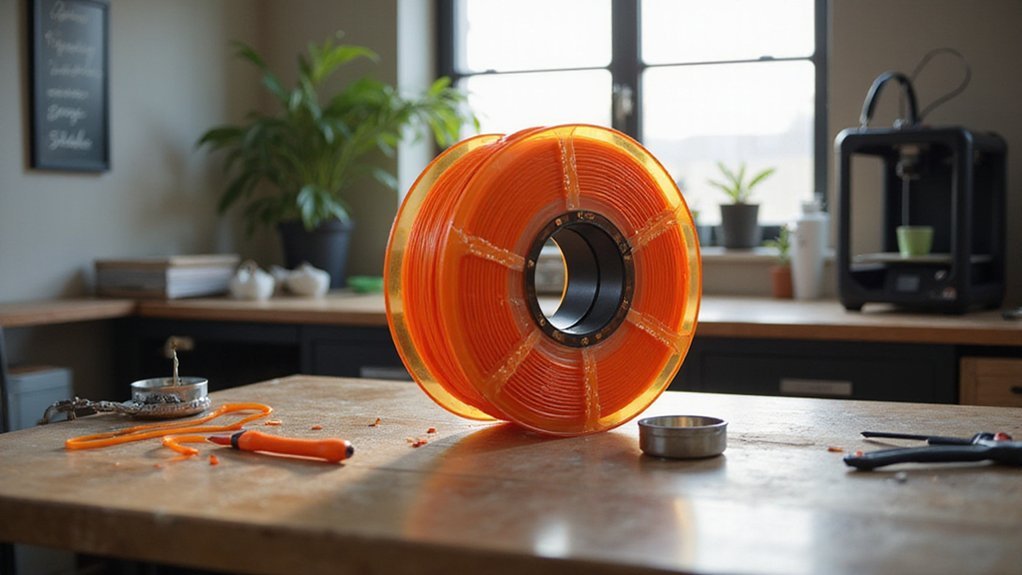
Finding the right filament for your 3D prints can feel overwhelming with so many options available. Each type offers different qualities, from eco-friendliness to strength and flexibility, making it essential to understand what suits your project best.
In this guide, you’ll learn how to choose the right filament based on your needs, whether for durability, flexibility, or specialty applications.
Keep reading to discover detailed insights that will help you optimize your printing results.
What Are the Main Types of 3D Printer Filaments?
The main types of 3D printer filaments are PLA, ABS, PETG, and flexible options like TPU or TPE. Each has unique properties that suit different printing needs.
PLA is the most popular filament for its wide range of colors and ease of use. It’s biodegradable and made from renewable resources such as cornstarch or sugarcane, making it an eco-friendly choice. PLA is ideal for hobbyists and quick prototypes but may lack the strength needed for functional parts.
ABS offers durability and strength, making it suitable for mechanical or functional components. However, it has a higher environmental impact because it is petroleum-based and releases fumes during printing. Proper ventilation can help mitigate some of the fumes’ effects.
PETG balances strength and flexibility, providing a good middle ground. It is more eco-conscious than ABS and creates parts that resist impact and are less brittle. PETG is often used for building items that require some flexibility but still need to be sturdy.
Flexible filaments like TPU or TPE simulate rubber or elastomers. They are perfect for creating flexible parts such as grips or wearable items, although they offer fewer color choices and can be trickier to print with. Understanding the filament types helps you choose the right material based on environmental considerations, color options, and the specific properties your project requires.
What Factors Should I Consider When Choosing Filaments?
Choosing the right filament depends on several key factors that match your 3D printer’s specifications and your project’s needs. First, verify that the filament diameter—most commonly 1.75 mm or 2.85 mm—aligns with your printer’s feed system. Using the correct size ensures smooth extrusion and reduces clogging risks. Next, check your printer’s nozzle and bed temperature ranges for the material you want to use. Higher-temperature filaments like ABS or nylon require specialized hotends and heated beds, so confirm your hardware can handle these demands. Matching filament to printer specifications is essential to avoid compatibility issues. Color options should match your aesthetic goals, whether you’re aiming for vibrant, translucent, or matte finishes. Environmental considerations also matter—some filaments are more eco-friendly, such as PLA, which is biodegradable, while others like PETG or nylon may have a higher environmental impact. Moisture sensitivity is another critical factor; many filaments absorb water from the air, leading to surface bubbling, stringing, or weak layers. Proper storage—sealed containers with desiccants—is essential to maintain filament quality. An understanding of the moisture sensitivity of different filaments can help in choosing appropriate storage methods. Additionally, being aware of filament manufacturing standards can contribute to more consistent print quality and durability. Using reputable and trusted sources for purchasing filament can also significantly influence print success, as quality control varies between suppliers.
How Do Standard and Specialty Filaments Compare?
Standard filaments like PLA, ABS, and PETG are generally more affordable and easier to print than specialty filaments, making them suitable for most beginner to intermediate projects. They offer a good balance of printability, durability, and cost efficiency. In comparison, specialty filaments are designed for specific performance traits, such as increased flexibility, high-temperature resistance, or unique visual effects. These materials often cost more and require more precise printing settings, which can make them challenging for newcomers. Environmentally, PLA stands out as a biodegradable option among standard filaments, reducing its ecological footprint, while some specialty filaments may involve less eco-friendly manufacturing processes. While standard filaments can handle most routine applications, specialty filaments broaden creative and functional possibilities but demand higher investment in equipment and expertise.
How Can Flexible and Support Filaments Improve My Prints?
Flexible and support filaments can significantly improve your 3D prints by enhancing both their durability and surface quality. Flexible filaments such as TPU or TPE make parts more impact-resistant by allowing them to bend and stretch without cracking. This is especially useful for components like hinges, gaskets, and wearable items that require flexibility. They also enable complex elastic shapes and better layer adhesion, resulting in smoother surfaces and more reliable motion parts. Proper weeding techniques ensure clean removal of support materials and intricate details. To optimize printing with flexible filaments, it’s essential to adjust your settings. Printing at slower speeds, reducing retraction, and increasing the nozzle temperature help achieve better layer bonding and flexibility. Support filaments, meanwhile, are ideal for creating clean overhangs and intricate structures. They facilitate easier removal of supports without damaging the main print, reducing post-processing time and effort. Additionally, they help minimize contact marks and avoid fusion issues, leading to a cleaner surface finish. Using suitable support materials can further improve the overall quality and efficiency of the printing process. Understanding the different filament types and their specific properties allows you to select the best options for your projects. Together, these filament types elevate your 3D printing projects by producing parts that are not only more functional and resilient but also have a superior appearance. They are especially beneficial when creating moving assemblies or complex geometries that require delicate support structures or flexible elements.
What Are the Best High-Performance and Composite Filaments?
High-performance and composite filaments excel in applications demanding exceptional strength, thermal resistance, and durability. Polycarbonate is a popular choice, offering impact resistance and heat tolerance up to around 110°C, making it suitable for mechanical housings and stress-exposed prototypes. PEEK is even more advanced, with tensile strength surpassing many metals and an operating temperature reaching approximately 260°C, ideal for aerospace components though it requires precise temperature control during printing. Carbon fiber-reinforced filaments significantly boost stiffness and strength-to-weight ratio; they are well-suited for structural parts but depend heavily on the quality of the base polymer. Glass fiber composites provide a cost-effective option, offering balanced mechanical strength and thermal stability. Understanding high-performance filament properties is essential for overcoming manufacturing challenges such as high extrusion temperatures or the need for specialized equipment. Additionally, knowing how material properties influence printing performance can help in selecting the most suitable filament for demanding applications. Recognizing the working principles of these advanced materials can further enhance your ability to optimize print quality and durability.