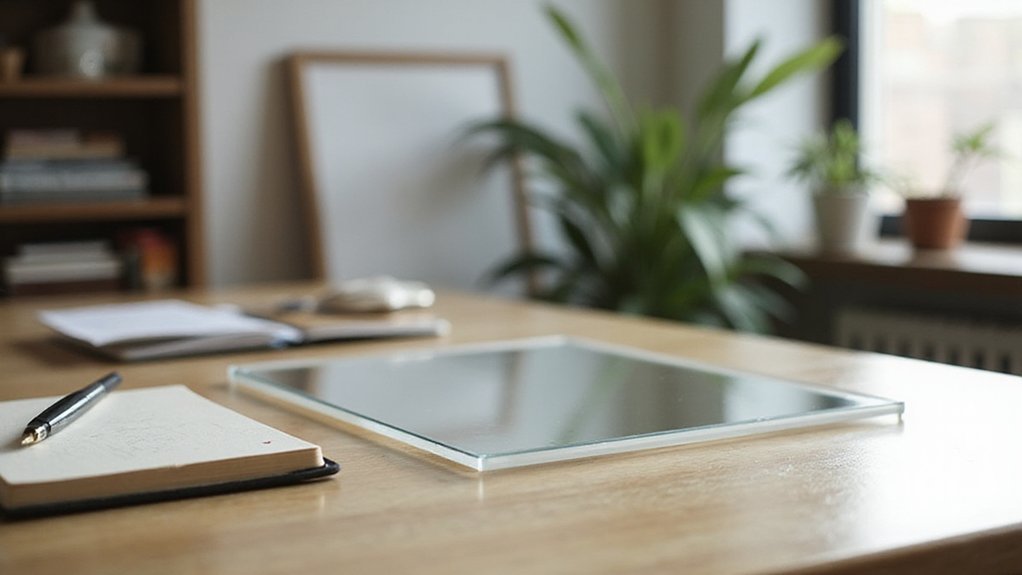
If you’re curious about 2-way mirror acrylic sheets and how they work, you’re not alone. These sheets are coated to create a mirror on one side and transparency on the other, depending on lighting.
Getting the right type and installation makes all the difference for your projects. Keep reading to discover how to make the most of this versatile material.
What Is a 2-Way Mirror Acrylic Sheet and How Does It Work?
A 2-way mirror acrylic sheet is a transparent acrylic panel coated with a semi-reflective layer that functions as both a mirror and a window, depending on the lighting conditions. Its semi-reflective coating is typically a thin layer of metal or film applied during manufacturing. When light is brighter on one side, that side appears like a mirror because the coating reflects most of the incoming light. On the darker side, the sheet remains see-through because less light is reflected. This effect relies on the difference in lighting levels between the two sides, creating a visual split where one side acts as a mirror and the other as a clear window. Proper installation and understanding of lighting conditions are also essential for optimal performance and security. Understanding how semi-reflective coatings work is crucial for making the most of these sheets. Additionally, controlling lighting environments can significantly enhance the effectiveness of a 2-way mirror panel.
Choosing the Best Acrylic for Your 2-Way Mirror
Selecting the right acrylic for your 2-way mirror depends primarily on optical density and lighting conditions. The acrylic must create a clear brightness contrast so that the darker side can see through while the brighter side reflects accurately. To achieve this, ensure that lighting on the viewing side remains lower than the reflective side, but avoid having both sides too brightly lit. Excessive illumination on either side causes the mirror to behave more like a regular window rather than a reflective surface. Additionally, surface finish matters: a high-gloss, silver-toned acrylic offers better reflectivity, improving both safety and clarity. The surface should be uniform and free of defects to maintain a professional appearance and ensure optimal performance. Proper material selection directly influences the effectiveness and safety of your 2-way mirror, making careful consideration essential.
Comparing Cell-Cast and Extruded Acrylic Sheets for 2-Way Mirrors
Cell-cast acrylic sheets generally provide superior optical clarity compared to extruded acrylic sheets. They feature a higher surface gloss and less distortion at low viewing angles, which is essential for high-quality 2-way mirrors. Cell-cast acrylic is manufactured by casting the liquid polymer between molds, resulting in fewer internal stresses and a consistent thickness that enhances image clarity. Its higher tensile strength also means it resists scratches and long-term wear better, making it more durable for demanding applications. Additionally, manufacturing method plays a crucial role in determining the overall quality and performance of the acrylic sheet.
In contrast, extruded acrylic sheets are produced through continuous extrusion, which can introduce internal stresses and minor variations in thickness. These factors can cause slight distortions in reflected images and reduce overall clarity. While extruded acrylic offers better thickness tolerance and is easier to cut and shape, it typically has lower surface gloss and may develop internal stresses over time. For a 2-way mirror where optical performance and durability are priorities, choosing cell-cast acrylic usually delivers better results despite its often higher cost and slightly more complex fabrication process.
Key Factors to Consider When Selecting a 2-Way Mirror Acrylic Sheet
Choosing the right 2-way mirror acrylic sheet requires careful evaluation of several key factors that influence optical clarity, durability, and suitability for your specific needs. First, check the spectral reflectance and transmittance data provided by the manufacturer for your exact batch, not just what’s listed in the catalog. This data reveals how much light is reflected versus transmitted at different wavelengths, which directly affects the mirror’s visual effect. Pay attention to the reflectivity-to-transmittance ratio: higher reflectivity enhances the mirror-like appearance, while higher transmittance allows better visibility through the sheet. Select a ratio aligned with your lighting conditions and desired contrast effect. To ensure the longevity and reliability of your project, consider the durability of coatings, as protective layers can significantly impact performance over time. Additionally, understanding the spectral characteristics helps you choose the most effective sheet for your specific application. Performance consistency is crucial—test the sheet under typical lighting to ensure the reflective effect remains stable. If your project involves decorative patterns or special design features, verify that these are incorporated without compromising optical clarity. For applications demanding minimal distortion, opt for sheets with proven optical performance, ideally made from cell-cast acrylic, known for better clarity and uniform thickness. These sheets also tend to have more durable coatings, helping maintain optical quality over time and ensuring long-lasting visual accuracy. Moreover, considering the manufacturing process can influence the uniformity and overall quality of the acrylic sheet, making it an important factor for critical applications.
How to Properly Calibrate Lighting for Clear 2-Way Mirror Effects?
To properly calibrate lighting for a clear two-way mirror effect, you need to set the lighting levels to create a distinct contrast between the two sides. Use a calibrated lux meter to measure the light intensity independently on each side. Aim for at least an 8:1 ratio, which generally translates to roughly 80–120 lux on the concealed side and 320–480 lux on the mirror side. Keep the subject side brightly lit with diffuse, even lighting to avoid hotspots, while the observer side should be dim and subdued to minimize reflections. Ensure the lighting color temperature is consistent and avoid mixing warm and cool tones, as this can affect visibility. Minimize ambient noise and remove bright, reflective objects from the observer zone, since these can create unwanted reflections or interfere with visibility. After each adjustment, re-measure with the lux meter to verify the contrast remains within the desired range. Maintaining this balance is key to achieving a clear, effective two-way mirror effect. Additionally, properly calibrated lighting can help prevent eye strain for viewers and improve overall image clarity. Properly adjusting your lighting setup ensures optimal clarity and prevents visual distortions.
Safe and Professional Methods for Installing Your 2-Way Mirror Acrylic
To install your 2-way mirror acrylic safely and professionally, start by preparing a smooth, stable surface that provides an even backing for the sheet. Choose a flat, rigid mounting surface such as drywall, plywood, or a cement wall in good condition. Thoroughly clean the substrate using a mild detergent or isopropyl alcohol to remove dust, grease, and any debris, ensuring the surface is completely dry. Avoid textured walls or flaky paint, as these can cause warping or prevent proper adhesion. In humid environments, check wall moisture levels to prevent adhesive failure. Apply adhesives designed specifically for acrylic mirrors in even beads or a zigzag pattern, spacing them approximately 120 to 150 millimeters apart. Mechanical supports like clips or screws can add extra security but avoid over-tightening, which can crack the acrylic. Proper surface preparation combined with safe adhesive use is essential for a durable, professional installation. Knowing how to prepare acrylic surfaces and ensure proper adhesion techniques enhances the durability and appearance of your installation, leading to better results.
Customizing Your 2-Way Mirror Acrylic: Painting, Backing, and Personalization Tips
Once your acrylic sheet is securely installed, you can personalize it to fit your design goals. Start with surface care by gently cleaning the acrylic with a non-abrasive cloth and mild soap or specialized acrylic cleaner. Keep the protective film on during handling to prevent scratches. When adding paint or decorative accents, mask the edges with painter’s tape to ensure clean, crisp borders. Use blending techniques with acrylic paint by applying two light coats—allow at least four hours for the first coat to dry and leave overnight for complete curing. Layer darker hues into grooves and add lighter highlights to create depth. For fine details or textured finishes, acrylic paint pens work well. To improve paint adhesion, gently lightly sand the surface with very fine grit sandpaper, but avoid harsh abrasion that could damage the acrylic. *In addition, using a primer designed for plastics can help achieve better adherence for your painted designs* for a more professional finish. Additionally, considering the quality of your acrylic and paint can significantly influence the durability and appearance of your personalized design considering the material quality. A helpful tip is to reusing transfer tape carefully to save costs, as it can often be cleaned and reused if handled properly and free from debris. Understanding the importance of cutting mat and proper workspace preparation can further enhance your crafting process.
Troubleshooting Common 2-Way Mirror Acrylic Projects
Warping, bending, and image distortion in 2-way mirror acrylic projects typically stem from improper mounting or putting stress directly on the acrylic surface. To prevent these issues, support larger panels—particularly those over 24 inches—with a flat, rigid backing. Excessive pressure during installation can cause the acrylic to warp or distort, so handle panels gently and avoid applying force unevenly. When cutting acrylic, use sharp tools and follow proper techniques to prevent damage to the coating. Smoothing edges after cutting can reduce stress points and improve the overall finish. For cleaning, always use microfiber cloths and mild soap to avoid scratches. Avoid ammonia-based cleaners, as they can damage the mirror coating. When it’s time to mount, choose recommended adhesives like VHB tape to ensure a secure hold without risking peeling or failure, which helps keep your project intact and looking professional.
Where to Buy Quality 2-Way Mirror Acrylic Sheets and How to Identify Authentic Products
To buy authentic, high-quality 2-way mirror acrylic sheets, focus on reputable specialty plastics suppliers like ePlastics, Canal Plastics, and T&T Plastic Land. These vendors consistently offer see-through mirror acrylic with detailed specifications, ensuring you receive genuine products suitable for artistic and functional projects. When selecting a product, check the listing for clear terminology such as acrylic, PMMA, or plexiglass, and verify the thickness—common measurements are 1/8 inch or ¼ inch.
Authentic 2-way mirror acrylic sheets will typically include descriptions highlighting their see-through, two-way, or one-way properties. Product photos should clearly demonstrate both reflective and transparent behavior in real-world scenarios, such as showing the mirror’s reflective side and how it appears transparent from the opposite side. Avoid listings with vague descriptions or missing specifications, as these are often signs of lower-quality or fake products.
Always consider the reputation of the supplier and ensure detailed documentation, including specifications, pictures, and technical data sheets. This attention to detail guarantees that you receive a product that meets your project needs and performs reliably, whether for infinity mirrors, digital displays, or other creative applications. Additionally, understanding quality indicators can help you assess whether a sheet will meet your specific requirements.
When in doubt, look for product reviews and customer feedback to verify the authenticity and quality of the acrylic sheets before making a purchase.