Deciding between resin and filament 3D printers can feel overwhelming, especially if you’re unsure which will best suit your projects.
Resin printers excel at capturing intricate details and smooth finishes, making them ideal for miniatures and jewelry.
Filament printers are often more durable and budget-friendly, perfect for larger or functional parts.
Keep reading to discover which option fits your needs best.
Which 3D Printer Should You Choose: Resin or Filament?
Deciding between a resin and filament 3D printer depends on your specific goals and priorities. If you prioritize detail and finish quality, resin printers excel with high resolution and smooth surfaces, making them ideal for miniatures, jewelry, or intricate prototypes. They produce finer details thanks to their high-precision light-based curing process. However, consider environmental impact and material recyclability—resin materials are often less biodegradable and harder to recycle, which raises sustainability concerns. Additionally, resin printing involves handling chemicals, which requires careful safety measures.
Filament printers typically use more affordable, recyclable materials like PLA, which is biodegradable and easier to dispose of. Their operation costs are lower, and cleanup is simpler, making them a more eco-friendly choice overall. These printers are well-suited for producing large, durable parts that require strength and resilience. They generally handle higher volume projects better and produce less waste compared to resin printers, which generate more liquid waste during printing. Exploring print quality factors can help you determine the best fit for your needs. It’s also important to consider the material versatility offered by each type, as this can impact the range of projects you can undertake.
Your decision should weigh environmental considerations against your need for surface quality. Resin printers give you finer detail and smoother finishes but produce more waste and involve more careful handling of chemicals. Filament printers offer functional, sturdy parts with a smaller environmental footprint and easier maintenance, especially for larger or more robust projects. Understanding the differences in printing materials can help you make a more informed choice.
Understanding Resin and Filament 3D Printing Technologies
Resin printing uses a liquid photopolymer resin that hardens when exposed to UV light. This process results in high resolution and smooth surface finishes, making it ideal for fine details and color customization. It is often chosen for small, intricate objects like miniatures or jewelry. The resin is cured layer by layer, with each exposure needing precise control to achieve the desired detail. Because of its accuracy, resin printing excels in applications where surface quality and detail are critical. Additionally, the layer-by-layer curing process allows for complex geometries that would be challenging with other methods. Properly managing exposure settings is essential to ensure optimal curing and surface quality. However, it generally involves post-processing steps such as cleaning and additional curing, which require careful handling to avoid issues like sticky surfaces or incomplete curing. Additionally, resin printing often requires protective gear due to the resin’s toxicity, emphasizing the importance of safety precautions throughout the process. Understanding the composition of resin can help users better handle the material and optimize printing settings for better results.
Resin and Filament Materials: What Are They Made Of?
Resin and filament materials are fundamentally different in their composition and their use in 3D printing. Resin is a liquid photopolymer that hardens when exposed to light, mainly UV. Its chemistry relies on monomers and oligomers that crosslink into solid polymers during curing, triggered by photoinitiators that start polymerization under light exposure. Resin formulations often incorporate pigments for color, fillers like silica for added strength or stability, and various additives to adjust properties such as flexibility and chemical resistance.
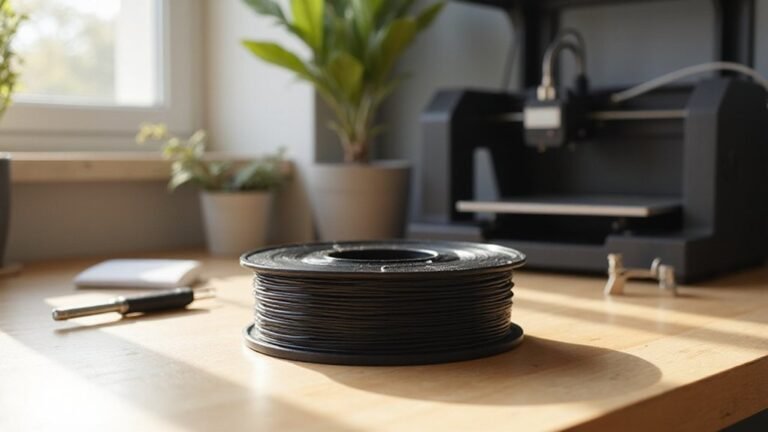
In contrast, filament is a solid thermoplastic material, available in forms like PLA, ABS, or TPU, wound on spools for easy feeding into a 3D printer. These thermoplastics soften when heated and harden as they cool, forming the basis of many standard 3D prints. Additives are commonly added to modify their strength, stiffness, or flexibility. While resin’s reactive liquid chemistry involves curing through light activation, filament’s structure relies on heating and cooling processes to change states, making their workflows and applications quite distinct.
How Do Surface Finish and Detail Compare Between Resin and Filament Prints?
Resin prints deliver a significantly smoother surface finish and finer detail than filament prints. Their layers are cured with high precision, resulting in minimal visible layer lines and a polished appearance. Colors tend to look more vibrant, and textures are crisper, making resin ideal for detailed miniatures, jewelry, or prototypes where surface quality matters most. Resin’s typical layer height can be as low as 25 microns, allowing for micro-features and tiny text to be captured clearly. In contrast, filament prints generally use layer heights around 100 microns, producing more pronounced step lines and a rougher surface finish.
While filament offers faster print speeds and can handle larger build volumes more easily, its stepped textures and lower resolution make it less suitable for highly detailed or visually refined objects. Post-processing for resin prints usually involves minimal clean-up beyond support removal, helping maintain their smooth, high-quality appearance. Overall, if surface finish and fine detail are your priorities, resin prints outperform filament, albeit with a higher complexity and longer preparation time.
Which Printer Is Better for Strength, Durability, and Functionality?
Filament printers generally provide better strength, durability, and functionality compared to resin printers. They use materials like ABS, PETG, and nylon, which offer high impact resistance, flexibility, and long-term resilience. These properties make filament prints ideal for functional parts such as brackets, housings, and tools that must withstand mechanical stress. The mechanical properties of filament materials are fundamental in understanding why they excel in producing resilient structures. Filament printing is also more cost-effective for larger, tough components, since filament materials tend to be less expensive than specialty resins. Moreover, layer adhesion in filament printing contributes to overall strength, making parts more resistant to breaking under stress. While resin prints can achieve high tensile strength with engineered formulations, they are often more brittle and less suited for everyday mechanical use. For demanding applications requiring robust, durable parts, filament printers are the superior choice.
How Size and Build Volume Affect Your 3D Printing Options
The build volume size of a 3D printer determines what you can create in a single print, affecting your project choices and workflow. Desktop FDM printers typically have build areas around 200 to 300 millimeters per axis, which is suitable for most small to medium-sized objects. Larger models can exceed a meter, enabling the printing of bigger items or reducing the number of parts needed for complex assemblies. However, bigger isn’t always better; increasing build volume can reduce resolution, impacting the level of detail in your prints. It also tends to slow down printing speeds because larger objects take more time to complete. Resin printers usually feature smaller build volumes, making them ideal for detailed miniatures and tiny components. When choosing a size, consider your project scope, available space, and the level of detail you need to achieve, ensuring your printer can support your goals without sacrificing resolution or speed. Additionally, understanding heat press machine costs and timing your purchases can help you find quality equipment without overspending. Keep in mind that build volume limitations can influence the overall quality and feasibility of your projects, especially when working with intricate designs or large models.
Cost Comparison: Resin vs. Filament 3D Printers-What You Need to Know
Resin printers generally have a higher initial purchase price than filament models, but their operating costs are typically more expensive per print. Resin costs around $30 to $50 per liter, which is generally higher than filament prices of about $20 to $25 per kilogram. This price difference means that resin prints tend to be 2 to 3 times more costly per project, mainly due to the expense of consumables, post-processing supplies, and the specific setup required. Additionally, resin materials often degrade faster if not stored properly, and the need for gloves and curing stations increases ongoing expenses. Proper storage and handling are essential to prolong resin material lifespan and maintain print quality.
Filament prints usually last longer under regular use because the materials are more durable and stable. For larger volume projects or routine printing, filament offers a more economical option over time. Resin is preferred for detailed, short-term, or precision-focused applications, where the higher cost is justified by the finer quality and resolution. Overall, your choice depends on balancing upfront investment with long-term operational expenses, keeping in mind that resin’s detailed output comes at a premium price.
Post-Processing and Cleanup: Which Method Is Easier?
Filament cleanup is simpler than resin cleanup. With filament, you mainly remove supports, sand rough edges, and use minimal tools like cutters and files. No solvents are needed, and storage is straightforward—just keep filament spools in a dry, dust-free place. Handling is less messy, which reduces safety concerns. Overall, the post-processing process for filament tends to be quicker and less labor-intensive, making it ideal if you want a straightforward experience. Resin cleanup, on the other hand, involves washing printed parts with isopropyl alcohol, UV curing, and careful handling of liquid photopolymer. It requires multiple tools including wash containers, gloves, and a UV curing station, adding complexity and extra time. While resin offers superior detail and surface finish, its post-processing process demands more steps, precautions, and cleanup effort, making filament the easier choice for most users focusing on toxicity concerns. Additionally, the ease of cleanup often influences beginners to prefer filament over resin for their initial projects. Being aware of post-processing steps can help makers decide which method aligns better with their workflow and safety preferences.
Are Resin Printers Ideal for Miniatures and Jewelry?
Resin printers excel in producing highly detailed miniatures and jewelry because of their micro-resolution—typically around 50 μm XY resolution. This level of precision captures intricate details like facial features, armor textures, filigree, and fine engravings, which are difficult to achieve with other types of 3D printers. Additionally, resin printers often utilize light-based curing technology that allows for rapid, precise layer setting, further enhancing their capability to produce complex geometries. Their layer resolution also contributes to a smooth surface finish that minimizes post-processing work. Although their build sizes are generally smaller, often limited to a few inches per side, this doesn’t hinder the quality of small, detailed work. Compact resin printers easily fit into typical workspace setups and support repeatable, consistent results for intricate designs. Their ability to produce smooth surfaces and fine details makes them the top choice for hobbyists and professionals who demand high resolution and a superior finish. Moreover, resin printing technology enables the production of complex geometries that are challenging for filament-based printers, further enhancing their suitability for miniature and jewelry creation. Ultimately, resin printers offer the micro-detail and high-quality surface finish essential for miniatures and jewelry, making them the ideal tool for these applications.
When Should You Use Filament for Large or Mechanical 3D Prints?
Filament is the optimal choice for large or mechanical 3D prints due to its strength, durability, and cost-effectiveness. When working on functional prototypes or sizable mechanical parts, filament materials like PETG, nylon, or PBT provide the toughness needed to withstand stress and repeated use. These materials also offer excellent dimensional stability, especially when using low thermal expansion options, which helps minimize warping during printing. Filament’s compatibility with common desktop 3D printers and its ability to produce precise, complex details make it ideal for enclosures, brackets, and mechanical mechanisms. Additionally, filament typically costs less per print compared to resin, and predictable results from sample tests ensure reliable quality for large projects. High-temperature nozzles and heated beds may be required for certain filament types, but overall, filament offers a practical, versatile solution for large and mechanically demanding prints. Understanding material properties like toughness and stability is crucial when selecting the right filament for your project.