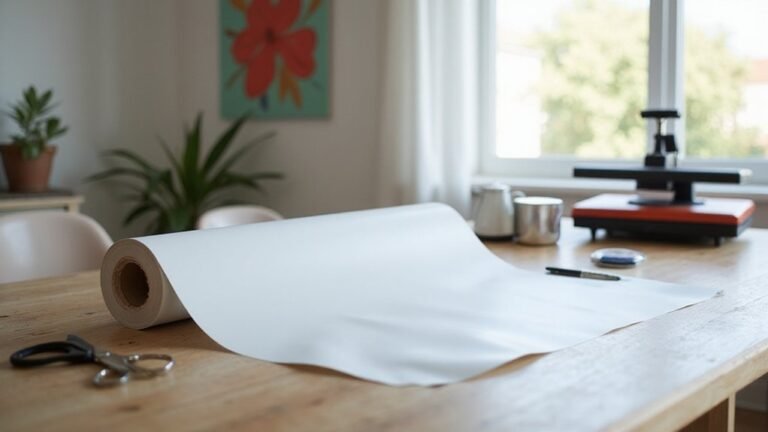
Thinking about using permanent vinyl on shirts? It might seem like a simple solution, but it’s not always the best choice for fabric. While it sticks well initially, it can peel, crack, and lose its flexibility after washes or stretches.
Usually, heat transfer vinyl (HTV) offers a more durable and comfortable finish for clothing.
Keep reading to learn how to get your shirt designs to last longer.
What Are the Types of Vinyl Used for Shirts?
The most common vinyl types used for shirts are Heat Transfer Vinyl (HTV) and adhesive vinyl, each designed for specific applications. HTV is the preferred choice for fabric projects because it bonds to the material when heat and pressure are applied, resulting in a durable decoration. It offers a wide variety of color options and finishes, including glitter, flocked, metallic, or holographic textures, providing creative flexibility. HTV is thin, flexible, and crafted to move naturally with the garment, making it comfortable to wear. Additionally, HTV’s ability to be properly dried ensures long-lasting adhesion and vibrant results. On the other hand, adhesive vinyl is pressure-sensitive and better suited for hard, smooth surfaces like mugs or windows. While it can be applied to fabric, it’s less common because its limited texture options and rigidity make it less ideal for clothing. Overall, HTV’s versatility in color, texture, and comfort makes it the top choice for decorating shirts, especially with proper application techniques to ensure longevity.
Why Is Permanent Vinyl Not Ideal for Clothing?
Permanent vinyl is not suited for clothing because it does not adhere well to fabric textures and weaves. Its bonding is uneven, which leads to peeling over time, especially with frequent washing or stretching. Clothing moves, stretches, and flexes during wear, but permanent vinyl lacks the flexibility to accommodate these motions, making it prone to cracking or lifting. Repeated body movements intensify this issue, causing the vinyl to break apart. Washing, drying, and exposure to moisture, heat, or harsh detergents weaken the adhesive, speeding up the peeling and cracking process. Due to these durability concerns, permanent vinyl is better used on hard, smooth surfaces rather than fabric garments. Vinyl’s inability to flex with fabric makes it unsuitable for clothing, as it can’t withstand the natural motion and deformation of textiles. Additionally, adhesion properties of permanent vinyl are not designed to handle the repeated stress and stretching typical of garments, which further compromises its longevity. This is why fabric compatibility is a critical factor to consider when choosing materials for clothing projects. Moreover, the application process for permanent vinyl typically involves heat-setting on solid surfaces, not fabrics, which can lead to poor results when used on clothing. Heat transfer vinyl offers a more flexible and resilient option that can withstand wear and washing better when applied to clothing.
How Does Heat Transfer Vinyl (HTV) Differ From Permanent Vinyl?
Heat transfer vinyl (HTV) and permanent vinyl differ primarily in their composition and application methods. HTV uses a heat-activated adhesive that bonds when exposed to heat and pressure. This makes it ideal for fabrics and soft surfaces because the heat causes the adhesive to melt and secure the vinyl in place. To apply HTV, you need a heat press, an iron, or another heat source to activate the adhesive, along with pressure to ensure a strong bond. A clear carrier sheet remains on top during application, helping position the vinyl accurately. Both types of vinyl require careful handling during application to ensure proper adhesion and design transfer. Permanent vinyl, on the other hand, relies on a pressure-sensitive adhesive that sticks without the need for heat. It adheres well to hard, smooth surfaces such as glass, plastic, or wood. Applying permanent vinyl involves pressing the vinyl directly onto the surface using transfer tape, which holds the design in place during application. Since it doesn’t require heat, permanent vinyl is often preferred for projects on surfaces where heat could cause damage or warping. Understanding the adhesion process can help you choose the right vinyl for your specific project needs, especially considering surface compatibility to achieve durable results. Additionally, knowing the material properties of each type can help prevent issues like peeling or unwanted damage over time.
Can Permanent Vinyl Last on Shirts? Expectations and Limitations
Permanent vinyl is not suitable for shirt decoration because it tends to only last a few washes before peeling or lifting. The adhesive bond weakens as the fabric stretches, flexes, and goes through repeated washing cycles. Heat and friction further accelerate deterioration, causing cracks, fading, and edge lifting. Applying permanent vinyl to shirts can be challenging due to uneven contact, bubbles, and incomplete adherence, which reduces its lifespan even more. Additionally, sublimation paper offers a different method that can produce more durable results on certain fabrics, but it requires specific materials and processes. Understanding vinyl adhesive strength and how it responds to fabric movement can help set realistic expectations for permanent vinyl on shirts. Recognizing the limitations of adhesive on flexible materials can further aid crafters in choosing the best method for their projects.
How Do You Apply Vinyl to Shirts Properly? Tips and Techniques
To apply vinyl to shirts properly, follow these essential steps. First, find the shirt’s center by folding it in half with a light crease as a guide. This ensures your design is aligned correctly. Before applying the vinyl, preheat the shirt briefly to remove moisture and improve adhesion. Set your heat press or iron to 305°F–320°F with medium pressure. Press the shirt for about 10–15 seconds to create a suitable surface for the vinyl. Preheating the shirt helps to eliminate wrinkles, which can interfere with proper adhesion. Position your design with the vinyl side down, shiny side up, using a ruler or alignment tool for accuracy. For larger backgrounds or multi-layered designs, layer the bigger pieces first and press each layer separately to prevent shifting. Cover the vinyl with parchment paper or Teflon sheet to protect it during pressing. Apply even pressure without sliding the iron, and wait until the recommended peel temperature—hot, warm, or cold—before removing the transfer backing. Proper adhesion techniques are crucial for a durable finish, and understanding how different heat levels affect the transfer can help achieve professional results. Ensuring proper adhesion techniques will also help prevent lifting or peeling over time. Starting with a clean, smooth surface and understanding acrylic sheet costs can help you plan your project budget effectively. Proper technique and attention to detail will ensure your vinyl design adheres smoothly and lasts through multiple washes.
What’s the Best Way to Care for Vinyl Designs on Clothing?
To ensure your vinyl-decorated clothing remains in top condition, it is best to wait at least 24 hours before washing the garment for the first time. Washing too soon can weaken the vinyl’s adhesion and cause the fabric to feel less soft. When you do wash, use cold water and select a gentle cycle to protect the vinyl design and extend color vibrancy. Hand washing is preferable, but if you choose to machine wash, opt for low heat and a mild detergent. Steer clear of bleach and fabric softeners, as these can damage both the vinyl and the fabric.
It’s also helpful to note that permanent vinyl is generally dishwasher safe and can withstand routine cleaning, making it a durable option for clothing and other surfaces. Properly applied vinyl will maintain its appearance even after multiple washes. Additionally, selecting a high-quality vinyl can significantly impact the longevity of your design, ensuring it stays vibrant and intact through repeated washes. Using proper application techniques can also help extend the lifespan of your vinyl decals on clothing.
For drying, air drying is the safest option to prevent warping or peeling. If using a dryer, choose the lowest heat setting. When ironing, never iron directly on the vinyl design. Instead, place a clean cloth over the area or turn the garment inside out to avoid direct heat contact. Proper storage in a cool, dry place also helps preserve the softness of the fabric and the brightness of the colors over time.
When Should You Use Permanent Vinyl on Shirts? Best Practices and Alternatives
Permanent vinyl is best suited for applications where you want a durable, non-stretchable design that lasts over time without frequent washing. Use it for projects like decals or stiff embellishments that won’t be subjected to stretching or regular laundering. It adheres well when the fabric is smooth and taut, and heat is applied with a heat press or iron to ensure a strong bond. To achieve optimal results, pre-press the shirt briefly to remove moisture, use parchment paper or Teflon sheets to protect the vinyl, and allow it to cool completely before peeling off the carrier sheet. For best results, ensure the fabric is properly prepared and pre-pressed, as this can impact vinyl adhesion and durability. Additionally, selecting the right temperature and pressure settings for your heat source can significantly improve the heat transfer process. Proper fabric selection can also help ensure the vinyl adheres well and lasts longer, especially on different shirt materials.
Avoid permanent vinyl for designs that require flexibility or will be washed frequently, as these needs are better served by heat transfer vinyl (HTV). Permanent vinyl is ideal for static or decorative applications where rigidity is acceptable and a shorter lifespan is sufficient.