Wondering how much a heat press machine costs? The price range spans from around $150 for basic models to over $2,500 for industrial-quality equipment.
Your choice depends on your printing needs—simple projects versus high-volume production. Keep reading to learn how to find the right machine for your budget and goals.
What Are the Types of Heat Press Machines and How Much Do They Cost?
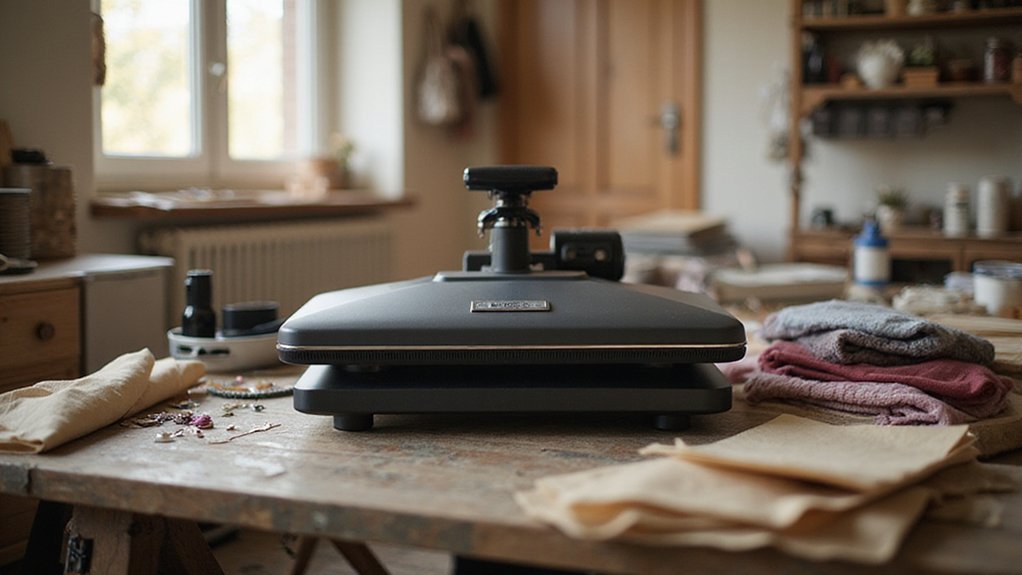
Clamshell heat press machines are the most budget-friendly option, typically priced between $150 and $500. They feature a compact design with an upward-opening top platen, making them easy to operate in small spaces. These presses are ideal for beginners due to their straightforward interface and affordability. Swing-away models, which cost from $300 to over $1,000, offer better access to the work surface and more precise control, making them suited for detailed projects. For high-volume production, dual-platen and industrial presses—often costing thousands of dollars—prioritize durability, automation, and faster turnaround times. Specialty presses like mug and hat machines usually stay under $700, providing specific functionality at accessible prices. When choosing a heat press, consider how durable it needs to be and whether its user interface feels comfortable for your workload. Additionally, understanding the different types of heat press machines available can help you make a more informed investment. Knowing the cost range of various models can assist in planning your purchase budget effectively. Exploring laser engraver prices is also beneficial for framing your overall investment in printing and engraving equipment.
How Do I Decide My Budget Based on My Printing Needs?
Your budget for a heat press machine should be based on your printing volume and goals. For hobbyists or low-volume needs, starter clamshell models priced between $150 and $250 are sufficient. These are compact and easy to operate but may lack durability for frequent use. For higher-volume or commercial applications, swing-away or flatbed models starting at around $2,000 offer larger platens, better heat distribution, and increased durability.
Considering the material compatibility of the heat press is crucial to ensure it can handle the types of transfers you plan to use, especially as you scale up your operations. Reviewing the product quality and construction of the machine helps ensure longevity and consistent performance. Additionally, understanding the proper heat settings required for different materials can prevent damage and ensure high-quality results. Review warranty options when choosing a higher-priced unit, as they can protect your investment over time. Consider platen size carefully: smaller sizes are ideal for T-shirts, while larger ones support bulk transfers or larger apparel items. Balancing initial costs with quality and future growth needs ensures your budget aligns with your printing expectations. As your business expands, you can upgrade or invest in more advanced models, so plan your budget to accommodate both current needs and future scalability.
What Factors Influence the Price and Value of a Heat Press?
The size of the platen, especially larger options like 15×15 inches or oversized twin-platens, significantly affects the price and value of a heat press. Larger platens require more materials for construction, as well as more advanced heating elements to evenly distribute heat over a bigger surface. This increased complexity results in higher manufacturing costs, which are reflected in the retail price. Additionally, the performance of the heat press may vary depending on its size and build quality, impacting your project results. The machine style also plays a crucial role. Clamshell designs tend to be more affordable and easier to operate, while swing-away models offer better access and safety for larger items, often at a higher cost. Combo presses that can handle multiple types of printing, such as flat surfaces and mugs or hats, add extra features and therefore increase the price. Automation level and production capacity influence value as well. Manual models are generally cheaper but require more effort and time to use, making them suitable for beginners or small-scale projects. Semi-automatic and industrial presses come with automated features and faster cycle times, which boost efficiency but come with a steeper price tag. Your choice among these options depends on your production needs and budget. Well-known brands tend to offer better durability, consistent pressure, and quality control, all of which justify higher initial costs. Investing in a reputable brand can prove economical over time, reducing maintenance and replacement expenses. Recognizing the significance of appropriate maintenance ensures your heat press operates efficiently and prolongs its lifespan, ultimately safeguarding your investment.
How Can I Save Money Without Sacrificing Quality?
To save money without sacrificing quality, explore used equipment in verifiable condition. Local marketplaces like Craigslist or Facebook Marketplace can offer reliable units at significantly lower prices than buying new. Always inspect the item thoroughly for signs of wear or hidden damage to avoid future issues. Comparing prices across multiple retailers helps identify the best deals and prevents overspending on unnecessary features. Looking for discounts, promotions, and bundle deals, especially when setting up a new workspace, as these can lower the total cost. Negotiating prices directly at trade shows can also lead to substantial savings, since exhibitors are often eager to sell. Prioritize materials and brands known for durability, which ensures long-term reliability and reduces repair expenses, allowing you to maintain high-quality standards without overspending upfront. When purchasing equipment, be mindful of the product’s support and warranty policies, as comprehensive support can save money in the long run by minimizing downtime and repair costs. Additionally, understanding the composition of PLA filament can help you choose higher-quality options that might cost a bit more upfront but offer better results and longevity, ultimately saving money over time. Investing in long-term reliable equipment can further prevent frequent replacements and ongoing expenses. Regularly checking heat resistance specifications of tapes and materials is also essential to ensure they meet your project’s heat press requirements, preventing product failures or damages.
Are Industrial Heat Presses Worth the Investment?
Investing in industrial heat presses over $2,500 can be a worthwhile decision if your production requires high volume, speed, and consistent quality. These machines are built for durability and typically support automation features that enhance efficiency. Although maintenance costs and repair bills can range from $300 to $800 annually, their lifespan often exceeds 50,000 cycles, justifying the expense over time. Proper maintenance and regular calibration are essential to ensure optimal performance and longevity. Regular monitoring of machine performance can help prevent unexpected breakdowns and extend the operational life of the equipment. The initial investment in industrial heat press machinery is often offset by increased productivity and fewer operational disruptions. Well-made equipment with robust construction can also withstand heavy usage, reducing the likelihood of early failures. Higher initial costs tend to lead to less downtime and better technical support, which boost overall productivity. If your business consistently demands precise results, minimal rework, and faster turnaround times, industrial presses provide a strong return on investment. While the upfront investment is significant, the long-term savings in labor, reduced waste, and increased output generally outweigh the costs, making them a strategic choice for growth-oriented operations.