Finding the right 3D printer can feel overwhelming with so many types available.
Whether you need quick prototypes, intricate details, or complex metal parts, there’s an option tailored to your needs.
Understanding the main types and their strengths will help you make an informed choice.
Keep reading to discover which 3D printer type fits your projects best.
What Are the Main Types of 3D Printing Technologies?
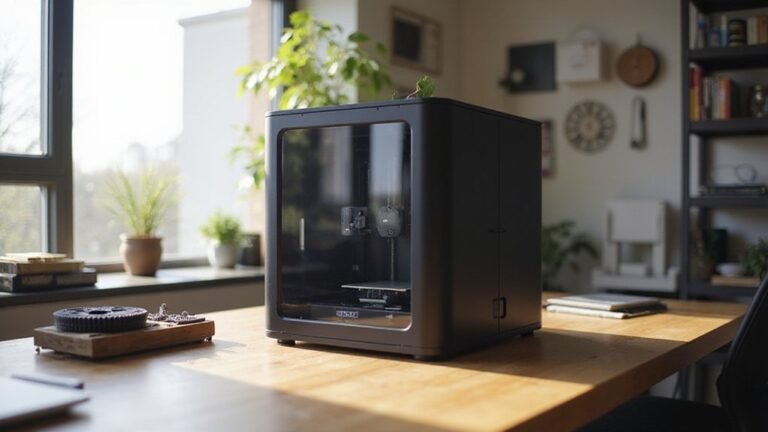
There are several main types of 3D printing technologies, each suited to different applications and materials. Vat photopolymerization uses liquid resin that is cured by light to produce highly detailed, smooth-surfaced parts, making it ideal for prototypes and small components. Powder bed fusion fuses powder materials with lasers or electron beams, commonly used for creating strong, complex metal or plastic parts in industrial settings. Material extrusion, such as Fused Deposition Modeling (FDM) or Fused Filament Fabrication (FFF), deposits heated filament layer by layer and is the most accessible for consumer projects and open-source printers. This method is especially popular when working with biodegradable materials like PLA, supporting eco-friendly printing options. Additionally, advancements in enclosed 3D printers offer improved temperature control and safety, making them increasingly popular among hobbyists and professionals alike. As technology continues to evolve, material versatility is expanding, allowing for a broader range of printable materials and further enhancing the capabilities of each printing method. One notable development is the increasing ability to print with metal and composite materials, opening new possibilities for industrial applications.
How Does FDM or FFF 3D Printing Work and When Should You Use It?
FDM or FFF 3D printing builds objects layer by layer by melting and extruding thermoplastic filament through a heated nozzle. It deposits material precisely along programmed paths guided by slicing software, which creates detailed layer instructions. Typical layer resolutions range from 0.1 to 0.3 millimeters, impacting the surface finish and detail level. As each layer cools and solidifies, the object gradually forms from the bottom up, resulting in a visible layered texture. This process is highly versatile in terms of materials, allowing the use of various plastics and composites like carbon-fiber reinforced filaments. FDM/FFF is especially suitable for prototyping, functional parts, jigs, and fixtures when strength, lightweight design, or resistance to heat and chemicals are priorities. Its affordability and ease of use make it popular across industries such as automotive, aerospace, and medical fields.
What Are the Common Vat Polymerization Methods and Their Differences?
Vat polymerization methods differ mainly in how they deliver light to cure the resin and control layer resolution. Stereolithography (SLA) uses a UV laser that traces each layer point-by-point, resulting in very high detail and accuracy, but it tends to be slower because it cures each layer sequentially. Digital Light Processing (DLP) employs a digital projector to expose an entire layer at once, which speeds up the build process, though the resolution may be slightly lower compared to SLA. Masked stereolithography (MSLA) uses an LCD mask to project a full layer at once as well, offering a good balance between cost and fine detail. Continuous DLP (CDLP) is an advanced method that provides near-continuous curing with a moving light source, significantly increasing speed without sacrificing quality. Overall, the key differences are in the light delivery mechanisms—laser, projector, mask, or continuous source—each impacting build speed, layer resolution, surface finish, and efficiency. Understanding the light delivery mechanisms is crucial for selecting the right vat polymerization method for specific applications. Additionally, innovations in light control contribute greatly to improving the precision and speed of these 3D printing techniques. Recognizing how these light delivery methods influence print outcomes can help users optimize their printing processes effectively.
How Do Powder Bed Fusion Technologies Like SLS and SLM Differ?
Powder bed fusion technologies like SLS and SLM differ mainly in how they process powder materials and the final properties they achieve. In SLS (Selective Laser Sintering), the process involves solid-state sintering, where particles fuse at their surfaces without fully melting. This occurs at temperatures just below the melting point of polymers, relying on thermal energy to bond particles together. SLM (Selective Laser Melting), by contrast, uses high-energy laser pulses to fully melt the metal powder particles. This results in parts that are dense and nearly porosity-free, with excellent mechanical properties. Additionally, these thermal mechanisms influence the final part quality, tailoring the process to specific engineering needs. The distinct thermal mechanisms define their applications: SLM produces high-performance, durable metal components suitable for aerospace and medical uses, where strength and precision are critical. SLS works well for lightweight, functional prototypes and parts where ease of processing and cost are more important than maximum density. Understanding these thermal mechanisms can help select the right technology for different manufacturing goals. The variability in energy input also impacts the thermal behavior within each process, affecting overall part integrity and performance.
What Are the Key Features and Benefits of Material and Binder Jetting?
Material and binder jetting excel at producing highly detailed, accurate parts with excellent surface quality. They are particularly well-suited for applications that require fine features and smooth finishes. You enjoy a wide range of material options, from rigid to flexible, transparent to biocompatible materials. The process supports full-color printing, enabling you to create multi-colored parts directly, which eliminates the need for post-processing painting or assembly.
Additionally, this technology can utilize laser technology to enhance precision and efficiency. This technology offers micron-level resolution and high dimensional accuracy, allowing you to produce thin sections and intricate geometries that other methods may struggle with. Speed and scalability are key advantages; rapid printing supports batch production with minimal waste and reduces post-processing time. Furthermore, understanding material properties is crucial to optimizing print outcomes and ensuring part durability. Knowledge of material behavior during printing can help prevent defects and improve overall quality. Overall, material and binder jetting provide precise, versatile, and colorful parts that are ideal for prototypes, small-batch manufacturing, and complex designs.
What Makes Metal 3D Printing Methods Like DED and EBM Unique?
Metal 3D printing methods like Directed Energy Deposition (DED) and Electron Beam Melting (EBM) are distinguished by their unique building processes and environments. DED uses a focused energy source, such as a laser or plasma torch, to melt metallic feedstock—either wire or powder—and deposit material directly onto existing components or substrates. It can operate in open air or inert gas environments, offering high flexibility and speed for larger parts or repairs. In contrast, EBM builds parts layer by layer within a vacuum chamber, which minimizes contamination and enhances the purity of components, especially with materials like titanium alloys. It produces finer microstructures and higher resolution details due to its powder-bed fusion process. While EBM’s precision is ideal for complex, small-scale components, DED typically achieves faster build times for larger, less detailed parts. Environment impacts also differ: EBM’s vacuum setting reduces impurities but increases equipment complexity, whereas DED’s open environment supports higher throughput but may necessitate additional measures to control contamination. Additionally, material control in these processes is crucial to ensuring the quality and performance of the final parts, especially since process parameters such as temperature and energy input significantly influence the outcome. Understanding these differences in process environment can help manufacturers select the proper technology for specific applications and desired outcomes.
Which 3D Printer Types Are Best for Industrial-Scale Manufacturing?
High-volume polymer systems like the HP Multi Jet Fusion 5200 and Stratasys F900 are ideal for large-scale industrial manufacturing. These printers offer extensive build volumes, allowing you to produce more parts in fewer cycles, which boosts efficiency and reduces cost per unit. They excel in speeding up production while maintaining consistent quality, making them suitable for high-volume applications in sectors like automotive and consumer goods.
The Stratasys F770 is tailored for automotive and aerospace industries, combining high precision with large build sizes. It supports intricate designs and functional prototypes, aligning with the demanding quality standards of these fields. Meanwhile, the SAF system maximizes build capacity through vertical stacking, effectively increasing throughput without requiring significant additional space.
Powder-bed fusion technologies like Selective Laser Sintering (SLS) and Multi Jet Fusion (MJF) stand out for creating strong, injection-molded-like parts with complex geometries. They require minimal supports, which simplifies post-processing and reduces waste, making them ideal for functional, durable components in manufacturing.
Metal 3D printers such as EOS M 290 and Desktop Metal systems provide high-strength, durable parts suitable for high-value industrial applications. They are capable of producing complex metal components with excellent mechanical properties, which are critical in aerospace, defense, and tooling.
Resin-based printers, including MSLA systems, deliver rapid, highly detailed parts. Their speed and precision are well-suited for applications where fine features matter, like intricate tooling or detailed prototypes in scalable production environments.
What’s the Difference Between Consumer and Professional 3D Printers?
Consumer 3D printers generally offer accuracy around 0.1 mm, suitable for hobby projects, educational purposes, and basic prototyping. They are typically based on FDM or FFF technology and support common materials like PLA, ABS, or simple resins, which limits their ability to produce highly detailed or functional parts. These printers are accessible, easy to operate, and cost-effective, making them ideal for non-professional users who prioritize ease of use over precision. Understanding PETG HF Filament can be beneficial for those looking to expand their material options with durable and versatile choices. The choice of print technology significantly influences the quality and functional capabilities of the final product. Professional 3D printers provide much higher accuracy, often better than 0.01 mm, enabling the production of detailed and precise parts. They support a wider range of materials such as metals, high-performance resins, and ceramics, which are necessary for industrial applications like tooling, complex prototypes, or end-use components. These machines are designed for consistency and repeatability, essential for quality control and large-scale manufacturing. While they tend to be more expensive and complex to operate, their capabilities unlock advanced applications that consumer printers cannot handle.
How Do Cost and Material Choices Affect Your 3D Printer Selection?
Your budget and the materials you plan to use are key factors in selecting a suitable 3D printer. Material costs significantly impact your overall expenses, with filament and resin prices varying widely. For instance, PLA filament is affordable, typically around $20 to $25 per kilogram, making it a popular choice for cost-effective prototyping. Conversely, higher-end materials like SLA resins or metal powders can cost anywhere from $50 to $200 per liter or kilogram, which can notably increase operating costs.
Your financial limits also influence the type of printer you choose. Basic models can be found for under $100, suitable for hobbyists or occasional users, while professional or industrial systems can run into thousands of dollars. Compatibility is another consideration—certain materials require specialized printers, which may further raise expenses. Balancing your desired material properties with your budget ensures you select a 3D printer that delivers the necessary performance without exceeding your financial limits.
What Are the Current Trends and Future Directions in 3D Printing?
Advancements in 3D printing are pointing toward increased automation, sustainability, and multi-material capabilities. AI-driven workflows are now common, helping you generate complex geometries, monitor printing in real-time, and create digital twins for predictive maintenance. This allows your printers to detect and correct defects immediately, reducing waste and boosting efficiency. Cloud systems are making it easier to submit jobs remotely and scale manufacturing across multiple locations, facilitating faster production cycles. Automated features like auto-leveling are becoming standard, ensuring consistency and reducing setup time.
The industry is shifting from primarily prototyping to producing end-use parts, supported by print farms and hybrid manufacturing setups that increase scalability and precision. Sustainability efforts are gaining momentum with recycled metal powders, biodegradable filaments, and bio-based resins, emphasizing circular manufacturing models. Future directions point toward multi-material printing, capabilities with advanced metals, embedded sensors, and strategies to improve material efficiency. These innovations will make 3D printing more reliable, environmentally friendly, and seamlessly integrated into industrial workflows.