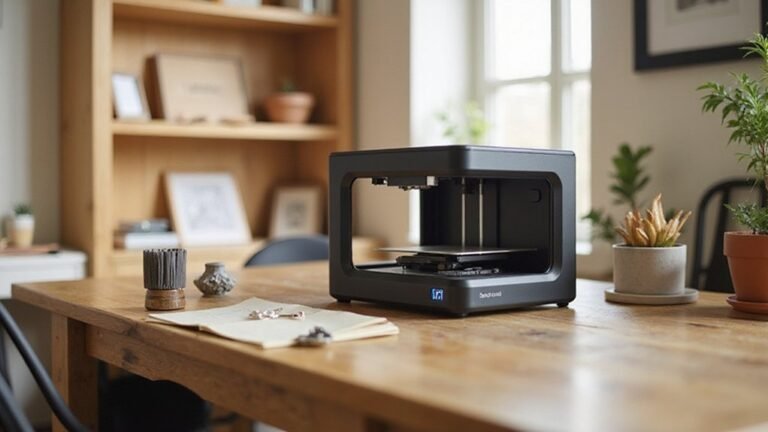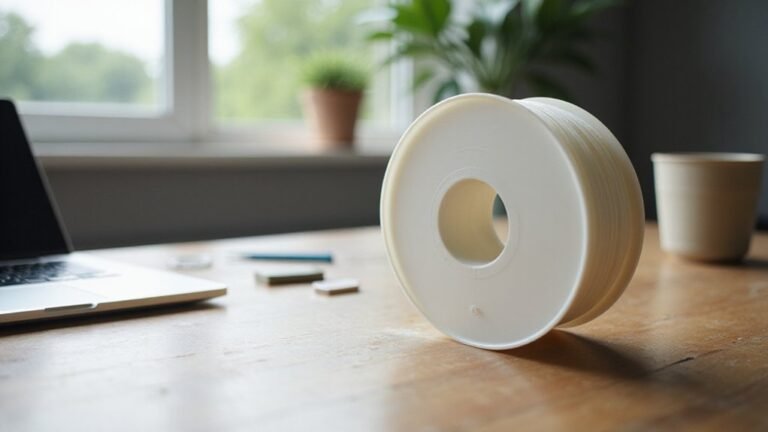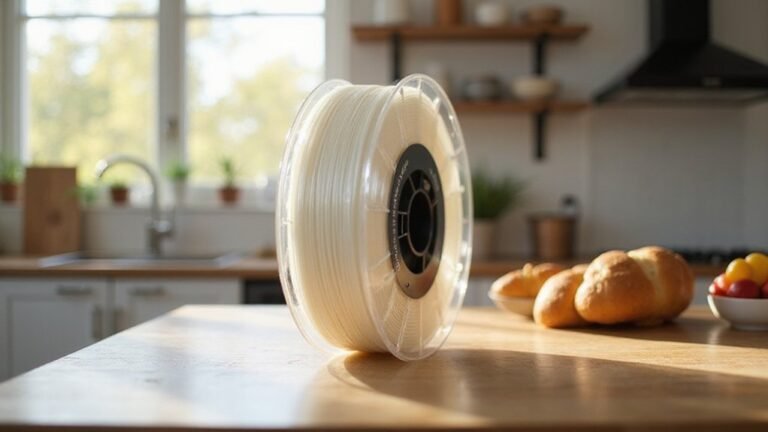
Choosing the right filament depends on your project’s needs.
If you want something easy to print and suited for indoor use, PLA is usually the way to go.
But for outdoor or long-term projects that need durability and weather resistance, ASA often outperforms.
Keep reading to explore the key differences so you can pick the best material for your next print.
Key Differences Between ASA and PLA
ASA generally outperforms PLA in outdoor durability because of its superior UV resistance. While both filaments are available in a variety of colors, ASA’s ability to resist UV rays helps maintain vibrant hues over time when exposed to sunlight. Submersion testing confirms that ASA can better withstand harsh environmental conditions, making it ideal for outdoor use. Additionally, material properties play a significant role in their performance differences. The weather resistance of ASA further contributes to its longevity in outdoor applications, helping it resist cracking and deterioration over time. PLA’s colors, on the other hand, tend to fade faster under prolonged sun exposure. Environmentally, PLA is more eco-friendly since it is biodegradable and made from renewable resources. ASA, however, has a higher environmental impact due to its chemical makeup and increased durability, which extends its lifespan outdoors but complicates recycling efforts. If reducing environmental impact is your priority, PLA is the better choice. Conversely, for projects requiring long-term outdoor performance with stable color and weather resistance, ASA provides significant advantages.
What Are the Main Uses of ASA and PLA?
ASA is mainly used for outdoor applications due to its strong weather resistance. It is popular for outdoor signage, automotive parts, marine equipment, and industrial covers because it can withstand UV exposure, sunlight, and harsh environmental conditions. ASA is also suitable for jigs, fixtures, and prototypes that need to maintain durability in demanding outdoor environments. Conversely, PLA is preferred for indoor projects and decorative items where environmental exposure is minimal. It is often chosen for high-precision mockups, art pieces, and prototypes where appearance and detail are more important than weather resistance. Both materials support sustainable practices through filament recycling and exploring alternative options, helping you reduce waste and improve environmental impact. Understanding their main uses ensures you select the right filament for your specific needs, balancing durability and appearance based on exposure to the elements. Additionally, material properties play a crucial role in determining the optimal choice for your project, especially considering the durability requirements in different environments. For example, knowing the weather resistance of ASA can help you decide if it suits outdoor applications over PLA.
How Do Mechanical Strength and Impact Resistance Compare?
Mechanical strength and impact resistance differ notably between ASA and PLA. PLA has a higher tensile strength, approximately 50 MPa, which makes it resistant to pulling forces but also more brittle, reducing its ability to absorb impacts. In contrast, ASA’s tensile strength is around 33 MPa, but it compensates with superior fracture toughness and impact resistance, absorbing nearly 30% of energy during shock tests. Additionally, ASA’s flexibility—about 2300 MPa in bending modulus—allows it to deform elastically, absorbing impacts more effectively before failure. This elastic deformation capacity contributes to its durability under repeated impacts. Moreover, ASA’s impact resistance can vary depending on print settings and layer adhesion, influencing its performance in practical applications. This variability highlights the importance of print parameters in optimizing impact resistance in 3D printing.
Is ASA Better for Outdoor Durability?
ASA is the better choice for outdoor durability due to its exceptional resistance to UV radiation, weathering, and prolonged sun exposure. Its high UV stability prevents photodegradation, allowing it to withstand years of outdoor conditions without significant surface chalking, embrittlement, or crumbling. In contrast, PLA degrades within weeks to months when exposed to the elements, making it unsuitable for long-term outdoor use. ASA’s weather-resistant properties help it maintain shape and structural integrity in sunlight and high temperatures. Its higher heat deflection temperature also prevents softening or warping under summer heat. The real-world outdoor service life of ASA can range from three to ten years, making it a reliable filament for exterior applications. Overall, ASA’s superior weather resistance and UV stability make it the preferred material for projects that need to endure outdoor environments over time. Understanding Teflon sheets can further explain how different protective materials contribute to durability in various outdoor conditions.
What Are the Printing Requirements for ASA vs. PLA?
The printing requirements for ASA and PLA differ significantly, affecting how you set up your 3D printer for each filament. PLA prints at a nozzle temperature of 180–220°C and a print bed temperature of 0–60°C. Typically, it doesn’t need a heated bed or enclosure, which makes it more accessible for beginners. ASA, on the other hand, requires a higher nozzle temperature of 230–260°C and a heated bed at 90–110°C. To prevent warping, it benefits from an enclosure that maintains a stable printing environment by reducing drafts and temperature fluctuations. Proper setup is essential for successful ASA printing, as it demands more temperature control and a controlled environment. PLA performs well on open-frame printers because it tolerates slight environmental changes, whereas ASA needs a controlled environment for the best results. ASA also demands more precise temperature management, including careful bed leveling and maintaining consistent temperatures throughout the print. Proper hardware setup, including a heated bed and enclosure, is crucial for successful ASA prints, unlike PLA, which can often print well without these features. Paying attention to filament storage is also important, as ASA is more sensitive to moisture that can affect print quality.
How Do Surface Finish and Appearance Differ?
The surface finish and appearance of ASA differ significantly from those of PLA. ASA generally has a matte, satin-like surface that effectively masks layer lines, resulting in a more uniform and subdued finish. This matte texture provides a professional look suitable for functional parts where visual imperfections should be minimized. In contrast, PLA typically produces a glossy, shiny surface that highlights surface details, making it ideal for decorative models. However, this glossy finish also makes layer lines and surface imperfections more visible. Understanding material properties can help inform your choice based on the desired aesthetic outcome. Post-processing techniques also differ: ASA’s matte surface often remains consistent after finishing, while PLA frequently requires additional work such as sanding or polishing to achieve a smooth, glossy look. Material characteristics influence not only the appearance but also the durability and suitability for different applications. Choosing the appropriate material can depend on your specific needs, whether for durability or visual appeal. The surface texture plays a crucial role in the overall appearance and perceived quality of the printed object.
How Much Do ASA and PLA Cost?
ASA generally costs between $17.99 and $39.99 per 1 kg spool, with recent listings averaging around $24.79. This places ASA in the medium-high price range compared to other filaments. Prices can drop significantly with larger orders, such as bundles or bulk deals, sometimes bringing the cost below $20 per kilogram. Regional differences and formulation variations also influence the price, with specialty blends demanding a premium. Overall, if budget considerations are key, PLA remains the more affordable choice, typically costing less than ASA. Additionally, the enclosure requirements to reduce warping and improve print quality can influence the choice of filament, as ASA often benefits from specific material properties for optimal results. Considering the overall cost-effectiveness of each filament type can help make the best decision for your project and budget.
Which Filament Is Best for Your 3D Printing Projects?
PLA is the best filament choice if you prioritize ease of printing, a wide range of colors, and environmental friendliness. It is compatible with most 3D printers and is considered beginner-friendly due to its low warping and smooth extrusion. PLA is made from renewable resources and is biodegradable, making it a good option if recycling and sustainability are important to you. It’s ideal for simple, aesthetic, indoor projects where high durability or weather resistance are not required. Additionally, PLA’s low warping makes it particularly suitable for beginners and detailed prints.
Choosing the Right Filament for Indoor or Outdoor Use
For indoor projects, PLA is the best filament choice. It offers a broad spectrum of vibrant colors, making it ideal for decorative displays and low-stress applications. Its user-friendly nature means you can print with minimal setup, which is perfect for beginners. Although recycling options are limited compared to other thermoplastics, PLA is biodegradable under industrial composting conditions, adding an environmental benefit. Its ease of use, affordability, and appearance make it a top pick for indoor use.