Wondering how to keep your 3D printing filaments in top shape? Moisture can cause print issues like warping or weak layers, especially with hygroscopic materials like Nylon and PETG.
Using a filament dryer helps remove that unwanted moisture, ensuring smoother, stronger prints.
Keep reading to learn how to choose the right dryer and make the most of your prints.
What Is a Filament Dryer and Why Do You Need One?
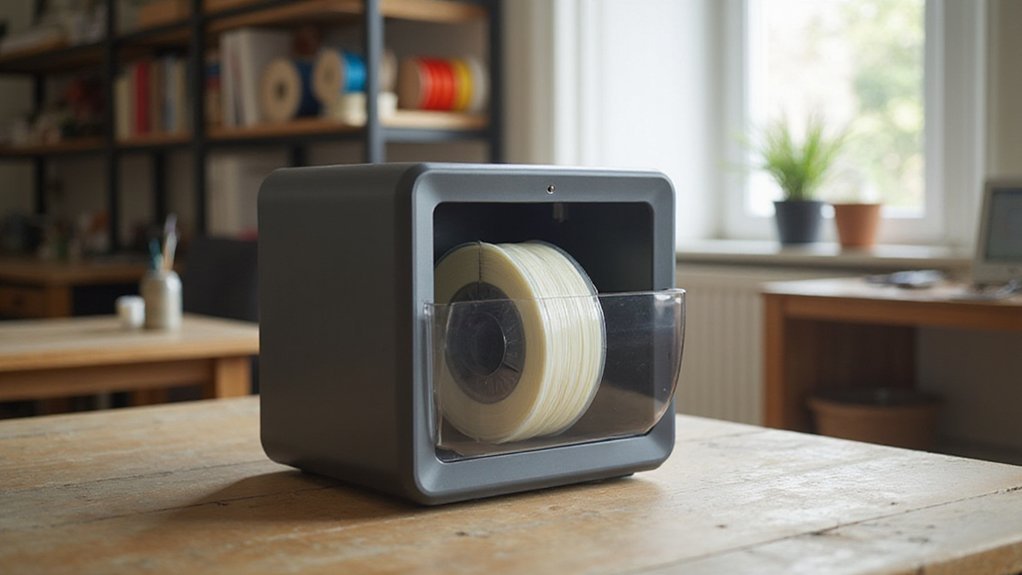
A filament dryer effectively removes moisture from 3D printing filaments, helping you maintain optimal filament quality. It works by heating the filament inside an enclosed chamber, often with humidity sensors to monitor moisture levels. This process prevents issues like stringing, bubbles, and weak layer adhesion during printing. Filament dryers can detect when moisture levels are too high and automatically adjust their operation accordingly. Investing in a filament dryer can improve your print results while saving money over time. Dry filament reduces failed prints and waste, which are common when using damp materials. Although it’s an upfront cost, a dryer can lower overall filament expenses and increase productivity. Environmentally, it lessens the need to discard moisture-absorbed filament and reduces resource consumption. Many models are designed to be energy-efficient, further minimizing environmental impact. Having a reliable moisture control system in your setup ensures consistent print quality and longevity of your filament stock.
How Does a Filament Dryer Remove Moisture From Filament?
Filament dryers remove moisture from filament primarily through controlled heating combined with active air circulation. The heating element raises the temperature to exactly where water molecules within the filament vaporize, without causing deformation or color shifts. This temperature is carefully calibrated based on the filament type to ensure effective drying while preserving material quality. Simultaneously, a fan circulates warm air evenly around the spool, carrying away the evaporated moisture as vapor. This consistent airflow helps achieve uniform drying across the entire spool, preventing areas that might still retain moisture. Precise temperature control is vital to prevent filament damage and ensure optimal drying conditions. Maintaining a low-humidity environment inside the drying chamber further reduces the risk of reabsorption. Timed drying cycles optimize the process, ensuring moisture is removed efficiently without overheating or damaging the filament. As the moisture escapes as vapor, the combination of heat and airflow guarantees the filament stays dry, resulting in reliable, high-quality prints. Additionally, understanding how different drying methods compare can help select the best drying approach for various filament materials.
Which Filaments Benefit Most From Drying?
Filaments that are highly hygroscopic, such as Nylon, Polyamide variants, and PETG, benefit most from proper drying. Moisture absorption can cause brittleness, bubbling, surface imperfections, and poor adhesion during printing. Dried Nylon, for example, responds best to heating at 95°C for approximately 7 hours, especially when stored in vacuum-sealed containers. Polyamide variants like Easy PA require drying at 75–90°C for 4–6 hours to maintain tensile strength and flowability. PETG benefits from drying at 65°C for around 7 hours, which significantly reduces stringing, cloudiness, and improves bed adhesion. Proper drying prevents nozzle clogs and surface defects, ensuring higher print quality and material performance with these sensitive filaments. Additionally, allowing filaments to reach the correct residual moisture level helps preserve their optimal mechanical properties, and understanding moisture levels is key to successful printing. Proper drying techniques are essential for maintaining filament quality and avoiding common printing issues.
Key Features to Look for in a Filament Dryer
Humidity control is crucial when selecting a filament dryer because moisture can cause print defects and weaken filament strength. Look for models equipped with stable humidity regulation systems and built-in sensors that continuously monitor drying conditions. Ideally, the internal humidity should stay below 10 percent to ensure optimal filament dryness. Proper humidity management prevents moisture absorption, which is especially important for hygroscopic materials like nylon and PVA. Automated systems that adjust drying parameters based on sensor feedback help maintain consistent results and prevent over-drying, which could damage the filament. Temperature control is equally important; an adjustable setting allows you to tailor the drying process to different filament materials without risking heat-related damage. Capacity should match your filament volume needs—whether you print infrequently or in large batches—so choose a dryer that accommodates your spool sizes comfortably. Good filament storage options and support for various materials extend the device’s usefulness and long-term reliability. Lastly, prioritize models with user-friendly controls, auto shut-off features, and built-in safety protections to make operation safer and more convenient, ultimately helping you achieve high-quality 3D prints consistently.
How to Use a Filament Dryer for Better 3D Printing Results
Before drying your filament, thoroughly inspect it for signs of moisture damage or physical issues. Look for brittleness, bubbles, or unusual discoloration, which can indicate it has absorbed moisture. Remove any dust or dirt from the spool or loose filament to prevent contamination during the drying process. If drying outside a spool, spread loose filament evenly on a tray and slightly loosen a spooled roll to improve airflow. Proper handling reduces moisture absorption and maintains filament quality. Ensuring correct drying techniques helps prolong the lifespan of your filament and ensures optimal print quality. It’s also helpful to note that moisture resistance plays a key role in maintaining filament integrity over time. Set your filament dryer to the appropriate temperature based on the filament type, typically around 40–80°C. Monitor the drying process closely to prevent overdrying, which can weaken the filament. Regularly clean and maintain your dryer to ensure good airflow and consistent results. Using a controlled environment for drying can further enhance the effectiveness and consistency of your results. Once dry, store the filament in airtight containers with desiccants to keep it moisture-free until use.
Troubleshooting Common Filament Dryer Issues
If your filament dryer isn’t working properly, start by checking its electrical and mechanical components. If the control panel doesn’t light up or the display is unresponsive, inspect the power cord, plug, and internal wiring for damage or loose connections. Avoid using the dryer if you notice burn marks, melted parts, or a burning smell, as these indicate electrical failure or overheating. For temperature issues, verify the set temperature using a separate thermometer to ensure accuracy, and confirm that your filament type is compatible—some filaments soften above 60°C and may not dry effectively if temperature settings are too low. If drying performance is poor, check that the timer matches your filament’s drying requirements, replace any desiccants regularly, and measure ambient humidity with a hygrometer to ensure proper conditions. Proper humidity control can significantly impact drying efficiency and filament quality. For airflow problems, confirm that the fan runs smoothly and that vents are clear of dust and obstructions. Lastly, inspect seals for leaks and clean the interior regularly to maintain consistent drying conditions, which helps improve filament quality and compatibility. Additionally, monitoring the humidity levels inside the dryer can help prevent moisture reabsorption and ensure optimal drying efficiency. Regularly verifying the integrity of seals and vents is also crucial to maintaining a controlled environment for effective filament drying.
Compare Top Filament Dryer Models and Prices
Choosing the right filament dryer depends on your budget, capacity needs, and specific features. Entry-level models like the Comgrow 3D Printer Filament Dryer Box cost around $50. This compact unit supports a single spool, offering adjustable temperatures and a digital timer, making it suitable for small-scale or occasional use. Proper drying helps prevent moisture-related print issues and extends filament lifespan, which is especially important for hobbyists or those printing infrequently.
For those with moderate drying needs, the Creality Space Pi Filament Dryer Plus costs about $90. It supports two spools simultaneously and can reach up to 65°C, with a straightforward display. This model is ideal if you process multiple filaments regularly but don’t require large-volume capacity. Additionally, considering the drying time and ease of maintenance can make a significant difference in workflow efficiency, especially when managing multiple filament types.
High-volume setups benefit from models like the SUNLU S4, priced around $150. It can handle four 1kg spools and features fast heating, humidity sensors, and desiccant pockets to efficiently manage moisture. When selecting a filament dryer, consider how each model handles filament storage, ease of maintenance, and temperature options to match your workflow and filament types.
Why Dry Filament Improves Print Quality and Reliability
Dry filament also enhances color vibrancy, producing more consistent and vivid hues in your prints. Materials like nylon, polycarbonate (PC), and thermoplastic polyurethane (TPU) are particularly prone to moisture uptake; drying them reduces warping, cracking, and delamination. In essence, using dried filament ensures your prints are more precise, durable, and visually appealing, making proper drying an essential step in achieving high-quality, reliable results. Proper filament storage plays a crucial role in preventing moisture absorption and maintaining filament quality over time. Moisture absorption can be influenced by material properties, which determine how readily different filaments absorb water from the environment.
Tips for Maintaining and Storing Your Filament Dryer
To ensure your filament dryer remains effective over time, regular maintenance and proper storage are crucial. Always keep the dryer sealed between uses by firmly closing the lid to prevent moisture from entering. Store dried filament immediately after printing in airtight containers, vacuum bags, or sealed boxes, preferably with desiccant packs to maintain a dry microclimate. Using a hygrometer to monitor humidity levels is highly recommended; aim for below 20% relative humidity for optimal protection. Regularly clean the interior of the dryer with a soft cloth and rubbing alcohol to remove dust and residue—avoid water to prevent trapped moisture inside. Check seals, power cords, and the temperature calibration monthly to ensure reliable operation. Properly stored filament and accessories, kept away from sunlight and warm, humid environments, help maintain consistent print quality. When selecting filament colors, consider matching hues with your print bed background to improve visual contrast and overall results. Filament storage practices play a vital role in preventing moisture absorption and ensuring your filament stays dry and ready for high-quality prints, especially since moisture damage can significantly affect print quality over time. Additionally, understanding how humidity levels impact filament storage can help you optimize your storage techniques for long-term filament stability. Regularly inspecting your drying equipment and temperature calibration helps prevent uneven drying and potential print failures.
Is Investing in a Filament Dryer Worth It for Your 3D Printing Setup?
Investing in a filament dryer is worthwhile if you frequently print with moisture-sensitive materials or notice print defects. Moisture in filament causes issues like stringing, bubbles, and layer separation, especially at higher extrusion temperatures. A dryer helps remove this moisture, leading to better flow and surface finish, and reducing failed prints. It’s particularly beneficial for materials like nylon, PETG, or carbon fiber blends, which absorb moisture quickly and require higher temperatures to print properly. For flexible filaments such as TPU, drying minimizes stringing and surface imperfections. Protecting your filament from humidity with proper storage can also extend its lifespan and maintain quality shiny side positioning. If you store filament long-term or in humid environments, a dryer can salvage partially degraded spools, reducing waste and cost. Overall, a filament dryer enhances print quality, consistency, and success rates, making it a valuable addition to your 3D printing setup.