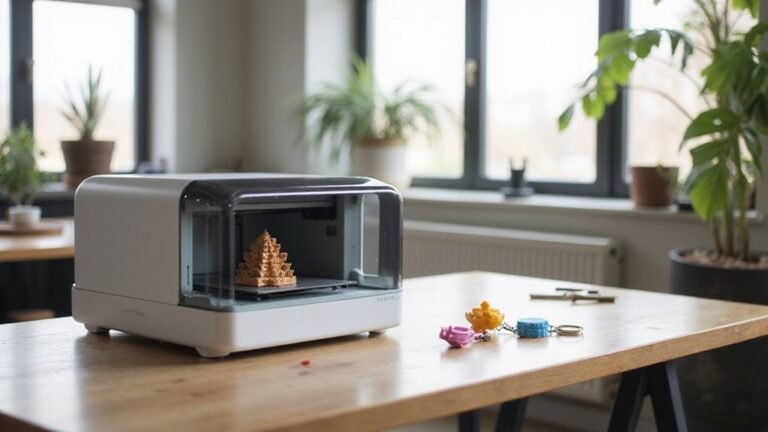
Figuring out which 3D printing filament is right for you can be tricky. Whether you need a sturdy, vibrant material or something more flexible and impact-resistant, your choice depends on your project’s goals.
By understanding the key differences between PLA and TPU, you’ll be better equipped to pick the one that matches your needs and skill level.
The full comparison is right below.
What Are the Main Differences Between PLA and TPU Filaments?
The main differences between PLA and TPU filaments lie in their material properties and intended uses. PLA is derived from renewable resources like cornstarch or sugarcane and is biodegradable, making it an environmentally friendly option. It is available in a wide range of vibrant colors and is excellent for producing detailed models with smooth finishes. However, its rigidity limits flexibility, so it isn’t suitable for applications requiring bending or stretching. In contrast, TPU’s flexibility allows for complex, resilient designs that can withstand frequent movements without cracking or breaking. A flexible filament like TPU enables the creation of parts that need to bend or absorb shocks, expanding the possibilities for your 3D printing projects. While TPU is less environmentally friendly due to its chemical composition, its durability and flexibility far surpass those of PLA in applications like flexible wearables, phone cases, or impact-resistant components. Additionally, TPU’s elastic properties make it ideal for custom flexible gears and seals where elasticity is crucial. Moreover, advancements in material development continue to improve TPU’s performance and range of applications. Essentially, choose PLA when you prioritize ease of printing, aesthetic detail, and biodegradability. Opt for TPU when you need flexibility, resilience, and elastic properties in your prints.
How Do PLA and TPU Perform in Strength, Flexibility, and Impact Resistance?
TPU generally outperforms PLA in strength, flexibility, and impact resistance because of its elastomeric properties. TPU’s tensile strength ranges from 47 to 82 MPa, allowing it to withstand repeated stress without permanent deformation. In contrast, PLA has a tensile strength of about 30 to 54 MPa, making it more rigid and suitable for static or decorative parts. When it comes to flexibility, TPU exhibits an elongation at break of 200 to 600%, enabling it to bend and stretch significantly before snapping. PLA, however, has limited flexibility with only about 5 to 7% elongation, meaning it barely stretches before breaking. For impact resistance, TPU absorbs impacts up to 10 to 40 times better than PLA and resists abrasion and shock more effectively. Additionally, material elasticity plays a crucial role in determining a filament’s performance under stress and deformation. A flexible material like TPU can also better withstand environmental factors such as temperature changes, which contributes to its durability in various applications. Overall, TPU’s superior mechanical properties make it ideal for functional applications where durability and resilience are important, whereas PLA works better for static, aesthetic creations.
What Are the Best 3D Printing Settings for PLA and TPU?
For PLA, set the print speed between 40 and 60 mm/s, with a slower first layer at 20 to 30 mm/s to improve bed adhesion. Using a layer height of around 0.2 mm offers a good balance between detail and speed. Keep the nozzle temperature steady at about 200°C and set the bed temperature between 45 and 60°C. Adjust cooling according to your needs—more cooling helps with surface quality, but too much can weaken layer bonding. To prevent moisture absorption that can affect print quality, drying filament properly is essential, especially if stored in humid environments. Ensuring proper storage prevents moisture absorption, which is critical for achieving high-quality prints. Additionally, maintaining the correct print environment can further improve filament performance and print quality.
When Should You Use PLA Instead of TPU?
You should choose PLA over TPU when your project requires rigid, non-flexing parts that need to stay solid. PLA is ideal for structural components, prototypes, figurines, and decorative or display models where the retention of shape and surface detail is crucial. It offers easier printing, faster build times, and requires less tuning, making it a favorite for beginners or quick iterations. PLA performs well for indoor, low-stress applications such as prototypes or artwork because it is less resistant to heat and weather, reducing the risk of deformation over time. When you aim for bright colors, a smooth, high-quality surface finish, or static, solid objects where flexibility and impact absorption are unnecessary, PLA is the better choice. Its straightforward nature and reliable performance make it suitable for projects where a durable, visually appealing, and easy-to-print filament is a priority. Additionally, PLA’s biodegradability makes it an environmentally friendly option for many users who prioritize sustainability in their projects.
In Which Applications Is TPU the Better Choice Than PLA?
TPU is the better choice over PLA in applications that require high impact resistance and flexibility. If you need parts that can absorb shocks without cracking, TPU is ideal—such as phone cases, bumpers, or protective gear. Its rubber-like elasticity allows it to return to shape after deformation, which enhances durability under repeated stress. Additionally, TPU’s elasticity and shock absorption make it particularly suited for dynamic applications where flexibility and resilience are critical. TPU excels in creating flexible or bending components, making it suitable for wearable items and parts that need to stretch and recover continually. It also provides superior grip and softer contact surfaces, making it popular for cushioning, protective caps, and anti-slip handles. Due to its elasticity, TPU is also well-suited for sealing applications, watertight gaskets, and compression-fit parts where flexibility and durability are key. Furthermore, TPU’s versatile properties enable it to be used in a wider range of industrial and consumer products. Its high elongation and ability to withstand repeated deformation further contribute to its durability, making it a reliable choice for long-term use. Additionally, TPU offers a broader range of colors and customization options, enabling more vibrant and varied designs. From an environmental perspective, TPU’s durability means fewer replacements are needed, reducing waste over time. If your application demands resilience, flexibility, and a durable surface, TPU surpasses PLA as the preferred material.
How Do Cost, Availability, and Handling Compare for PLA and TPU?
PLA is generally more affordable and easier to find than TPU, making it the preferred choice for those on a budget or new to 3D printing. The typical cost per kilogram for PLA ranges from $15 to $40, often around $15 to $20, while TPU tends to be more expensive, usually between $30 and $100 per kilogram. Supply chain data shows that PLA’s large manufacturing volume and status as a commodity mean it has a more consistent price spread and is more readily available globally. TPU’s broader price range results from different formulations and specialty grades, which can limit availability and drive up costs at times. Both materials are commonly stocked by major suppliers, but PLA’s dominant market presence offers a wider array of colors, finishes, and options, whereas TPU’s specialty grades are less common and can be pricier. Additionally, material availability and the variation in formulations can influence the choice depending on your specific project needs. The development of sublimation blanks has also expanded options for customizing printed items, adding more versatility to both materials, especially as market options continue to grow.
What Common Troubleshooting Tips Help When Printing With PLA or TPU?
Ensuring proper bed adhesion and a well-calibrated first layer are critical steps for trouble-free printing with PLA or TPU. Start by cleaning the print bed surface with isopropyl alcohol to remove dust and oils that hinder adhesion. Level the bed accurately and verify the Z-height to ensure the nozzle is at the optimal distance from the bed. A consistent and well-adhered first layer minimizes issues like warping or lifting. Printing the first layer slowly, around 20–30 mm/s, helps improve adhesion and ensures the filament sticks properly. For added security, set the heated bed to approximately 60–65°C for PLA and TPU. Additionally, adding a brim or raft creates extra contact area, especially for small or intricate prints, further enhancing bed adhesion. If you notice muted color contrast or prints lifting at the edges, revisit the bed prep steps to improve contact. Proper bed preparation and first-layer setup are essential for successful prints with both PLA and TPU, helping prevent common issues like warping, lifting, or poor surface quality. Ensuring bed adhesion strategies can significantly reduce print failures and improve surface quality. Regularly inspecting your print surface and applying appropriate adhesion aids can enhance long-term printing success.
How Do PLA and TPU Hold Up to Heat and Long-Term Use?
TPU outperforms PLA in heat and long-term durability due to its higher thermal stability and flexibility. While PLA’s glass transition temperature is around 60°C, causing it to soften and become brittle under sustained heat, TPU can withstand temperatures up to 80°C with minimal deformation. This means TPU maintains its mechanical properties longer in environments with temperature fluctuations. Additionally, TPU’s thermal stability makes it more resistant to the effects of prolonged heat exposure. In addition, TPU demonstrates superior resistance to UV exposure, impact, and repeated bending, making it suitable for applications exposed to harsh outdoor conditions. PLA, on the other hand, succumbs more quickly to cracking, brittleness, and degradation when subjected to sunlight and environmental stress over time. Therefore, for prolonged use in environments with varying heat and exposure, TPU offers a far more durable and reliable choice.
Can You Use Both Materials in Multi-Material or Multi-Color Projects?
Using both TPU and PLA in the same project is feasible, but their compatibility depends on proper bonding and process adjustments. Achieving a strong bond between TPU and PLA is often a challenge; TPU-to-PLA bonds tend to be weak, especially without design features like interlocks or segmented assembly. However, printing TPU onto PLA can yield better fusion because PLA’s higher temperature during printing helps it bond more effectively to TPU. Additionally, understanding die cutting machines and how they work can help you create prototypes or components that facilitate multi-material assembly more efficiently. For multi-color projects, managing filament storage and purge volume is essential to maintain clear color separation and prevent residual contamination that can compromise layer quality. When switching between these materials, you should carefully adjust printer settings such as temperature, flow rate, and print speed to ensure clean transitions and prevent issues like stringing or layer defects. Support strategies also play an important role. Using PLA as a support material or interface often provides more reliable results compared to bonding parts directly. Additionally, controlling filament storage to minimize moisture absorption helps preserve print quality across different materials, ensuring consistent results throughout your multi-material or multi-color print. Proper filament drying is also key, as both TPU and PLA can absorb moisture from the air, leading to filament degradation and print defects if not stored properly.
Which Material Is Better for Your Skill Level and Project Goals?
PLA is better for your skill level and project goals if you are a beginner or aiming for quick, reliable results. Its forgiving nature, easy calibration, and compatibility with most printers make it ideal for those new to 3D printing. PLA works well for projects that require sharp detail, vibrant color blending, or clean finishes, such as figurines, prototypes, or decorative items. Its straightforward setup process helps minimize frustration during calibration and troubleshooting.
Conversely, if your goal involves creating flexible, impact-resistant parts that endure stress and repeated bending, TPU is the preferable choice. It is suited for experienced users who can manage its slower printing speeds and require more tuning. TPU excels in applications like phone cases, wearables, or flexible joints, where durability and flexibility are key. While it demands more patience to print correctly, the result is a resilient, elastic component that can withstand substantial wear and tear.