Are you trying to find the right heat-resistant tape for your craft or project? Choosing the correct type depends on the temperatures you’ll be working with, from lower heat applications to those reaching up to 600°F.
Knowing which tape suits your needs ensures your project stays secure and effective.
Keep reading for all the details to help you make the best choice.
What Is Heat-Resistant Tape and Why Do You Need It?
Heat-resistant tape is essential because it can withstand high temperatures without losing its adhesive strength or melting. Unlike standard adhesive tapes, which soften or lift when exposed to heat, heat-resistant tape is made with a heat-stable backing and specialized adhesive that maintain their integrity under extreme conditions. This makes it indispensable in environments where temperatures can reach hundreds of degrees, such as during heat pressing, sublimation, or industrial repairs. Its ability to preserve structural integrity, prevent heat transfer, and stay securely in place ensures your projects remain intact and perform reliably. Whether you’re working with delicate electronics, automotive parts, or crafts that involve high heat, this tape keeps components protected and held firmly without degradation. The performance of heat-resistant tape depends on both the adhesive and carrier being rated for high temperatures, ensuring it functions effectively under the specified heat conditions. Understanding temperature ratings and proper application techniques can extend the life of your heat-resistant tape and improve project safety, especially when paired with knowledge of heat transfer. Additionally, knowing environmental factors that impact tape performance can help in selecting the most suitable type for your specific needs.
Different Types of Heat-Resistant Tape and Their Temperature Limits
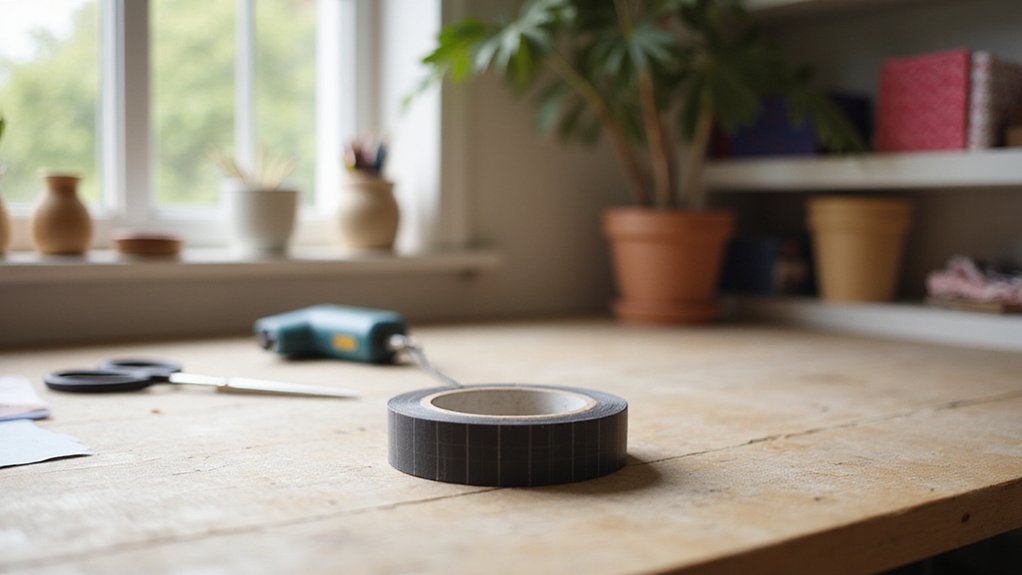
Different types of heat-resistant tape are designed to withstand specific temperature ranges, so selecting the right tape depends on your project’s heat conditions. Polyimide tape, also known as Kapton, can handle temperatures up to 260°C, with some high-performance variants tolerating as much as 400°C. This makes it ideal for electronics and high-heat insulation applications. Silicone adhesive tape typically endures temperatures from -60°C to 260°C, offering flexible and stable adhesion in demanding environments. Foil tape can resist heat up to 600°F (316°C), making it suitable for thermal shielding and sealing tasks. Glass cloth tape withstands approximately 260°C and is used where tear resistance and durability are required; some specialized variants can endure even higher temperatures. Eco-friendly options, such as certain polyester or acrylic tapes, provide moderate heat resistance and often incorporate sustainable adhesives, aligning with environmentally conscious project goals. Temperature resistance is a crucial factor when choosing heat-resistant tape to ensure it performs reliably under your specific heat conditions.
How to Choose the Best Heat-Resistant Tape for Your Project
The key to choosing the best heat-resistant tape is matching its maximum temperature rating to your project’s highest heat exposure. Aim for a tape rated at least 10–20% higher than your peak temperature to ensure safety and performance. For instance, polyimide tapes handle extreme temperatures from -269°C to 400°C, making them suitable for high-heat applications. It is also important to consider the tape’s ability to withstand prolonged heat exposure to prevent degradation or failure during extended heat press processes. Additionally, understanding the 3D printing process can help determine the appropriate tape type, especially when working with high-temperature filaments or dedicated build surfaces. Considering temperature stability over time can also impact your choice, as some tapes may perform well initially but degrade with prolonged heat cycles. Moreover, better understanding the properties of heat-resistant tapes can help in selecting a product with consistent performance for specific tasks.
Consider surface compatibility as well. Silicone adhesives work effectively on non-porous surfaces like metal and glass, providing stable adhesion under heat. Acrylic adhesives, on the other hand, are better suited for painted wood and plastics, as they tend to adhere well without damaging finishes. When working outdoors or in humid conditions, choose environment-friendly adhesives that resist moisture, oils, and chemicals.
Finally, think about the specific demands of your project. Factors such as durability, exposure to UV rays or vibration, and ease of removal will influence your choice. Selecting a tape that combines appropriate temperature resistance with the right adhesive features ensures reliable performance and simplifies your work process.
Applying and Removing Heat-Resistant Tape Safely
Applying and removing heat-resistant tape carefully is crucial for its effectiveness and safety. Always clean the surface thoroughly with isopropyl alcohol before application to ensure maximum adhesion, which reduces the need for reapplication and minimizes waste—beneficial for both your project and the environment. Apply the tape within the recommended temperature range, often between 40°C and 70°C, and press firmly using a roller or squeegee to promote a strong bond. This reduces the risk of failures or rework that can be costly. Understanding 3D printer costs can help you allocate resources more effectively and avoid unnecessary expenses on materials like heat-resistant tape. Additionally, knowing how 3D printers work can give you insight into proper application techniques that enhance overall project quality. Being aware of the resin curing process can also inform better handling of adhesives and tapes used in post-processing stages.
When removing heat-resistant tape, use gentle methods such as applying heat with a heat gun or hairdryer to soften the adhesive. Carefully peel back a corner and slowly peel the tape away, avoiding aggressive pulling that might damage the surface. If residue remains, use appropriate cleaners like isopropyl alcohol or specialized adhesive removers, and gently scrape with a plastic tool instead of metal blades. Proper handling during both application and removal extends the tape’s lifespan and reduces replacement expenses. Working efficiently and carefully not only achieves optimal results but also minimizes waste and cost, supporting both safety and environmental responsibility.
Troubleshooting Common Heat-Resistant Tape Problems
Surface contamination is a common cause of heat-resistant tape failure. Oil, dust, or moisture on the substrate surface prevents proper adhesion, leading to early lift or peeling. Always ensure the surface is thoroughly cleaned and dried before applying the tape. Use appropriate cleaning agents that do not leave residues or introduce contaminants. Additionally, verify that the substrate material is compatible with the tape’s chemistry, as mismatched materials can compromise adhesion and performance. Proper surface preparation and material compatibility are key to maximizing the tape’s effectiveness and longevity.
Tips to Make Your Heat-Resistant Tape Last Longer
Proper storage is key to making your heat-resistant tape last longer. Keep unused tape in a temperature-controlled environment between 15°C and 26°C to preserve the adhesive‘s effectiveness. Store the tape in its original, sealed packaging to protect it from air, dust, and moisture. Avoid exposure to direct sunlight and UV rays, which can break down the adhesive and liner material over time. Maintain relative humidity between 40% and 60% to prevent the adhesive from softening, absorbing moisture, or becoming brittle. Ensure the tape is stored flat or wound properly to prevent deformation or damage to the edges during long-term storage. When applying, make sure surfaces are clean, dry, and free of grease for optimal adhesion. Consider the chemical compatibility of the tape with your materials and select tapes rated for your specific temperature conditions to maintain both heat resistance and adhesive performance over time. According to the top laser engravers for leather, choosing a tape rated for high temperatures can help ensure consistent performance. Transfer tape plays a crucial role when working with heat-resistant tapes, as it helps facilitate precise application and transfer of designs or adhesives without damaging the original material. Additionally, understanding the adhesive properties is essential to ensure the tape maintains its integrity over extended periods and in various environmental conditions.
Final Tips for Choosing and Using Heat-Resistant Tape
Choosing the right heat-resistant tape requires matching its material and adhesive properties to your specific application, especially considering the highest temperature your project will reach. Select a tape rated for your project’s peak heat, adding a 20% margin for reliability. This ensures the tape can handle brief spikes and sustained exposure without failing. Materials like polyimide, silicone, foil, or glass cloth vary in surface flexibility, so choose one that suits your material—whether paper, fabric, or metal.
Understanding adhesive properties can help you select the most suitable tape, as different adhesives perform better on certain surfaces and conditions. Silicone adhesives offer excellent heat resistance and clean removal, while acrylic adhesives provide strong adhesion on a wide range of surfaces. Proper surface preparation is essential; thoroughly clean, dry, and possibly prime surfaces to enhance adhesive longevity. During application, apply even pressure to maximize contact and adhesion. Additionally, selecting a tape with appropriate surface flexibility helps ensure a good seal and prevents damage during removal. Choosing a tape with adequate thermal endurance can make a significant difference in long-term performance, especially in high-temperature environments. Before committing to a full project, test the tape on a small area to verify performance and avoid peeling or residue issues down the line.