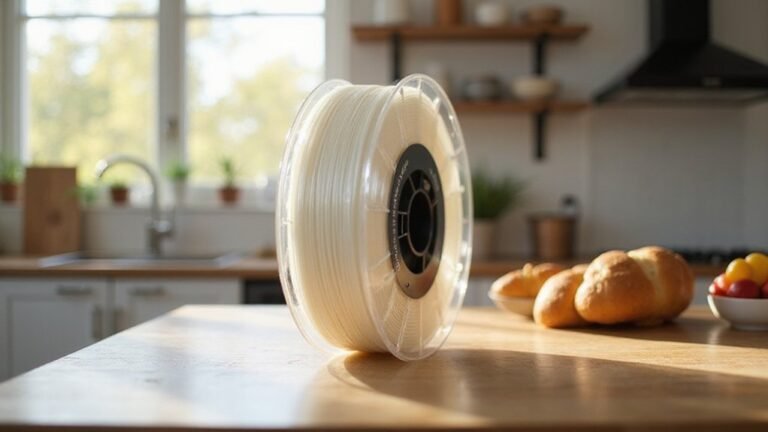
If your ABS filament isn’t printing as smoothly as you’d like, moisture might be the sneaky culprit. When ABS absorbs water, it can cause bubbling, surface flaws, and weak spots in your prints.
Knowing how to dry and store it properly can keep your projects looking professional. Keep reading to learn the best techniques for keeping your filament dry and your prints perfect.
Why Dry ABS Filament? How Moisture Affects Your Prints
Moisture in ABS filament can significantly compromise print quality. When ABS absorbs water, it leads to inconsistent extrusion, resulting in rough, fuzzy, or swollen layer lines. This can also cause print defects that are difficult to correct later. Excess moisture also causes popping or hissing sounds during printing, as trapped water vaporizes in the hotend, which can cause filament compatibility issues. If your filament isn’t dry, you may notice warping or surface defects that weaken the final part and diminish its appearance. Drying your ABS filament enhances its compatibility with the printer, ensuring a stable and smooth filament flow. Moisture absorption can also cause increased filament brittleness, making it more prone to breakage during handling. Maintaining proper filament storage reduces moisture uptake and helps achieve more consistent results. This helps reduce print defects and achieves more precise, high-quality results each time you print.
Recognizing When ABS Filament Needs Drying
Detecting whether your ABS filament needs drying involves observing specific signs during extrusion and physical inspection. Popping, sizzling sounds, or steam near the nozzle indicate trapped moisture, suggesting drying may help. If the filament crackles or produces irregular extrusion, moisture is likely present. Physically, brittle filament tends to snap easily when bent, especially near the spool’s ends, which absorb moisture faster. Conversely, if the filament bends with some flexibility without breaking, it is less likely wet. Additionally, moisture absorption can lead to poor print quality, making it essential to identify these signs early. Indicators include persistent stringing despite tuning, bubbles or inconsistent surface quality during printing. A spool left open or stored without proper sealing is a common cause of moisture absorption. Monitoring filament condition regularly and proper storage can help prevent moisture-related printing issues in the future. Understanding filament storage methods is crucial because it can significantly influence the filament’s dryness over time.
How Moisture Impacts ABS 3D Printing Quality and Strength
Moisture absorption into ABS filament significantly compromises both print quality and part strength. When filament contains moisture, surface defects such as roughness, bubbles, gas voids, and cracks appear during extrusion. This happens because water in the filament turns into steam inside the hot end, disrupting the melt flow and damaging the surface finish. As the moisture content increases, these surface imperfections become more pronounced, resulting in pitted or foamy prints. Furthermore, moisture can cause print warping and reduce overall dimensional stability. Moisture also reduces the tensile strength of printed parts; even a slight increase of about 0.1% in moisture can lower strength by more than 1 MPa. Additionally, moisture causes dimensional inaccuracies, with parts expanding by up to 10%, leading to poor fit and precision. To maintain optimal print quality, it’s essential to control filament moisture and keep the filament dry during storage and printing. Proper drying techniques can help prevent moisture-related defects from compromising your print results. Overall, degraded filament from moisture hampers both the mechanical integrity and geometric accuracy of your prints, underscoring the importance of keeping ABS dry for optimal results.
What Are the Best Temperatures and Times to Dry ABS?
The optimal drying temperature for ABS filament is typically between 65°C and 80°C, with 80°C being the most common target. Staying below ABS’s glass transition temperature of around 105°C helps prevent deformation or damage to the filament. Drying at this temperature range effectively removes moisture without compromising filament integrity. Common drying durations are between 4 and 6 hours at 70–80°C, though some sources suggest extending the process to 8–12 hours for more thorough moisture removal. For best results, drying should be done at 80°C for 4–5 hours or at 70–80°C for 4–6 hours. Keep in mind that factors such as spool size, humidity level, and equipment accuracy can influence the exact times and temperatures needed. Properly drying ABS filament preserves color, improves print quality, and reduces issues like bubbling or poor layer adhesion. Additionally, consistent drying practices help maintain filament properties over time and prevent sudden print failures. Conducting a pre-drying inspection to check for moisture or surface imperfections can further optimize drying efficiency. Maintaining a controlled environment after drying is also important to prevent moisture from reabsorbing into the filament. Ensuring a proper storage environment after drying also plays a crucial role in maintaining filament quality.
How to Properly Dry ABS Filament at Home or in Workshops
To properly dry ABS filament at home or in a workshop, you should set the drying environment to 80°C–85°C. Use a dedicated filament dryer, an oven, or a food dehydrator to maintain consistent temperature control. Place the filament spool on a tray inside the container, ideally on a rack that allows for good airflow around the filament. Darker colored filaments tend to absorb more heat, so be mindful of the filament’s color when setting the temperature. Use an independent thermometer to monitor the internal temperature, ensuring it stays steady throughout the drying process. Additionally, understanding how laser engravers work can help you appreciate the importance of proper temperature control and environment for various materials. Maintain relative humidity levels below 10% in the drying environment to prevent moisture absorption. If using a DIY dry box, incorporate small holes to facilitate air circulation, and set the heat source to around 60°C. Properly managing moisture content in the filament helps achieve consistent print quality and reduces the risk of print failures. Always allow the filament to cool completely before handling or removing it from the drying environment to avoid deformation and to achieve optimal dryness. Proper drying preserves filament quality and helps prevent print issues caused by moisture.
Storing ABS After Drying: Tips to Prevent Moisture Reabsorption
To prevent moisture reabsorption after drying ABS filament, storing it in airtight containers is crucial. Use vacuum bags or sealed bins with a tight gasket to maintain a strong seal and limit exposure to humidity. Adding fresh silica gel packs will help absorb residual moisture, while color-changing desiccants can alert you when saturation occurs. Keep your filament in a cool, dry environment—ideally around 60 to 75 degrees Fahrenheit—and avoid areas like garages or spaces near heat sources, which increase humidity levels. Regularly check the humidity inside storage with a hygrometer, aiming for below 40 percent. Label each spool with the drying date and rotate your stock to prevent unnecessary exposure to moisture. Additionally, proper storage management can significantly extend the shelf life of your filament by preventing deterioration caused by humidity. Incorporating humidity control methods can further enhance your storage practices and ensure consistent print quality. Maintaining appropriate storage conditions is essential because it prevents filament deterioration caused by humidity and preserves print quality over time.
Can You Over-Dry ABS? Risks and Precautions
Over-drying ABS filament can cause significant damage and should be avoided. Temperatures above 70 °C for extended periods increase the risk of making the filament brittle or deformed. Excessive heat exposure can lead to warping, softening, or even snapping during handling. Precise temperature control is crucial; using an oven or filament dryer without proper calibration can quickly result in thermal damage. A thermometer helps ensure you stay within safe drying temperatures, typically 60–65 °C. Drying cycles longer than 6 hours at these temperatures can compromise filament strength and print quality. The goal is to remove moisture effectively without damaging the filament’s structure, so sticking to recommended times and temperatures is essential to prevent over-drying. Additionally, understanding the moisture sensitivity of ABS filament can help you determine when and how to dry it properly.
Tips for Maintaining Dry ABS Filament Long-Term
To maintain dry ABS filament over the long term, consistent storage practices and monitoring are essential. Store filament in airtight containers or vacuum-sealed bags to reduce moisture absorption. Adding silica gel desiccant packs—around 20 to 30 grams per spool—helps absorb residual humidity. Remember to recharge or replace the desiccants regularly, especially after seasonal changes or frequent container openings. Keep the filament in a cool, dark place with temperatures between 20°C and 25°C and away from sunlight or heat sources to prevent degradation and color fading. Weigh your spools periodically to detect any moisture uptake, and organize your usage so that older spools are used first, avoiding long-term reabsorption. Proper storage and handling are crucial to prevent filament deterioration. Additionally, understanding the moisture absorption properties of ABS filament can help you better anticipate and mitigate issues caused by humidity. Being aware of how humidity affects printing quality can help you adjust your storage practices accordingly. For an eco-friendly approach, consider biodegradable storage options that support sustainability while keeping your filament dry and functional over time.
Moisture-Resistant Storage Solutions for ABS Filament
Airtight containers, dry boxes, and vacuum bags are effective moisture-resistant storage solutions for ABS filament. Using desiccants like silica gel inside these containers helps absorb residual moisture that may be present. Incorporating a hygrometer allows you to monitor humidity levels, keeping them below 30% to prevent issues like color fading and filament brittleness. For open spools, it’s important to reseal immediately after use to prevent moisture from entering. In humid environments, vacuum-sealing with desiccants offers reliable long-term protection, reducing the risk of moisture absorption over time. Maintaining storage at a stable, cool temperature around 15°C to 25°C, away from sunlight and heat sources, minimizes environmental fluctuations that can lead to moisture buildup. Moisture-barrier systems such as vacuum bags or airtight bins provide a cost-effective, passive way to defend against moisture ingress, ensuring your ABS filament remains dry and ready for consistent printing performance. Proper storage helps you avoid moisture-related issues and maintains filament flexibility and color integrity during printing projects.
FAQs: Common Questions About Drying and Storing ABS Filament
To effectively dry ABS filament, use a dedicated filament dryer set between 75 and 80°C for a duration of 4 to 12 hours. This temperature range is high enough to remove absorbed moisture without warping the filament or damaging its structure. If you don’t have a filament dryer, a regular oven can work as an alternative, but you must carefully monitor the temperature with an accurate thermometer to avoid overheating. Additionally, using a thorough drying process helps maintain filament quality and prolongs its lifespan.
After drying, allow the filament to cool to room temperature before handling. Store it in airtight containers with desiccants, or vacuum-seal it to prevent re-absorption of moisture. Proper storage is crucial because moisture can cause issues like popping, bubbling, and stringing during printing. Checking humidity levels regularly with a hygrometer helps ensure your filament stays dry and ready for high-quality prints.