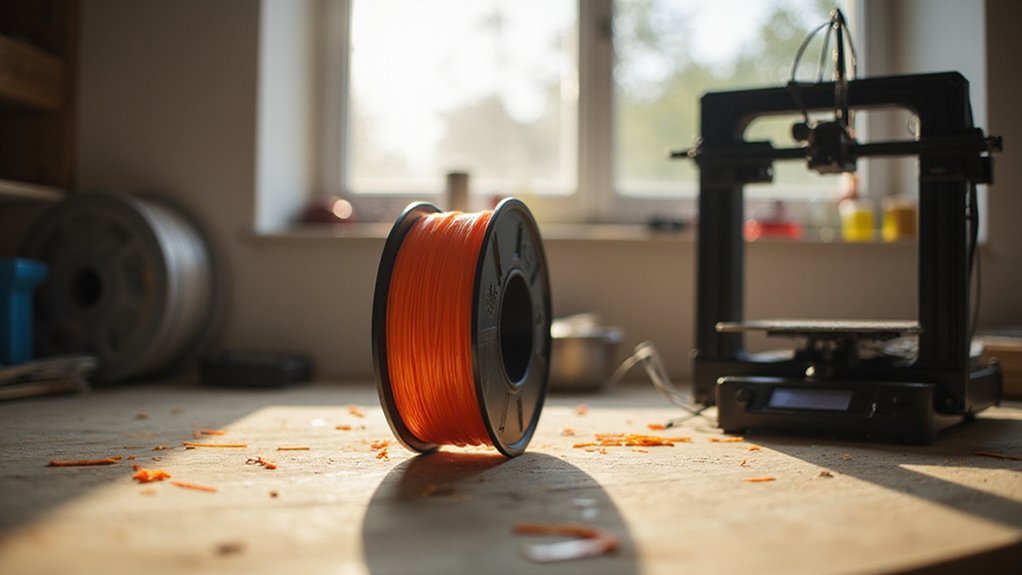
Finding the right filament for flexible prints can be tricky. TPU filament is a popular choice because it’s soft, stretchable, and tough enough to handle impacts. It resists oils, chemicals, and weathering, making it suitable for projects like phone cases, shoe soles, or custom hobby items.
Keep reading to learn the essentials about printing and working with TPU.
What Is TPU Filament and Why Use It?
TPU filament is a flexible, rubber-like filament that is ideal for printing parts that require elasticity. It’s a type of thermoplastic elastomer that becomes soft and pliable when heated and hardens back to its shape when cooled. This reversible behavior allows for re-processing and recycling. Compared to rigid filaments, TPU offers a unique blend of flexibility and strength, providing excellent impact resistance and durability. Additionally, TPU’s reversible behavior makes it suitable for projects that may need reshaping or repair over time. Its flexibility also enables it to be used in applications that demand stretchability and resilience. The property of elasticity is what makes TPU particularly versatile for functional items. Cost-wise, TPU is generally more affordable than other flexible filaments such as nylon or TPE, making it accessible for a wide range of projects. Its flexibility makes it suitable for items that need to stretch, bend, or absorb shocks. Common applications include phone cases, shoe soles, and wearable accessories. Its resistance to oils, chemicals, and abrasions further enhances its utility, especially for functional and protective parts. Overall, TPU combines cost efficiency, flexibility, and toughness, making it a popular choice for versatile, durable prints.
How Is TPU Different From Other Flexible Filaments?
TPU is a standout among flexible filaments because of its distinctive chemical structure and performance traits. Its cross-linked composition results in a material that is tougher and more resistant to wear compared to standard thermoplastic elastomers (TPE) and other flexible options. When assessing flexibility, TPU offers a wide Shore hardness range, allowing you to choose the most suitable level of softness and stiffness for your project. Unlike TPE, which tends to be softer and more easily bent but can be tricky to print because of warping issues, TPU strikes a good balance between flexibility and ease of printing. It extrudes smoothly and maintains its shape better during printing. Furthermore, TPU exhibits excellent durability outdoors, resisting weathering and UV damage, making it ideal for parts exposed to the elements. Its chemical properties also contribute to its outstanding resistance to environmental factors, ensuring longevity in various conditions. The wear resistance of TPU enhances its reputation for creating long-lasting, flexible parts that withstand rough handling. Most FDM 3D printers can handle TPU well, and it is perfect for creating resilient, elastic components that require both flexibility and strength. Overall, its combination of toughness, adaptability, and ease of use makes TPU a superior flexible filament choice. Its high impact resistance and elasticity also contribute to its widespread use in demanding applications.
What Are the Main Properties and Benefits of TPU?
Thermoplastic polyurethane (TPU) is characterized by its high elasticity and flexibility, with an elongation at break ranging from 200% to 1000%. This means you can stretch TPU parts over five times their original size without them tearing, making it ideal for applications requiring significant deformation. Its ability to recover after stretching ensures that objects made from TPU remain resilient even after repeated use. TPU also offers superior durability, including excellent resistance to tearing and abrasion, which helps maintain performance over time under demanding conditions. Its chemical properties provide strong resistance to oils, acids, and a wide temperature range, making it suitable for challenging environments. Additionally, TPU absorbs shocks and impacts effectively, adding robustness to your finished parts. Because of these properties, TPU is often chosen for applications that demand high elasticity and resistance, ensuring long-lasting and reliable performance. Its versatility also extends to flexible 3D printing, which benefits greatly from TPU’s elastic qualities. Overall, these properties make TPU a versatile filament well-suited for functional, industrial, and flexible 3D printing applications.
How to Get Great Results When Printing With TPU
To get great results when printing with TPU, keep your print speed slow, around 15–30 mm/s. This helps prevent common issues like jams, under-extrusion, and stringing. For detailed sections or small features, slow down even further, adjusting speed as needed. Ensuring proper bed adhesion starts with a stable, leveled bed and an appropriate nozzle gap. Set your bed temperature between 40°C and 60°C to improve adhesion without softening the filament excessively. Use a moderate cooling fan, around 20% to 30%, after the first few layers to enhance surface quality. Minimize travel moves to reduce stringing, and avoid excessive retraction, as TPU can buckle or jam in the extruder when retracted too often. Fine-tuning these settings will lead to smoother, stronger prints with better bed adhesion and fewer issues. Additionally, consistent calibration of flow rate is crucial to ensure the filament extrudes correctly throughout the print. Being aware of filament toxicity concerns can help users maintain a safe printing environment. Furthermore, proper filament storage can prevent moisture absorption, which can negatively impact print quality. Regularly inspecting your printer and cleaning the nozzle can also help sustain optimal extrusion performance.
Troubleshooting Common TPU 3D Printing Problems
To troubleshoot common TPU 3D printing problems, start by adjusting your print speed to around 20-30 mm/s. Slowing down helps reduce jams and ensures smoother extrusion because TPU is flexible and can clog if pushed too quickly. For stringing and oozing, lower the retraction distance to 1-2 mm and increase the travel speed. Also, decreasing the print temperature slightly prevents excessive filament flow that causes stringing. Improving bed adhesion often involves setting the bed temperature between 40-60 °C, cleaning the surface thoroughly, and applying adhesion aids like hairspray or glue. To prevent nozzle clogs, verify that the nozzle is clean and maintain consistent feed rates. Dry your TPU filament thoroughly to avoid moisture-related issues, and inspect the filament for diameter inconsistencies that can disrupt extrusion. Proper use of heat tape can help maintain consistent temperature and prevent warping, further enhancing print quality. Additionally, monitoring the filament moisture content is essential because moisture can cause printing defects, making proper storage vital. Being aware of filament storage solutions can help you keep moisture levels in check, ensuring smoother prints and fewer maintenance issues. These adjustments can significantly enhance your TPU printing experience.
Popular Applications of TPU in Industry and Hobby Projects
Polymer-based thermoplastic polyurethane (TPU) is widely used in industry and hobby projects due to its combination of flexibility, abrasion resistance, and durability. Its versatility allows it to be applied in industrial seals, gaskets, and vibration control components that need to withstand impact, wear, and chemicals. In automotive and transportation sectors, TPU is commonly found in weather strips, bumpers, and interior trims because it offers impact resistance and long-lasting flexibility. Consumer electronics benefit from TPU’s shockproof and scratch-resistant properties in items like phone cases, cable sheathing, and protective bumpers. Hobbyists also favor TPU for creating flexible wearable parts, robot components, and custom accessories, as it effectively bridges the gap between rigid plastics and rubber-like materials. This adaptability drives innovation across industries, opening up new possibilities for functionality and creativity. Understanding how TPU material properties influence its applications can help in selecting the right filament for specialized projects. Additionally, the ability of TPU to withstand harsh environments makes it an especially valuable choice for outdoor or high-stress applications. Recognizing these qualities emphasizes the importance of appropriate material selection in achieving durable and effective end results.
Post-Processing Tips for TPU 3D Prints
To post-process TPU 3D prints effectively, focus on trimming, smoothing, and bonding with precision. Use sharp, non-serrated tools to carefully trim excess material, applying gentle pressure on warm supports to avoid brittleness. Finish edges with a fine-file to achieve a smooth surface. For surface refinement, employ fine-grit sandpaper in the 400 to 600 grit range, using gentle, damp sanding motions to prevent deep scratches or tearing. Regular cleaning with mild agents and soft cloths will help maintain surface quality and prevent buildup. Understanding the importance of surface texture, which can significantly influence the final appearance, is essential in achieving a high-quality finish, much like selecting the right tools when working with different art mediums. Additionally, controlling temperature settings during post-processing can help prevent warping or deformation of the flexible material.
When bonding TPU parts, opt for flexible adhesives specifically formulated for elastomers to preserve the material’s elasticity. Applying a primer before painting can improve adhesion and finish quality. For increased durability, heat-treat the parts at 100 to 120 degrees Celsius, and consider encasing the components in salt or sand during heating to prevent warping. Proper temperature control is crucial to avoid deformation while achieving optimal bonding strength. Finish the process with protective sealants to extend the lifespan of your prints. Routine inspections for signs of wear or damage will help ensure long-lasting, high-quality results.