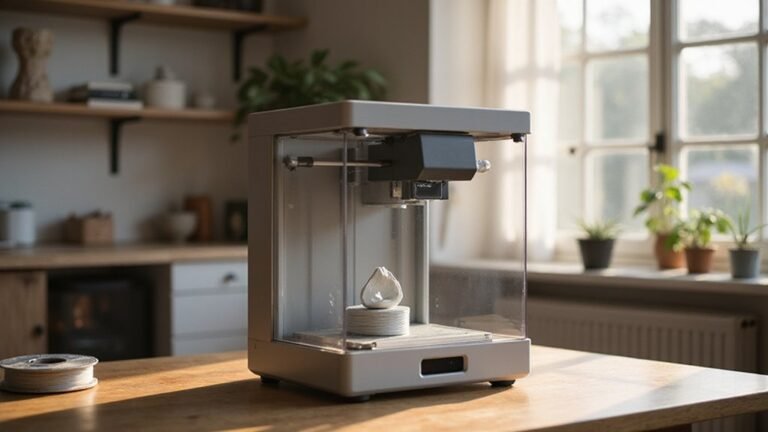
Wondering how to recycle your PLA filament effectively? The process involves sorting out non-PLA materials, cleaning, breaking down the filament, and then extruding it into new filament.
Following proper steps ensures you make the most of your recycled material without sacrificing quality.
Keep reading to learn the full, simple process step by step.
How to Properly Sort and Prepare Your PLA Waste
Properly sorting and preparing your PLA waste is crucial for producing high-quality recycled filament. Begin by separating PLA from other plastics like PETG and ABS because mixed materials lead to contamination and reduce filament quality. Visual cues help—since PLA softens around 60°C, you can identify it by its appearance or feel, or use a thermal check to confirm. Remove non-PLA attachments such as rafts, supports, and secondary structures to prevent contamination. This careful separation is essential to maintain the integrity of the recycled material. Next, strip off labels, adhesives, and coatings, as these can introduce impurities. Also, clean off dirt or oils, which can clog equipment during extrusion. Managing small batches of sorted waste helps maintain quality, so work with manageable quantities. Proper filament quality depends on thorough cleaning and size reduction to ensure uniform melting. Before processing, break the PLA into pieces around 8 to 20 millimeters to facilitate melting and extrusion. Ensure all waste is dry and free of moisture, since moisture can cause defects like bubbles or weak spots in the filament. Practicing proper material handling and storage can prevent moisture absorption and maintain filament consistency. Proper sorting, cleaning, and size reduction set the foundation for successful recycling and high-quality filament production, especially when you consider material properties that influence melting behavior and filament strength.
Easy Steps to Clean and Decontaminate Your PLA Scrap
To effectively clean and decontaminate your PLA scraps, start by removing supports, rafts, and labels, which are common sources of contamination. Next, wipe off dust, smears, and residues using a plastic-safe solvent like isopropyl alcohol. Rinsing with warm water mixed with mild dish soap helps remove any remaining dirt and residue. Be sure to thoroughly dry the material afterward to prevent moisture from affecting the extrusion process. For stubborn residues or contamination, testing can help identify lingering contaminants. Filament recycling before cleaning, cut larger chunks into smaller, uniform pieces around 1 to 2 centimeters to increase surface area and facilitate cleaning. Proper storage in clean, sealed containers prevents recontamination and helps maintain consistent color during reuse. Understanding the 3D printing process can also improve your recycling techniques by ensuring better-quality reprocessed filament. Additionally, familiarizing yourself with the material properties of PLA can assist in optimizing cleaning and recycling methods for different types of scraps.
Shredding and Grinding PLA: Achieving Consistent Particle Sizes
Particles between 3 and 6 millimeters in size are ideal for consistent extrusion when shredding and grinding PLA. Using sieves or meshes around 3 mm helps you separate suitable regrind from oversized chunks or fines. This particle size range ensures steady feeder flow, reducing clogging and irregular extrusion. If particles are too large, re-shredding them into this target range creates uniform particles that improve flow stability. Avoid producing dust-like fines, as they can cause blockages and irregular filament quality. Pre-cut large PLA pieces before grinding to enhance efficiency and achieve more consistent results. During shredding, maintain a steady feed rate and regularly check particle size to keep the process efficient and the end product consistent.
How to Dry Recycled PLA to Prevent Bubbles and Weak Filament
Dry recycled PLA at 40–50°C (104–122°F) for 4–6 hours to effectively remove moisture without risking softening or deformation. Maintaining this temperature range prevents steam bubbles during extrusion and printing, resulting in stronger, more consistent filament. Use a dedicated filament dryer or a stable oven for better control over temperature and drying conditions. For very damp filament, extend the drying time accordingly. Once dried, store the filament in an airtight container with desiccant to prevent moisture reabsorption and preserve filament quality. Proper drying minimizes bubbles and ensures reliable, high-quality filament for your projects. Additionally, monitoring temperature stability during the drying process helps achieve optimal results without damaging the filament. Ensuring consistent drying conditions is crucial for optimal filament performance and avoiding issues like bubbles and weak filament.
Step-by-Step: Extruding Recycled PLA Into Filament
Once your recycled PLA filament is thoroughly dried to eliminate moisture and bubbles, you can begin the extrusion process. Start by heating your extruder to a stable temperature between 180 and 200°C. Load shredded PLA into the hopper gradually to prevent blockages and ensure smooth feeding. Maintain a consistent flow by feeding slowly at first, then increase as the material melts and flows smoothly through the nozzle. A nozzle type can significantly impact the quality and consistency of your filament, so choose one suited for recycled materials. Adjust the extrusion speed to around 6 to 7 RPM for 1.75 mm filament. Begin with a slower setting and increase gradually, monitoring the filament as it emerges. Keep a close eye on the filament’s color and texture, making fine adjustments to the stepper motor speed or pull rate to consistently produce a diameter of about 1.75 mm, with a tolerance of plus or minus 0.05 mm. Use a caliper regularly to check diameter consistency and catch any deviations early to maintain high quality in your recycled PLA filament.
Ensuring Quality: Cooling, Spooling, and Measuring Your Filament
To ensure the quality of recycled PLA filament, focus on proper cooling, spooling, and measurement. Use a part-cooling fan after the first few layers; this helps solidify the print and reduces brittleness. However, avoid excessive cooling, which can lead to cracking or poor layer adhesion.
When spooling filament, wind it evenly to maintain stable feed tension and prevent tangles. Consistent winding also ensures a uniform diameter, which is crucial for reliable extrusion. Store filament in an airtight, dry container with desiccants to prevent moisture absorption—moisture can cause bubbles and surface defects during printing.
Regularly measure the filament diameter with a caliper at multiple points along the spool to verify consistency. Proper measurement helps you set accurate print parameters, resulting in cleaner, more precise prints. During printing, experimenting with color blending or mixing can produce unique effects. Adjust your temperature and fan settings to suit the filament’s properties for optimal results. Moisture absorption can significantly impact print quality, so understanding how to prevent it is essential.
Maintaining these practices ensures high-quality, reliable prints from recycled PLA, giving you a better surface finish and greater detail in your models.
Common Problems in Recycled PLA Filament and How to Solve Them
Moisture absorption is a common problem in recycled PLA filament that can significantly affect print quality. When filament absorbs water, it creates bubbles and rough surfaces during extrusion, leading to cracks and poor layer bonding. To prevent this, it’s essential to dry your filament at around 80°C before printing. This process removes moisture, restoring a smoother surface and improving adhesion. Using a dedicated filament dryer or placing the filament in a hot, dry environment for several hours can make a noticeable difference. Keep in mind that proper storage in airtight containers with desiccants also helps maintain filament quality over time. Additionally, understanding ABS filament needs drying can help in choosing the right filament type and storage practices. Properly dried filament, including moisture content, is crucial for achieving high-quality prints. Ensuring that your filament remains dry is especially important because moisture absorption can result in degraded print quality over time.
Tips for Storing and Labeling Your Recycled Filament Properly
Proper storage and clear labeling are crucial to maintain the quality of recycled PLA filament over time. Use airtight containers such as vacuum-sealed bags, sealed bins, or containers made of durable materials like HDPE or polypropylene to minimize moisture exposure. Inside these, add silica gel packets or desiccants to absorb residual humidity, and keep the containers sealed except when handling the filament. Store your filament in a cool, dry place with temperatures ideally between 20 and 25 degrees Celsius and relative humidity below 50%. Keep spools upright in rigid storage boxes to prevent deformation and manage space effectively. Regularly checking filament condition can help identify early signs of moisture damage and ensure optimal print quality. Additionally, utilizing proper storage methods can further extend the lifespan of your recycled filament by protecting it from environmental factors. Ensuring that your storage environment is moisture-controlled will help maintain filament integrity and reduce the chances of print failures. Label each spool clearly with essential information such as the material type, date of storage, color, and any relevant notes. Using simple, consistent labels or tags makes it easier to track batch freshness and quickly identify specific filaments, streamlining inventory management and reducing waste. Proper storage and labeling ensure your recycled filament remains in optimal condition, improving print quality and reducing the risk of issues caused by moisture or misidentification.
Troubleshooting Recycled PLA: Bubbles, Brittleness, and Uneven Diameter
Moisture in recycled PLA filament is the primary cause of bubbles during printing. These bubbles form when moisture absorbed by the filament undergoes hydrolysis during extrusion, producing steam that creates voids in your print. To prevent this, dry the filament at around 50 °C for several hours before use. Proper storage in airtight, moisture-resistant containers also helps minimize moisture absorption. Additionally, understanding PETG HF Filament can help you choose the right materials and techniques for optimal results. Ensuring consistent extrusion conditions is key to avoiding printing issues caused by uneven filament flow. Recognizing moisture content in your filament can further help you troubleshoot these issues effectively.
Eco-Friendly Practices to Maximize Your PLA Recycling Results
To maximize your PLA recycling results, it’s essential to maintain the purity of your feedstock. Keep PLA separate from other plastics and remove painted, coated, or dirty parts to prevent chemical degradation during reprocessing. Store scraps in dry, sealed containers to avoid moisture absorption that could weaken the polymer. Optimize print settings to reduce waste upfront by designing for reuse and minimizing the use of supports or failed prints. During mechanical processing, shred PLA into small, uniform pieces to enhance melting efficiency and lower energy consumption. Use renewable energy sources during shredding, drying, and extrusion steps to reduce your environmental footprint. Understanding PLA formulation is crucial for selecting appropriate recycling techniques and ensuring the quality of your recycled filament. These practices help produce higher-quality recycled filament while supporting eco-friendly goals.