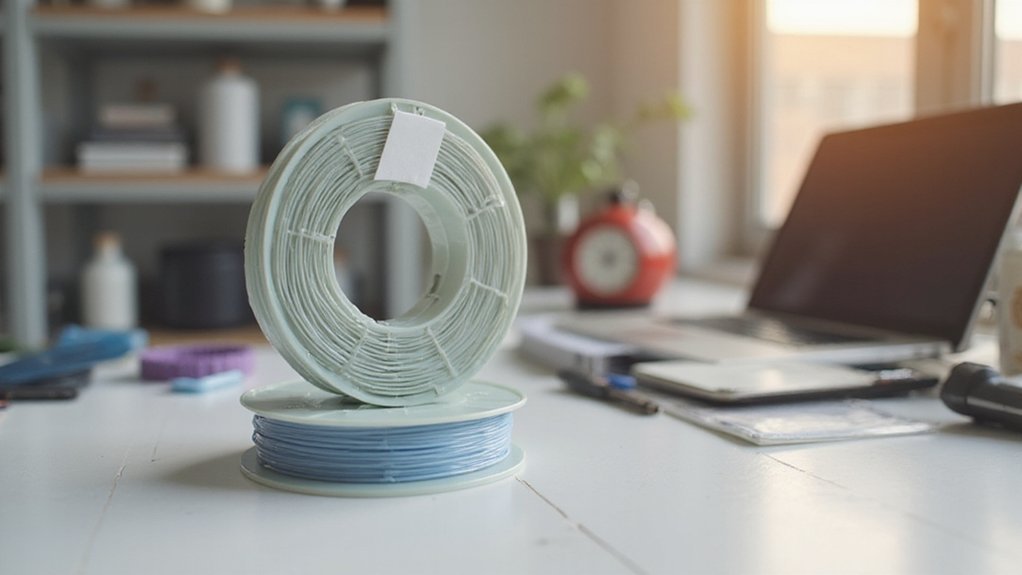
If you’re wondering what makes ABS filament a go-to choice for 3D printing, you’re not alone. It’s known for being durable, impact-resistant, and able to withstand high temperatures, making it perfect for functional parts like automotive components or electronic housings.
Want to learn how to get the best results with this versatile material? Keep reading—everything you need to know is right here.
What Is ABS Filament and Why Is It Popular in 3D Printing?
What Is ABS Filament and Why Is It Popular in 3D Printing?
ABS filament is popular in 3D printing because it offers a strong combination of durability, impact resistance, and versatility. Its extensive range of color options allows you to customize your projects easily, making it suitable for both functional prototypes and finished models. ABS also responds well to proper filament storage methods, which help prevent warping and moisture absorption, ensuring consistent quality over time. Additionally, its layer adhesion properties make it ideal for creating complex, durable prints with smooth finishes. Known for its toughness and heat resistance, ABS supports various post-processing techniques such as sanding, painting, and acetone smoothing. These methods help achieve professional finishes on your prints. Its affordability and wide accessibility make it a favorite among makers and professionals alike, especially when creating items that require strength and stability. Proper filament storage techniques further enhance its longevity and performance. Using moisture-resistant storage can significantly extend the lifespan of your filament and maintain optimal printing quality. Overall, the blend of customizable colors and manageable storage needs contributes to ABS filament’s ongoing popularity in 3D printing.
Key Properties of ABS That Make It Suitable for Tough, Heat-Resistant Parts
ABS’s suitability for tough, heat-resistant parts stems from its impressive impact toughness and thermal stability. Its high impact resistance allows it to endure drops, shocks, and repeated mechanical stresses—making it well-suited for functional components that face everyday use. The rubbery phase derived from butadiene acts as an impact absorber, dispersing energy and helping the material maintain its structure after multiple hits. Additionally, thermal deformation temperature further enhances ABS’s ability to withstand high temperatures without deformation or loss of integrity. Its chemical resistance also plays a crucial role, ensuring durability when exposed to various chemicals and challenging conditions. Furthermore, the thermal stability of ABS helps maintain its integrity even under prolonged heat exposure.
How to Use ABS Filament in Your 3D Printer : Tips and Best Practices
To use ABS filament successfully, focus on proper printer setup and temperature control. Set the nozzle temperature between 220–260 °C, starting around 235 °C, and adjust in small increments to find the ideal setting for your filament. Maintain the heated bed at 95–110 °C; many users find 100–110 °C gives the best adhesion and helps reduce warping. Using an enclosure or a closed environment stabilizes the chamber temperature and prevents drafts that can cause warping or layer separation. Aim for an enclosure temperature around 45–50 °C if possible. Before printing, preheat the bed and ensure the first layer bonds well by slowing down the print speed, adding a brim, and using adhesion aids like PEI sheets or a glue stick. Proper storage is essential: keep filament in a sealed container to prevent moisture absorption and preserve color fidelity, which ensures consistent quality for each print. Controlling ambient conditions is also important, as fluctuations in room temperature or airflow can negatively affect print quality. Additionally, paying attention to the filament’s moisture content can significantly improve the overall print outcome. Regularly checking and drying filament if necessary helps maintain the filament’s performance consistency, leading to better print results and fewer print failures. Ensuring your workspace is well-ventilated can also reduce fumes and improve safety during printing.
Common Problems When Printing With ABS and How to Solve Them
Printing with ABS often results in warping and corner lift because ABS contracts significantly as it cools. To prevent this, set your heated bed to around 90–110°C and enclosure to maintain consistent temperatures. Using adhesion aids such as ABS slurry, glue stick, or Kapton tape on the build surface can also help keep the print firmly attached. Proper filament storage is crucial; moisture absorption leads to increased stringing, oozing, and overall print imperfections. Keep your filament in a dry, sealed environment to maintain consistent flow.
Additionally, understanding laser cutter technology can help you customize and optimize your print setup for better adhesion and precision. Ensuring your print surface is clean and properly prepared is also key to avoiding initial adhesion issues.
Poor first-layer adhesion causes parts to lift or detach during printing. Ensure your bed is properly leveled, the nozzle is at the correct height, and that your chamber environment remains stable. Strong initial adhesion prevents issues early on and improves overall print quality. Layer splitting and cracking happen when layer bonds are weak—they can be mitigated by raising the nozzle temperature and reducing print speed. Additionally, consistent filament storage and a controlled environment aid in avoiding extrusion irregularities, ensuring uniform, reliable prints with ABS. Properly controlling these factors can significantly enhance your print quality.
Post-Processing ABS Prints: Smoothing, Bonding, and Finishing Techniques
Post-processing ABS prints requires careful application of smoothing, bonding, and finishing techniques to achieve the desired surface quality and strength. Acetone vapor smoothing is a popular method for blending layer lines to produce a glossy surface; however, controlling exposure time is critical to prevent feature loss. Using a partially enclosed chamber helps contain fumes while avoiding excess acetone buildup that could soften details or distort the print. When smoothing specific areas, a brush-on application of acetone allows targeted refinements but must be applied sparingly to avoid softening edges or creating uneven textures. Proper ventilation is essential during all steps involving acetone to avoid health hazards associated with fumes. Mechanical sanding is essential before polishing, starting with coarse grit and progressing to finer grains to remove imperfections and prepare the surface. Proper sanding not only improves appearance but also enhances adhesion for subsequent finishing steps. For bonding parts, acetone serves as a solvent weld: applying a small amount to the joining surfaces fuses the parts seamlessly. Always ensure parts are fully cured and free of dust before bonding. Safety precautions include ventilating well during the process and allowing printed parts to cure completely before handling or further finishing to prevent deformation or bonding issues.
Typical Applications of ABS in Industry and DIY Projects
ABS is widely used in industry and DIY projects because it meets key standards for strength, durability, and processability. Its compatibility with manufacturing methods such as injection molding, CNC machining, and 3D printing makes it versatile. In automotive manufacturing, ABS is common for dashboard panels, bumpers, wheel covers, and interior trims due to its impact resistance and stability. Electronics and appliance housings often utilize ABS because of its smooth surface and durability, making it suitable for monitor cases, keyboards, and device covers. DIY enthusiasts favor ABS filament for creating prototypes, models, and functional parts because it is easy to shape, cost-effective, and has a broad processing window. Its material properties allow for a wide range of consumer, industrial, and creative applications. Additionally, 3D printer filament ABS vs PLA comparison helps users determine the best material for their specific project needs. ABS’s inherent thermal stability also makes it suitable for projects requiring resistance to heat and mechanical stress. Understanding the material properties of ABS can help makers optimize their designs for durability and performance.
Is ABS the Right Material for Your 3D Printing Needs? Factors to Consider
ABS is a strong choice for your 3D printing projects if durability, impact resistance, and heat tolerance are top priorities. It produces parts that can withstand mechanical stress and higher temperatures, making it suitable for functional, wear-resistant items. However, ABS can be more challenging to print than PLA, as it requires a stable environment with a heated bed and enclosure to prevent warping. The material also emits fumes during printing, so proper ventilation is necessary.
Based on filament drying requirements, ABS can also absorb moisture from the air, which may affect print quality if not properly managed. Proper storage and moisture control are essential to maintaining print quality over time. Environmental considerations are important. ABS is a thermoplastic that can be reshaped and recycled, but recycling options are limited and less accessible compared to biodegradable materials. If environmental impact and recycling options are concerns, exploring eco-friendlier options might be worthwhile.
If you need a high-quality surface finish or plan to perform post-processing or high-impact applications, ABS offers advantages in these areas. On the other hand, if you prioritize simplicity, ease of use, and sustainability, other materials like PLA or PETG might be better suited. Ultimately, your choice depends on your project’s specific needs and your ability to manage the printing conditions and environmental implications.