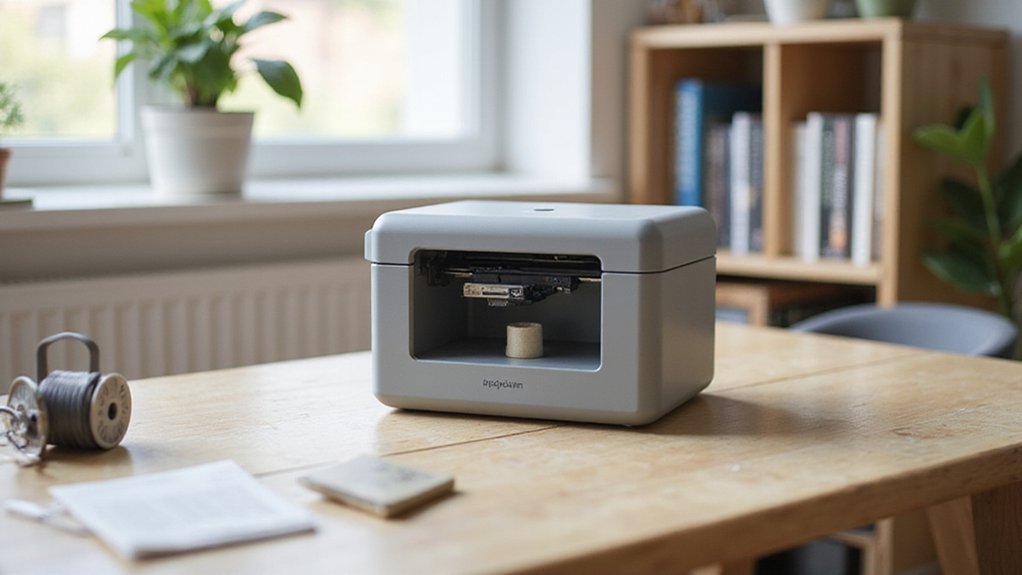
Thinking about starting 3D printing but worried about costs and complexity? The good news is that there are affordable options designed for beginners, with features like automatic bed leveling and straightforward controls.
These machines support common filaments such as PLA and ABS, making them perfect for learning and small projects. Keep reading to find out how to choose the best beginner-friendly 3D printer for your needs.
What Features Make a Budget 3D Printer Easy and Affordable for Beginners?
Automated calibration is a key feature that makes a budget 3D printer easier to use for beginners. It ensures consistent first layers by automatically adjusting the print bed and nozzle height, saving you time and reducing trial-and-error. Reliable calibration minimizes print failures caused by uneven surfaces or incorrect leveling. High-quality automated calibration systems are quick to execute, often taking less than a minute, and are straightforward to operate through simple menus or software. This feature helps beginners achieve successful prints without needing advanced technical skills or manual adjustments, making the whole experience more hassle-free and affordable. Understanding the importance of Teflon sheets can also enhance print quality and ease maintenance for your 3D printer. Additionally, automated calibration systems often include features like bed leveling sensors that further simplify the setup process. Knowing how calibration impacts overall print consistency can assist beginners in troubleshooting and optimizing their print results.
How to Choose the Best Low-Cost 3D Printer for Your Projects
Choosing the best low-cost 3D printer for your projects depends on understanding your specific needs and budget. Material compatibility is key—most budget-friendly FDM printers support common filaments like PLA, ABS, and PETG. However, always verify if your preferred material is compatible before making a purchase. Additionally, considering print quality can help ensure your projects turn out well, even on budget models. Print speed is another factor to consider. Faster printers can save you time but often come at a higher cost and may slightly compromise print quality. Smaller build volumes, around 100 x 105 x 100 millimeters, are ideal for small figurines and testing, while larger options like 256 x 256 x 256 millimeters provide more flexibility for bigger projects. Features such as automatic bed leveling and straightforward setup significantly improve your experience, especially if you’re new to 3D printing. Prioritizing these features ensures easier calibration and better results, helping you avoid common beginner frustrations. Moreover, understanding print reliability can help you select a model that consistently produces good results over time. It’s also beneficial to consider the availability of support and accessories, as having access to spare parts and community resources can greatly enhance your overall experience.
Top Affordable 3D Printers for Beginners in 2023
If you’re looking for affordable 3D printers suitable for beginners, several models stand out for their balance of cost, ease of use, and performance. The Bambu Lab A1 and A1 Mini are excellent choices, offering quick setup and minimal tuning—ideal for newcomers. They support multiple filament types, making them versatile for various projects. The Creality Ender-3 V3 SE stands out as a popular budget-friendly option, with a large community that provides troubleshooting support and easy upgrades. It supports different filament materials, which is beneficial as your skills grow. Sovol SV06 Ace offers precise printing at an affordable price, making it a good choice if you want to explore different materials without a hefty investment. The Anycubic Kobra series features larger build volumes and multicolor capabilities, perfect for more ambitious beginners wanting more variety. Overall, these printers deliver reliable performance and affordability, making them accessible entry points into 3D printing. Additionally, understanding the cost factors involved in 3D printing can help you make better purchasing decisions and avoid overspending. This includes factors like filament compatibility and initial setup requirements, which can significantly affect your overall experience.
Comparing Performance, Print Quality, and Features of Budget 3D Printers
Budget 3D printers today offer a good balance of speed, quality, and usability, but not all models are strong in every aspect. When evaluating performance, don’t focus solely on print speed; while speeds around 250 mm/s are common, high speeds can cause inaccuracies if the printer lacks advanced acceleration and motion control. Proper tuning of these settings helps prevent issues like layer shifting and surface defects. Affordable 3D printers have made it easier for hobbyists and novices to start printing without a steep learning curve.
Print quality varies significantly. Resin-based printers can achieve details as fine as 0.05 mm, making them ideal for miniatures or intricate designs. FDM printers are improving in external surface finish and dimensional accuracy through better bed leveling, consistent extrusion, and a more rigid frame. These improvements help produce smoother surfaces and precise parts even on budget models.
Ease of use features such as automatic bed leveling, simple interfaces, and touchscreen controls are essential for newcomers. These features reduce setup time and minimize user errors, making the printing process more accessible. Stability and reliability are equally important; sturdy frames and features like automatic calibration contribute to consistent results and broader material compatibility.
Ultimately, a good budget 3D printer balances speed, print quality, and ease of operation. If all these elements are aligned, you’ll get reliable, high-quality prints without overly complicated setups or high costs.
Tips for Setting Up and Maintaining Your Affordable 3D Printer
Getting your 3D printer set up correctly from the start is essential for consistent results and smooth operation. Begin by removing all shipping locks, tape, foam, and transit screws. Then, place the printer on a sturdy, level surface to reduce vibrations that could affect print quality. Inspect the printer for any loosened screws or damaged parts and follow the specific assembly instructions provided by the manufacturer. Proper setup prevents many initial issues and ensures accurate prints. Before powering on, check that the fans, heaters, and axes are functioning properly. Proper filament storage is also crucial; keep filament in a dry, sealed container to prevent moisture absorption, which can cause poor extrusion and print failures. Bed leveling is a critical step. Heat the bed and nozzle, then manually adjust or auto-level the bed to ensure it is perfectly level. Maintain a clean surface and set the correct Z offset to improve first-layer adhesion. To reduce noise during printing, consider using damping materials and ensure all moving parts are well-lubricated. Regular cleaning and maintenance will keep your 3D printer reliable and efficient over time, helping you achieve better print quality and extend its lifespan. Additionally, filament moisture can significantly impact print quality, so it’s important to monitor and control ambient humidity in your workspace.
Is a Low-Cost 3D Printer Right for Your Creative Needs?
A low-cost 3D printer under $300 can be a good match for your creative needs if you focus on basic projects. These printers generally support simpler designs and single-color prints, making them suitable for prototypes, educational use, and hobbyist experimentation. Most budget models can handle standard filament types like PLA and ABS, but compatibility with more advanced materials may be limited. Features such as automatic bed leveling and self-calibration are often included to make setup easier. Keep in mind that assembly might be required, and maintenance could be more frequent, especially with kit versions. Additionally, understanding 3D printing technology can help you optimize your projects and troubleshoot potential issues. Overall, if your projects are straightforward and don’t require complex multi-material or high-resolution prints, a low-cost 3D printer can effectively meet your expectations. Understanding heat tape and its uses can also be beneficial when working on certain 3D printing projects or upgrades, especially for temperature management.