Finding the right place to buy PLA filament can feel overwhelming, whether you’re shopping online or in person.
The key is to focus on trusted brands and quality options that fit your needs and budget.
Knowing where to look and what to prioritize helps you avoid issues and get the best results for your 3D printing projects.
Keep reading for the full tips.
Where Can You Buy PLA Filament? Online and In-Store Options
You can purchase PLA filament both online and in physical stores. Online shops and dedicated retailer websites usually offer a wider selection, including a variety of colors, filament types, and price points. Product descriptions on these sites often include detailed specifications, such as filament diameter, compatibility with different printers, and suggested applications. Many brand-direct online stores also provide competitive prices, bulk purchasing options, and multi-spool packs, which help ensure consistent quality and availability. When choosing where to buy, consider quality control measures to ensure you receive reliable filament every time. In-store options like hobby and craft stores allow you to see basic PLA colors—such as black, white, green, and red—immediately. This is especially useful if you need filament quickly or want to verify the color before buying. Additionally, retailer reputation can be an important factor when selecting where to purchase filament, ensuring you receive a quality product. It’s also helpful to look for accurate product information that clearly explains filament features and compatibility to make informed choices. When choosing where to buy, look for clear product details, a diverse range of colors, and stores that make browsing and selecting filament straightforward. Whether you prefer the convenience of online shopping or the immediacy of in-store purchase, both options can serve your PLA filament needs effectively.
What Are the Best Brands for Consistent, High-Quality PLA?
Prusament PLA stands out as the top choice for consistent, high-quality filament due to its extremely tight diameter tolerance of plus or minus 0.02 mm. This precision reduces the risk of nozzle clogs and ensures smoother feeding, which is essential for detailed and precise prints. Bambu Lab PLA Basic offers a similar tolerance level, making it a reliable alternative for users seeking dependable results without sacrificing quality. Polymaker’s PolyTerra and PolyLite brands are known for their consistent diameter and broad compatibility testing across various 3D printers, providing predictable performance. Their matte finish also helps hide surface imperfections, resulting in cleaner finishes. eSUN PLA+ delivers enhanced durability suitable for functional parts, all at a competitive price point. For budget-conscious users, brands like Hatchbox, Overture, and Sunlu offer acceptable consistency and performance without significant compromises. These brands are favored for their reliability, helping you maintain steady filament quality across multiple print sessions. Consistent quality control is a key factor that sets top-tier brands apart, ensuring fewer print failures and more reliable results over time. Additionally, diameter tolerance plays a crucial role in achieving optimal print quality and reducing filament-related issues. A focus on manufacturing standards further supports the reliability of reputable brands, making them dependable choices for serious 3D printing hobbyists and professionals alike. Moreover, understanding and prioritizing quality assurance processes can significantly improve your overall printing experience.
How Do I Choose the Right PLA Filament Based on My Needs?
Choosing the right PLA filament involves matching its specifications to your printer’s capabilities and your project needs. First, verify the filament diameter—most desktop 3D printers use 1.75 mm, while some require 2.85 mm—to ensure compatibility. Next, confirm that your printer’s nozzle temperature range (usually 210–225°C for PLA) aligns with the filament’s recommended settings. Look for filament with tight dimensional tolerance, ideally within ±0.02 mm, to prevent extrusion problems and achieve consistent prints.
Additionally, understanding the uses of PLA filament can help you select the best type for your project’s requirements. Color options are mainly a matter of aesthetic preference, but technical features matter more for functional or high-quality projects. Consider specialty PLA variants like PLA+ or high-flow formulations if you need increased strength, flexibility, or faster printing speeds. Packaging is also critical; vacuum-sealed spools with desiccants help control moisture, preventing issues like stringing or weak layer adhesion. Proper storage methods can significantly extend the lifespan of your filament and maintain its quality.
Awareness of material properties can further influence your choice, especially for projects with specific environmental or mechanical demands. Ultimately, your choice should reflect the purpose of your part—whether for prototypes, decorative items, or parts requiring post-processing. Matching filament properties such as finish, strength, and ease of use to your specific project goals ensures the best results.
What Should I Look for When Evaluating Quality and Price?
When evaluating quality and price, focus on precise filament dimensions supported by third-party verification or measurement reports. Look for filaments with dimensional tolerances of ±0.02 mm to ±0.03 mm, verified through tests or reliable datasheets. Use digital calipers to measure filament diameter at multiple points along the spool, and reject any with variations exceeding ±0.03 mm, as inconsistencies can lead to print defects. Check the filament’s material purity and batch traceability—high-purity materials with consistent melt flow index and comprehensive QC reports help ensure consistent performance. Packaging is crucial; opt for vacuum-sealed bags with desiccants and moisture barriers to prevent moisture absorption, which can cause poor layer adhesion and surface defects. Paying attention to filament quality standards that specify dimensional tolerances and certification ensures you are choosing reliable products. A consistent melt flow index can also be a useful indicator of filament performance and processability during printing. Assess performance metrics such as tensile strength, recommended nozzle temperature, and stability at high printing speeds. These factors indicate how well the filament will perform during demanding print jobs and can help you weigh quality against cost. Additionally, consider moisture control methods that can extend filament shelf life and maintain optimal printing conditions. By paying attention to these specific properties and certifications, you can better identify filaments that offer true value for your investment.
Which Colors and Specialty PLA Types Are Available?
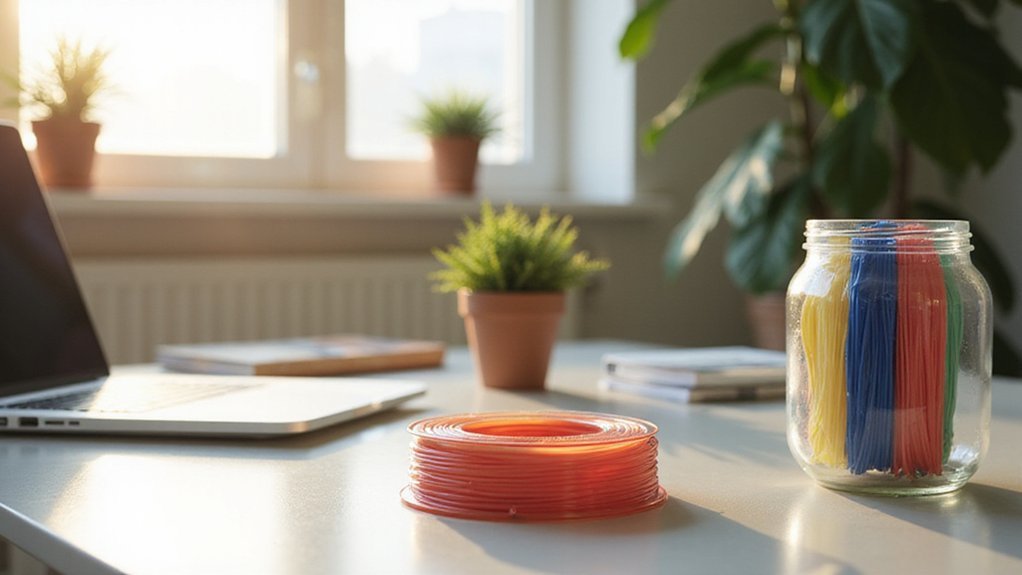
There is a wide range of colors and specialty types available in PLA filament to expand your creative options. Basic shades such as black, white, red, and blue are standard, while more specific options include RAL or Pantone-matched colors, like Traffic White and Traffic Red. Specialty finishes like Silk PLA provide a smooth, glossy surface, whereas Matte PLA offers a muted, non-reflective finish. Effect filaments add visual impact, with options like glow-in-the-dark, multicolor, and metallic-effect PLA that create striking effects. Fluorescent PLA glows under UV light, and color-shift variants change appearance based on viewing angles or lighting conditions. Some brands also offer expanded families such as PLA+ or PLA Wood, which combine vivid colors with enhanced mechanical properties for more durable or realistic prints.
How Much Does PLA Filament Cost, and When Is It Worth Paying More?
PLA filament generally costs between $15 and $25 per kilogram for standard grades. Prices can vary based on brand, quality, and regional differences. Basic PLA usually falls within the $10 to $30 per kilogram range, with industrial-grade options costing roughly $15 to $22. Specialty filaments that incorporate metal, glow-in-the-dark features, or composites like wood or carbon fiber tend to be more expensive, ranging from $20 to over $40 per kilogram. Investing a bit more in premium options is worthwhile when precision, a smooth surface finish, or unique effects are important. These higher-priced filaments often offer tighter diameter tolerances and improved consistency, making them ideal for detailed or high-reliability projects. Budget PLA can work well for simple, decorative, or prototype prints but may lack the quality needed for professional or critical applications. Recognizing when to pay extra ensures you get better quality and performance from your 3D prints. Additionally, understanding filament price ranges can help you make more informed purchasing decisions. Being aware of material characteristics is also important for choosing the right filament for your specific project needs. Moreover, considering cost factors such as supply chain and manufacturing methods can help you understand price fluctuations better.
What Are the Best Strategies for Saving Money on PLA Filament?
Comparing prices across multiple vendors is one of the most effective ways to cut costs on PLA filament. Many online marketplaces and specialty stores often compete on price, so checking multiple sellers can help you find better deals. Remember to consider the total landed cost, which includes shipping fees, since lower product prices may be offset by high shipping charges. Take advantage of sales, coupons, and loyalty programs to secure additional discounts. Buying in bulk, especially larger spools or multi-spool deals, lowers the cost per unit and makes long-term printing more economical. Recycling leftovers and offcuts also helps extend your filament supplies, preventing waste and maximizing savings over time.
How Can I Ensure My PLA Filament Will Work Well With My Printer?
Proper calibration is essential to ensure PLA filament works well with your printer. Start with temperature calibration by setting your nozzle between 190 and 210°C, typically around 200°C. Use a temperature tower test to fine-tune this setting for your specific spool; slight adjustments can significantly improve print quality. Next, prepare the build surface by cleaning it thoroughly and ensuring the bed is level. Set the heated bed to 50–60°C to promote good adhesion during the first layer. Calibrate the Z-offset so the first layer is just pressed enough to stick without scraping. Also, inspect the extruder drive gear for cleanliness, proper tension, and replace worn parts to prevent feeding issues. Regular calibration helps improve extrusion consistency, surface finish, and overall print reliability. Additionally, always consider proper filament storage to prevent moisture absorption, which can negatively impact print quality.