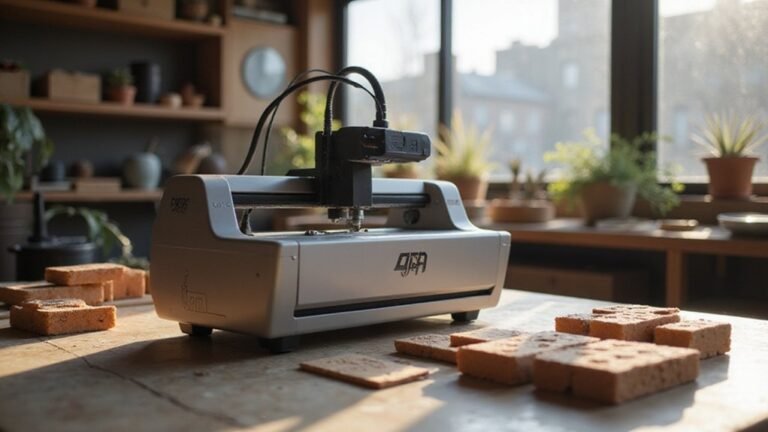
Ever wonder how craft and hobbyists create precise cuts and intricate designs so quickly? A die cutting machine is the answer—it uses pressure and specially made dies to cut, shape, or emboss materials like paper, fabric, or metal with accuracy and speed.
Whether you’re a beginner or a pro, understanding these machines can open up new creative possibilities. Here’s everything you need to know.
What Is a Die Cutting Machine and How Does It Work?
A die cutting machine works by exerting pressure to cut shapes from various materials using a shaped tool called a die. You begin by placing your material on the platform or between cutting plates. Then, position the die on top of the material in the desired location. The machine is activated—either manually with a crank or lever or automatically—causing rollers or plates to press down firmly. This pressure shears the material along the die’s sharp edges, producing clean, precise, and consistent shapes. The entire process is quick, making it suitable for high-volume production. Its core advantage is its ability to cut identical shapes reliably and efficiently, whether for craft projects or industrial manufacturing. Understanding the material compatibility of your die cutting machine is essential to achieve optimal results across different projects. Additionally, being aware of the types of dies and materials compatible with your machine will help you select the right tools for your specific needs. For these reasons, selecting a machine with versatile compatibility options can enhance your crafting or production capabilities.
What Are the Different Types of Die Cutting Machines and When to Use Them
There are several types of die cutting machines, each suited for particular tasks and materials. Rotary die cutters are ideal for high-volume production, especially when you prioritize speed and consistent cuts over complex shapes. They operate on a continuous web or sheet feed and are durable enough to handle large quantities with moderate maintenance. Flatbed die cutters are versatile and excel at cutting thick or rigid materials, making them a top choice for packaging, boxes, and heavy-duty projects. They provide high precision and clean cuts but may be slower for continuous production. Laser die cutters offer exceptional detail without the need for physical dies, perfect for intricate and delicate designs. Regular maintenance is essential to maintain their accuracy. Water jet cutters can handle a wide spectrum of materials, including metals and heat-sensitive substances. They use high-pressure water streams, making them suitable when minimal thermal impact is desired and when cutting hard or composite materials. Additionally, understanding the variety of materials compatible with these machines can help you select the most efficient type for your specific project. Familiarity with different machine types can also assist in optimizing your workflow and achieving better results. Knowing the cost considerations for each type can further help in making an informed investment decision.
What Materials Can You Cut and Create With a Die Cutter
Die cutters can cut a wide variety of materials with precision, making them highly versatile for different crafting and industrial applications. You can easily cut paper, cardstock, and paperboard, which are ideal for scrapbooking, card making, labels, and packaging. Thin films such as vinyl, acetate, and plastics like PET and PVC are also compatible, supporting the creation of custom decals and flexible packaging solutions. Fabrics including cotton, felt, denim, and leather can be shaped using die cutters equipped with the appropriate settings, perfect for apparel, accessories, and fabric crafts. Additionally, foam, rubber, cork, and spongy substrates are commonly used for cushioning, seals, and industrial gaskets. For more rigid or specialty materials, thin sheets of aluminum, sheet metal, fiberglass, or even wood can be cut with the right die cutter, enabling precise shapes, perforations, and scoring. The ability to work across such a broad spectrum of materials is what makes die cutters invaluable for both creative projects and industrial manufacturing. Material compatibility is a key factor to consider when selecting a die cutter for specific applications, ensuring clean cuts and optimal results across different substrates. Understanding the material properties and how they interact with different cutting technologies can greatly improve your project outcomes, especially when working with multi-material setups that require adjustments in cutting parameters.
What Are the Benefits of Using a Die Cutting Machine in Your Projects
Using a die cutting machine significantly improves the accuracy and consistency of your projects. You can achieve precise cuts that meet exact specifications, ensuring uniformity across large batches. This consistency helps maintain your brand standards and produces a professional finish. The process is also much faster than manual methods, allowing you to process multiple pieces simultaneously. This increased speed can reduce production times by up to 30 percent, helping you meet tight deadlines more effectively. Additionally, utilizing advanced cutting techniques can further enhance the precision and quality of your results. Cost savings are another key advantage. Die cutting machines minimize material waste by making accurate cuts, which lowers material expenses. Additionally, they reduce tooling costs compared to traditional cutting tools, offering long-term savings. The versatility of these machines allows you to create a wide variety of designs, from simple shapes to intricate patterns, across different industries. They are also user-friendly, with automation features that reduce errors and ensure consistent quality throughout your projects. Incorporating effective maintenance practices can extend the lifespan of your equipment and ensure consistent performance. This makes them ideal for scalable manufacturing and innovative design applications.
How to Choose the Right Die Cutting Machine for Your Needs
To choose the right die cutting machine for your needs, start by identifying your primary use case. Determine whether you plan to craft, package, or produce large volumes, and select a machine that aligns with these goals. Consider the main materials you’ll work with—paper, fabric, plastic, or metal—and ensure the machine handles these substrates effectively. If your projects involve simple shapes, a basic manual model could suffice; for intricate designs or higher automation, look into digital or rotary options.
Assess the complexity of your cuts—simple shapes require less precision, while detailed designs demand higher accuracy. If you only need the machine occasionally, a manual or semi-automatic version is cost-effective and easy to operate. Conversely, high-volume production benefits from fully automatic machines with advanced features.
Additionally, material compatibility is essential to ensure the machine can handle the specific substrates you plan to use without damaging or failing to cut properly. Check the machine’s material compatibility and its ability to handle various thicknesses without compromising cut quality. Factor in your workspace—measure available space to confirm the equipment fits comfortably and supports your workflow. Considering these aspects helps you select a die cutting machine that not only meets your current needs but also adapts to future projects.