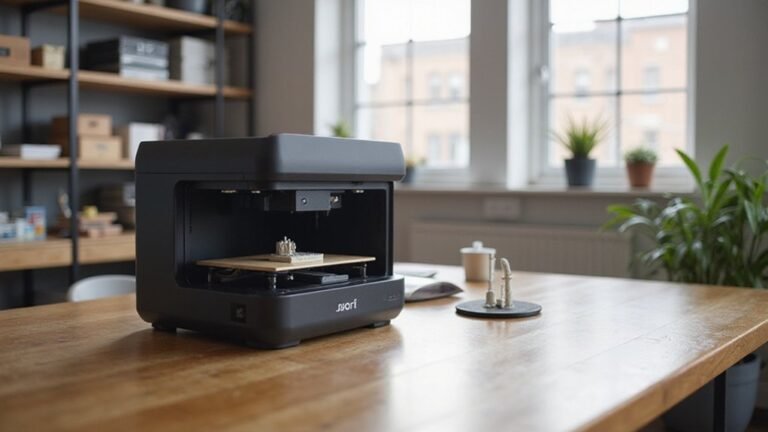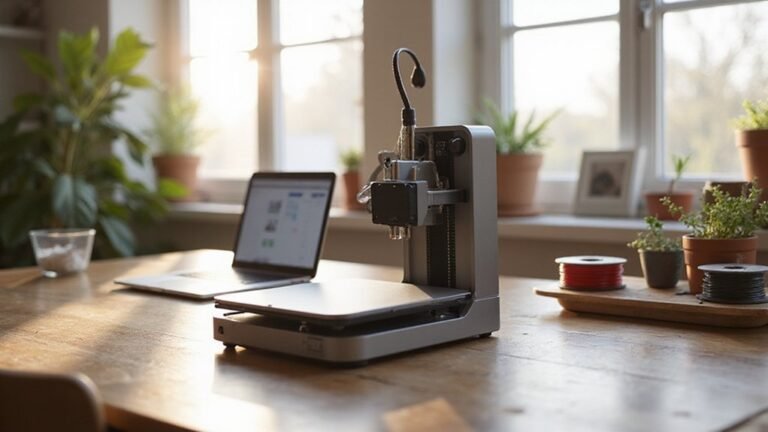
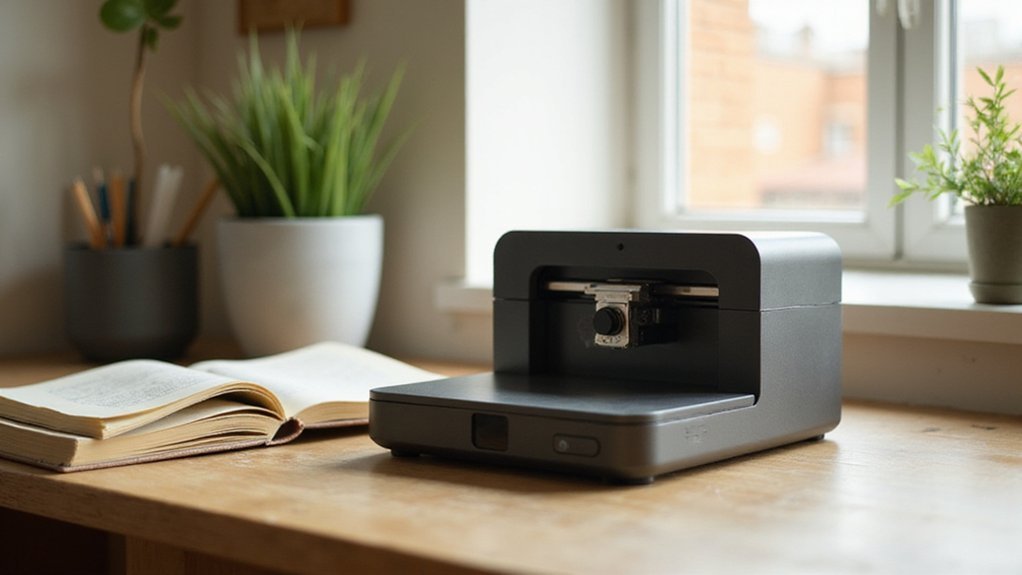
Have you ever wondered how digital designs transform into real objects? A 3D printer makes this possible by building items layer by layer from materials like plastic, resin, or metal. It’s a versatile tool used in many industries, from creating prototypes to custom medical devices.
Keep reading to discover how this innovative technology works and what options are available.
What Is a 3D Printer and How Does It Work?
A 3D printer builds objects layer by layer from a digital input. The process begins with designing the model using CAD software, which creates a detailed digital file. This file is then sliced into thin horizontal layers by slicing software, which generates instructions for the printer. During printing, the machine deposits or solidifies material—such as plastic, resin, or metal—precisely where each layer needs to be, gradually sculpting the final object. Proper maintenance, including regular cleaning and calibration, is essential for consistent results. regular cleaning and calibration prevent issues like misaligned layers or poor adhesion. Inspection helps identify wear or damage that could disrupt print quality. Proper maintenance ensures that the printer deposits material accurately and smoothly, reducing waste and improving precision.
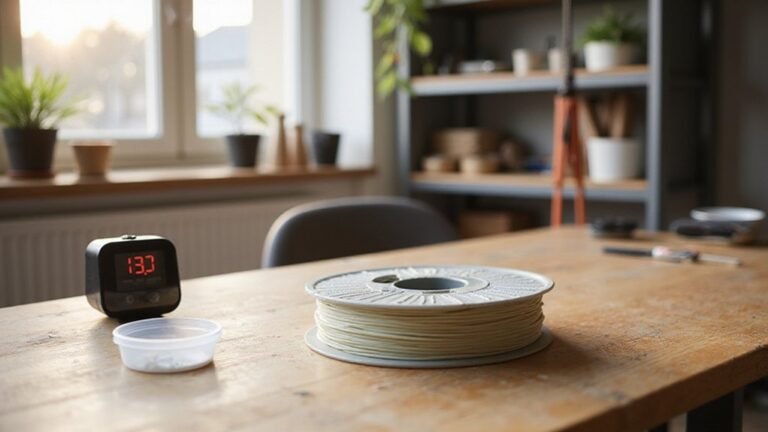
Material sourcing also plays a critical role. Different printers are compatible with specific materials, such as thermoplastics for FDM printers or photopolymer resins for resin printers, or even metals for industrial machines. Choosing the right material affects the strength, finish, and application of the finished object.
Types of 3D Printing Technologies: FDM, Resin, and More
3D printing technologies differ significantly in how they create objects, each with distinct advantages depending on your project needs. Fused Deposition Modeling (FDM) melts thermoplastic filament to build parts layer by layer, making it a popular choice for functional prototypes, larger models, and budget-conscious projects. Resin-based printing, such as SLA and DLP, cures liquid resin with light to produce highly detailed objects with smooth surfaces, ideal for miniatures and intricate prototypes. Powder bed techniques like SLS and DMLS use lasers or electron beams to sinter or melt powder, resulting in strong, durable parts that can be made from a variety of materials. Multi-material systems like PolyJet jet multiple liquid resins to create complex surfaces and parts with different textures and properties, often used for realistic prototypes. Advances in technology continuously enhance these methods, increasing precision, speed, and the range of printable materials. Additionally, the choice of filament material, such as ABS, plays a critical role in the mechanical properties and overall quality of the printed objects. For example, understanding the printing process can help optimize settings for better accuracy and surface finish.
What Materials Are Used in 3D Printing and What Are Their Uses?
A variety of materials are used in 3D printing, each chosen for specific applications based on their properties. Plastics and polymers like polylactic acid (PLA) are among the most popular, especially for prototypes, hobbyist projects, and beginners. PLA is easy to print, derived from renewable resources, and supports environmentally sustainable manufacturing. Acrylonitrile butadiene styrene (ABS) offers better heat resistance and strength, making it suitable for durable parts that need to withstand higher temperatures. PETG strikes a balance between ease of printing and durability, ideal for mechanical components that require some flexibility and strength.
Flexible materials such as thermoplastic polyurethane (TPU) and thermoplastic elastomer (TPE) provide elasticity and are perfect for models that need softness or bending. Resins used in stereolithography (SLA) or digital light processing (DLP) deliver high detail, which makes them ideal for prototypes and miniature models with fine surface finishes. Metals including stainless steel and titanium serve industrial purposes where strength, longevity, and heat resistance are critical. Ceramics are also used for heat-resistant applications, often for decorative objects or specialized industrial components.
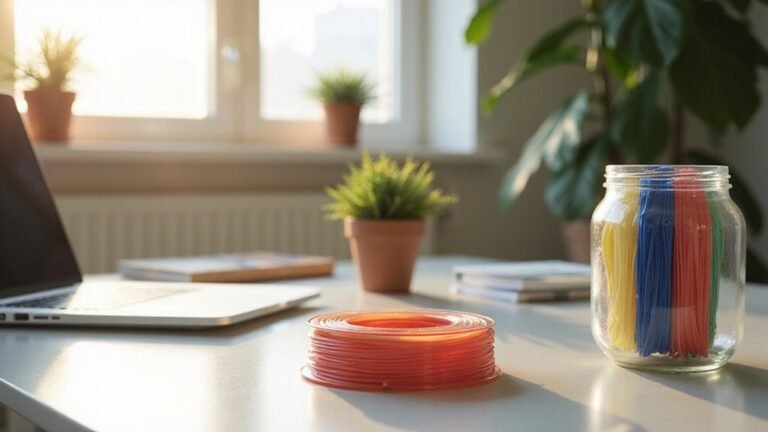
In addition to material choices, incorporating recycling practices helps reduce waste and promotes eco-friendly 3D printing. Recycled filaments and powders are increasingly available, making it easier to adopt sustainable habits while still producing high-quality prints. Moreover, understanding material properties is crucial for selecting the right filament or resin for specific projects.
Core Components of a 3D Printer Explained
The core components of a 3D printer include several essential parts that ensure precise operation. The frame and structural base provide stability, minimize vibrations, and help maintain dimensional accuracy throughout the printing process. The motion system, which uses stepper motors guided by belts, pulleys, or lead screws, moves the printhead or build platform along the X, Y, and Z axes with high precision. End stops are positioned at the limits of travel for each axis, preventing the printhead from colliding with the frame or other parts. The extrusion system involves the extruder and hot end; the extruder feeds filament into the hot end, which melts it through the nozzle for controlled deposits. The build surface or print bed, often heated, supports the print and ensures good adhesion while reducing warping. Proper design, calibration, and maintenance of these core components are key to achieving consistent, high-quality 3D prints. Additionally, many modern 3D printers incorporate sensors and automated calibration systems to further enhance precision and ease of use, emphasizing the importance of system engineering. Understanding the material compatibility of each component helps ensure smooth operation and long-term durability of your 3D printer. Proper understanding of each component’s functional role can significantly improve troubleshooting and maintenance efforts.
Getting Started With 3D Printing at Home or in Business
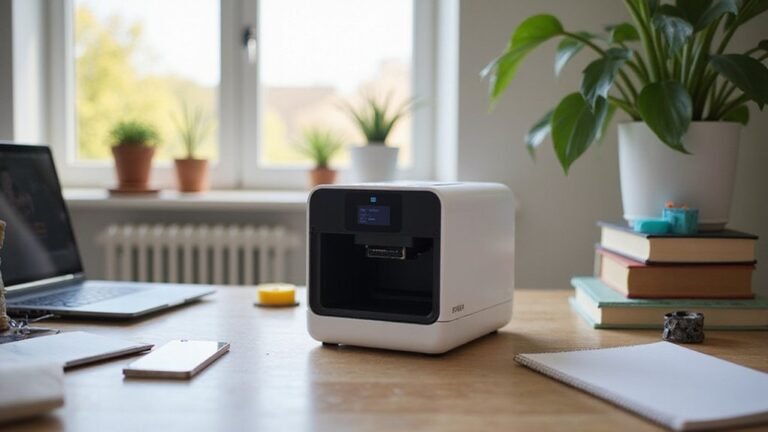
Getting started with 3D printing at home or in your business involves making strategic choices about equipment, workflow, and initial costs. Begin by defining a clear use case, such as hobby projects, prototyping, or small-scale sales, because this will determine your choice of printer type and materials. Start with a simple project like coasters to learn the entire workflow—design, slicing, printing, and post-processing. Use beginner-friendly CAD tools like Tinkercad or Blender to develop your skills without steep learning curves.
Budget around $400 to $600 for a basic setup. Entry-level 3D printers typically cost between $100 and $400, and filament prices range from $20 to $50 per spool. Ensure your workspace has dedicated storage for supplies and post-processing tools to keep your workflow efficient. A reliable process, from setup to finishing, saves you time and improves the quality of your prints, making the whole experience smoother and more rewarding.
Pros and Cons of Using 3D Printing Technology
3D printing offers several compelling advantages. It is particularly effective for rapid prototyping, creating custom parts, and small-scale manufacturing. You gain exceptional design flexibility, enabling you to produce complex geometries that would be difficult or impossible with traditional methods. This process allows for the consolidation of multiple parts into a single piece, reducing assembly time and potential points of failure. Digital workflows facilitate quick design modifications, supporting fast iteration and decreasing overall development time. For low-volume production, 3D printing can significantly lower costs because entry-level printers are affordable, and material expenses are relatively low. Its additive process generates minimal waste, contributing to sustainability efforts.
However, limitations exist. Material options are narrower compared to traditional manufacturing techniques, restricting the types of parts you can produce. Some components may not achieve the required dimensional accuracy or long-term stability, which can impact their performance and durability—especially in demanding applications.
Real-World Applications of 3D Printing Across Industries
3D printing is rapidly expanding across numerous industries, with healthcare, aerospace, automotive, manufacturing, and construction leading the way. In healthcare, it enables the creation of patient-specific implants, prosthetics, surgical models, and even tissue bioprinting, allowing for personalized treatments and better outcomes. Aerospace companies benefit from producing lightweight components with complex geometries, reducing aircraft weight and fuel consumption while speeding up prototyping processes. The automotive industry leverages 3D printing for quicker design iterations, custom parts, and on-demand replacement components, cutting down production time and inventory costs. Manufacturing practices are shifting toward mass customization, lowering waste, and enabling local supply chains that reduce transportation emissions. Construction firms are increasingly using 3D printing to build structural elements or entire structures efficiently and cost-effectively. The flexibility of 3D printing technology is also driving innovation, opening up new possibilities for creative and complex designs that were previously difficult or impossible to produce. As the technology continues to evolve, it offers significant potential for sustainable manufacturing practices, reducing environmental impact through material efficiency and energy use. Future advancements are expected to further streamline production, unlock new design possibilities, and promote sustainable, cost-efficient solutions across all sectors.