Imagine holding a perfectly forged aluminum bracket, its surface smooth and precise, thanks to a top-tier 3D printer. If you’re aiming to push your projects beyond standard plastics, investing in the best 3D printers for aluminum is a smart move. These machines are equipped with advanced features like auto-leveling, large build volumes, and high-temp capabilities, turning complex metal parts into achievable tasks. Want to see which models can genuinely elevate your work and how to choose the right one? Let’s explore.
| Creality K2 Plus 3D Printer with Auto-Leveling |  | Professional Grade | Build Volume: 350×350×350 mm | Auto-Calibration: Auto-leveling with sensors | Multi-Color Support: Multi-color via CFS (16 colors) | VIEW LATEST PRICE | Read Our Analysis |
| Anycubic Kobra X Multicolor 3D Printer |  | User-Friendly | Build Volume: 260×260×260 mm | Auto-Calibration: LeviQ 3.0 automatic bed leveling | Multi-Color Support: Supports 4-19 colors with ACE 2 Pro | VIEW LATEST PRICE | Read Our Analysis |
| Creality K2 SE 3D Printer with Auto Leveling | High-Speed Performance | Build Volume: 220×215×245 mm | Auto-Calibration: Auto bed leveling with probe | Multi-Color Support: Multicolor with optional CFS | VIEW LATEST PRICE | Read Our Analysis | |
| Creality K2 Combo 3D Printer with Auto Leveling |  | Multi-Color Master | Build Volume: 260×260×260 mm | Auto-Calibration: Auto-calibration with sensors | Multi-Color Support: Supports 16 colors via CFS | VIEW LATEST PRICE | Read Our Analysis |
| Creality K2 Pro 3D Printer with Dual Camera | 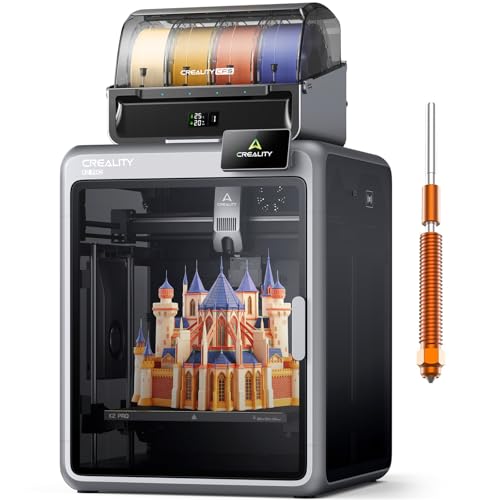 | Large-Volume Powerhouse | Build Volume: 300×300×300 mm | Auto-Calibration: Auto-bed leveling with sensors | Multi-Color Support: Up to 16 colors via CFS | VIEW LATEST PRICE | Read Our Analysis |
| Creality K2 Plus 3D Printer with Multi-Color Printing |  | Advanced Multi-Material | Build Volume: 350×350×350 mm | Auto-Calibration: Strain gauge-based auto-leveling | Multi-Color Support: Connect multiple CFS units for 16 colors | VIEW LATEST PRICE | Read Our Analysis |
| FLASHFORGE Adventurer 3D Printer with Auto Leveling |  | Fast & Reliable | Build Volume: 220×220×220 mm | Auto-Calibration: Automatic bed leveling | Multi-Color Support: Multi-color via CFS (16 colors) | VIEW LATEST PRICE | Read Our Analysis |
More Details on Our Top Picks
Creality K2 Plus 3D Printer with Auto-Leveling
If you’re looking for a professional-grade 3D printer that’s packed with automation, the Creality K2 Plus is a solid choice. It features auto-leveling, so you don’t spend ages fiddling with bed alignment, which is a real timesaver. The large build volume of 350 by 350 by 350 millimeters means you can craft bigger projects in one go or produce batches more efficiently. The frame’s aerospace-grade aluminum alloy makes it sturdy, and the dual Z-axis system ensures precise vertical movement. Plus, with smart sensors and dual AI cameras, you get constant monitoring and automatic adjustments, making high-quality prints almost effortless.
- Build Volume:350×350×350 mm
- Auto-Calibration:Auto-leveling with sensors
- Multi-Color Support:Multi-color via CFS (16 colors)
- Filament Management:RFID filament system with auto-switch
- Monitoring & Cameras:Dual AI cameras and monitoring
- Max Printing Speed:Up to 600 mm/s
- Additional Feature:Multi-color mixing technology
- Additional Feature:Large 350×350×350mm build volume
- Additional Feature:Dual AI cameras
Anycubic Kobra X Multicolor 3D Printer
The Anycubic Kobra X Multicolor 3D Printer is a user-friendly choice if you want vibrant, multi-material prints with minimal hassle. With a large build volume of 260x260x260mm, it lets you make bigger, more detailed projects without splitting them into parts. It supports a variety of materials like PLA, PETG, TPU, PVA, and ASA—so your options are wide open. The super-quiet operation (under 48 dB) and features like filament run-out sensors and power loss recovery mean fewer surprises during long prints. Its automatic bed leveling with 49-point calibration makes setup faster than ever, perfect for both beginners and pros.
- Build Volume:260×260×260 mm
- Auto-Calibration:LeviQ 3.0 automatic bed leveling
- Multi-Color Support:Supports 4-19 colors with ACE 2 Pro
- Filament Management:Filament sensors with auto-resume
- Monitoring & Cameras:720P AI camera monitoring
- Max Printing Speed:Up to 600 mm/s
- Additional Feature:Auto bed leveling (LeviQ 3.0)
- Additional Feature:Vibration compensation system
- Additional Feature:Supports diverse filament types
Creality K2 SE 3D Printer with Auto Leveling
Looking for a high-speed 3D printer that also makes setup a breeze? The Creality K2 SE is your new best friend. It prints up to 500mm per second thanks to its lightweight CoreXY system, which means faster builds without sacrificing accuracy. Its solid aluminum frame with corner gussets gives durability and stability, perfect for serious projects. The automatic bed leveling with a touchscreen simplifies the whole process—no more fiddling with screws or manual calibration. Plus, it supports a broad range of materials and is compatible with multicolor options if you want more visual flair. It’s a reliable, feature-rich machine ideal for both hobbyists and professionals alike.
- Build Volume:220×215×245 mm
- Auto-Calibration:Auto bed leveling with probe
- Multi-Color Support:Multicolor with optional CFS
- Filament Management:Filament detection with run-out sensor
- Monitoring & Cameras:AI cameras for real-time monitoring
- Max Printing Speed:Up to 500 mm/s
- Additional Feature:Expert tuning via Creality OS
- Additional Feature:LAN multi-printer control
- Additional Feature:Quick high-speed print profiles
Creality K2 Combo 3D Printer with Auto Leveling
If you’re after a multi-color master that can tackle serious aluminum projects, the Creality K2 Combo is worth a close look. It offers a build volume of 260 by 260 by 260 millimeters, so you can design larger, more complex pieces without feeling cramped. The next-gen direct drive extruder made from hardened steel gears means you can use advanced filaments like carbon fiber-filled materials without fuss. Plus, auto-leveling and auto-filament detection save time and fuss. The printer runs ultra-quiet thanks to dynamically balanced fans, and the smart AI camera helps you keep an eye on things. With quick setup, multi-color options, and premium durability, this setup elevates your game for demanding projects.
- Build Volume:260×260×260 mm
- Auto-Calibration:Auto-calibration with sensors
- Multi-Color Support:Supports 16 colors via CFS
- Filament Management:RFID system with filament cutter
- Monitoring & Cameras:AI camera for failure detection
- Max Printing Speed:Up to 600 mm/s
- Additional Feature:Pre-assembled, plug-and-play
- Additional Feature:Aero-grade aluminum frame
- Additional Feature:Time-lapse printing capability
Creality K2 Pro 3D Printer with Dual Camera
If you’re after a large-volume powerhouse that handles complex and detailed prints with ease, the Creality K2 Pro 3D Printer with Dual Camera is a top contender. It boasts a sizable build volume of 300 by 300 by 300 millimeters, perfect for big prototypes or printing multiple small parts at once. Supporting materials like PLA, ABS, ASA, PPA-CF, and PET-CF makes it versatile for different projects. The dual AI cameras mean you can monitor your prints remotely and catch issues early. With high-speed printing up to 600 millimeters per second and smart features like auto bed leveling and filament detection, this machine combines speed, size, and intelligence for serious 3D work.
- Build Volume:300×300×300 mm
- Auto-Calibration:Auto-bed leveling with sensors
- Multi-Color Support:Up to 16 colors via CFS
- Filament Management:Smart RFID and filament sensors
- Monitoring & Cameras:Dual AI cameras with time-lapse
- Max Printing Speed:Up to 600 mm/s
- Additional Feature:High-temperature hotend (350°C)
- Additional Feature:Active chamber heating
- Additional Feature:Automatic filament cutter
Creality K2 Plus 3D Printer with Multi-Color Printing
The Creality K2 Plus stands out as an advanced multi-material 3D printer perfect for multi-color projects. With a large build volume of 350 x 350 x 350 mm, it’s ideal for bigger models or multiple parts in one print. Its sturdy matrix frame and dual Z-axis provide stability, so your layers stay consistent. Designed for versatility, it supports up to 16 colors by connecting four CFS units, and handles a range of filaments like PLA, ABS, PETG, and more. Automated features like auto-leveling, filament cutting, and fail detection via dual AI cameras make setup and monitoring smooth, giving you more time to focus on creating.
- Build Volume:350×350×350 mm
- Auto-Calibration:Strain gauge-based auto-leveling
- Multi-Color Support:Connect multiple CFS units for 16 colors
- Filament Management:Auto-detect and manage multiple filaments
- Monitoring & Cameras:AI camera with failure detection
- Max Printing Speed:Up to 600 mm/s
- Additional Feature:Die-cast high-rigidity frame
- Additional Feature:Strain gauge auto-leveling
- Additional Feature:Automated filament management
FLASHFORGE Adventurer 3D Printer with Auto Leveling
Looking for a 3D printer that’s fast, reliable, and easy to set up? The FLASHFORGE Adventurer 3D Printer with Auto Leveling is a solid choice. It features fully automatic bed leveling, so you don’t have to fuss over manual adjustments. Its CoreXY all-metal structure ensures durability and smooth movement, while the 280°C direct extruder with a detachable nozzle makes changing materials quick and easy. With speeds reaching 600mm/s and a warm-up time of just 35 seconds, you get faster results. Plus, remote monitoring simplifies operation. All these features combine to make this printer perfect for quick, consistent, and versatile creative projects.
- Build Volume:220×220×220 mm
- Auto-Calibration:Automatic bed leveling
- Multi-Color Support:Multi-color via CFS (16 colors)
- Filament Management:Filament sensor with auto feeding
- Monitoring & Cameras:Remote camera monitoring with AI
- Max Printing Speed:Up to 600 mm/s
- Additional Feature:Fully automatic bed leveling
- Additional Feature:Rapid tool change (3 sec)
- Additional Feature:Remote monitoring via app
Factors to Consider When Choosing a 3D Printer for Aluminum
When choosing a 3D printer for aluminum, you’ll want to pay close attention to a few key factors. Things like temperature requirements, frame durability, and material compatibility can make or break your printing experience—imagine trying to work with metal that doesn’t stay hot enough or a frame that flexes under pressure. And don’t forget about precision, speed, and auto-leveling features—they save you time and help guarantee your prints come out just right!
Temperature Requirements
Ever wondered what it takes to get aluminum to cooperate with your 3D printer? Well, it all starts with temperature. To print aluminum successfully, you need a hotend that can reach at least 220°C—sometimes even up to 300°C or higher depending on your filament. But that’s just the beginning. Your printer’s hot chamber should stay around 60°C to prevent warping, and a heated build plate capable of hitting at least 80°C is key for better adhesion and smoother surfaces. Remember, consistent temperature stability is a must—fluctuations lead to defects. Think of it as a delicate dance: high-temperature extruders, stable chamber, and a reliable heated bed all work together to make sure your aluminum parts come out perfect every time.
Frame Durability
To successfully print with aluminum, your 3D printer’s frame needs to be as sturdy as possible because the high temperatures and abrasive nature of aluminum filaments can put a lot of stress on the structure. A reinforced, rigid frame helps keep everything aligned and minimizes vibrations, which is critical for consistent, high-quality prints. Materials like aerospace-grade aluminum alloys or heavy-duty steel add durability and help the frame withstand thermal expansion and mechanical wear. Look for a frame with minimal flex — even tiny movements can cause layer shifts in aluminum projects. Corrosion-resistant, thermally stable materials also matter since high temperatures and exposure to heat can weaken less durable frames over time. Remember, a tough frame is your foundation for success in aluminum 3D printing!
Material Compatibility
Getting the right material compatibility for aluminum printing might seem intimidating at first, but it’s all about matching your printer’s capabilities with the unique demands of metal-infused filaments. First, make sure your 3D printer supports high-temperature extruders that can reach at least 300°C—most aluminum filaments need this. You’ll also want a heated bed and chamber to prevent warping and ensure good adhesion. Compatibility with abrasive filaments is key, so look for a printer that can handle wear from metal particles without damaging nozzles. A robust, metal hotend and durable tooling components are essential to manage the abrasive nature of these materials. Ultimately, check if your filament system accommodates specialized aluminum or metal-blend filaments, which often have specific storage and handling needs.
Precision And Speed
When choosing a 3D printer for aluminum, striking the right balance between precision and speed is key to achieving high-quality results without sacrificing efficiency. You want a stable, rigid frame—think dual Z-axis or CoreXY setups—that keeps movements smooth and accurate. Faster speeds, like 600mm/s, can boost productivity, but they risk sacrificing detail if not managed carefully. Make sure your hotend can reach at least 350°C to melt aluminum-compatible filaments properly. High-flow rate extruders (40mm³/s or more) ensure dense material flow, which is vital for quality and speed. And don’t overlook auto-leveling features—these keep your layers consistent and the final part to spec. Balancing these factors makes your projects both precise and efficient, with less hassle and better results.
Auto-Leveling Capabilities
Auto-leveling capabilities are a game-changer when it comes to printing with aluminum. They make setup smoother and help guarantee your first layers stick well. Advanced auto-leveling systems use proximity sensors or strain gauges to measure bed flatness accurately, adjusting in real-time before you even start printing. This means fewer manual tweaks and a lower chance of errors—saving you time and frustration. Proper auto-leveling adjusts for surface irregularities, which is vital for high-temperature materials like aluminum that demand perfect adhesion. Multi-point or mesh bed leveling techniques even create detailed surface maps, letting your printer act like it has a sixth sense—dynamically adjusting the nozzle height across uneven areas for the best results. Reliability in auto-leveling means consistent, exceptional prints, no matter the shifts or surface changes.