Did you know that the best 3D printers for car parts don’t just depend on affordability? In fact, choosing the right one can make or break your projects, especially when precision, size, and material compatibility come into play. Whether you’re after a reliable, easy-to-use machine like the Ender 3, a dual extruder powerhouse such as the T300D Pro, or a larger, smart option like the K2, understanding what features matter will set you up for success—so let’s explore what makes each model stand out and match your specific needs.
| Creality Ender 3 3D Printer with Resume Function | 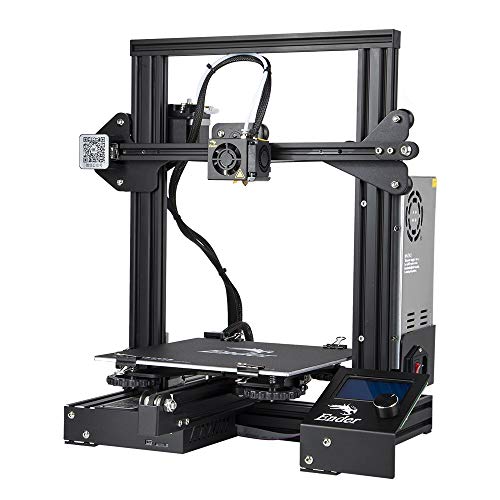 | Reliable Starter | Build Volume: 8.66 x 8.66 x 9.84 inches | Assembly: DIY, ~2 hours | Hot End Support: Supports various filaments, hot bed reaches 100°C | VIEW LATEST PRICE | Read Our Analysis |
| T300D Pro Dual Extruder 3D Printer with Precision |  | Creative Multicolor | Build Volume: Not specified | Assembly: Quick, mostly pre-assembled | Hot End Support: Supports PLA, PETG, ABS, TPU | VIEW LATEST PRICE | Read Our Analysis |
| Creality K2 3D Printer with Auto Leveling & Camera |  | Professional Precision | Build Volume: 260 × 260 × 260 mm | Assembly: 95% pre-assembled | Hot End Support: Supports PLA, PETG, ABS, PLA-CF | VIEW LATEST PRICE | Read Our Analysis |
More Details on Our Top Picks
Creality Ender 3 3D Printer with Resume Function
If you’re a car parts enthusiast looking for a reliable starter 3D printer, the Creality Ender 3 with resume function is a solid choice. It’s a budget-friendly, DIY-friendly machine with an 8.66 x 8.66 x 9.84-inch build volume packed into a compact 16.14 x 16.54 x 18.31-inch frame. The best part? Its resume printing feature helps you pick up where you left off after a power outage or electrical hiccup—no more wasted time or materials. With a quick hot bed heating time of 5 minutes and quiet operation, it’s perfect for hobbyists and beginners looking to create detailed, durable car parts.
- Build Volume:8.66 x 8.66 x 9.84 inches
- Assembly:DIY, ~2 hours
- Hot End Support:Supports various filaments, hot bed reaches 100°C
- Connectivity:SD card, computer connection
- Multi-color Printing:No
- Automated Leveling:No
- Additional Feature:Resume print function
- Additional Feature:No mobile support
- Additional Feature:Pre-assembled parts
T300D Pro Dual Extruder 3D Printer with Precision
The T300D Pro stands out if you’re into creating colorful car parts, thanks to its advanced dual-extrusion system. This means you can print complex, multi-colored models in one go without switching filaments. Its sturdy all-metal frame and precision hotend guarantee wobble-free, smooth surfaces with fine details, even at high speeds. It supports a variety of filaments like PLA, PETG, ABS, and TPU, making it versatile for different projects. Setup is quick — mostly pre-assembled so you can start printing in minutes. Plus, the intuitive color screen and easy bed-leveling knobs make it beginner-friendly but powerful enough for seasoned enthusiasts wanting professional results.
- Build Volume:Not specified
- Assembly:Quick, mostly pre-assembled
- Hot End Support:Supports PLA, PETG, ABS, TPU
- Connectivity:Not specified
- Multi-color Printing:Yes (dual-extrusion)
- Automated Leveling:No
- Additional Feature:Dual-extrusion system
- Additional Feature:Multicolor printing
- Additional Feature:All-metal frame
Creality K2 3D Printer with Auto Leveling & Camera
When precision matters most in your car parts projects, the Creality K2 3D Printer stands out with professional accuracy packed into every print. With a generous build volume of 260 by 260 by 260 millimeters, it’s ready for larger or detailed parts. Thanks to its next-gen direct drive extruder and four CFS units, you can print in up to 16 colors without extra work. The smart auto leveling with an AI camera makes setup quick and precise, saving you time and frustration. Plus, it operates quietly, almost like a soft whisper, creating a more pleasant workspace. If ease, speed, and quality matter, the K2 might just be your new favorite tool.
- Build Volume:260 × 260 × 260 mm
- Assembly:95% pre-assembled
- Hot End Support:Supports PLA, PETG, ABS, PLA-CF
- Connectivity:Not specified
- Multi-color Printing:Yes (up to 16 colors with 4 CFS units)
- Automated Leveling:Yes (smart auto leveling with AI camera)
- Additional Feature:AI camera auto leveling
- Additional Feature:Ultra-quiet operation
- Additional Feature:Multi-material compatibility
Factors to Consider When Choosing a 3D Printer for Car Parts
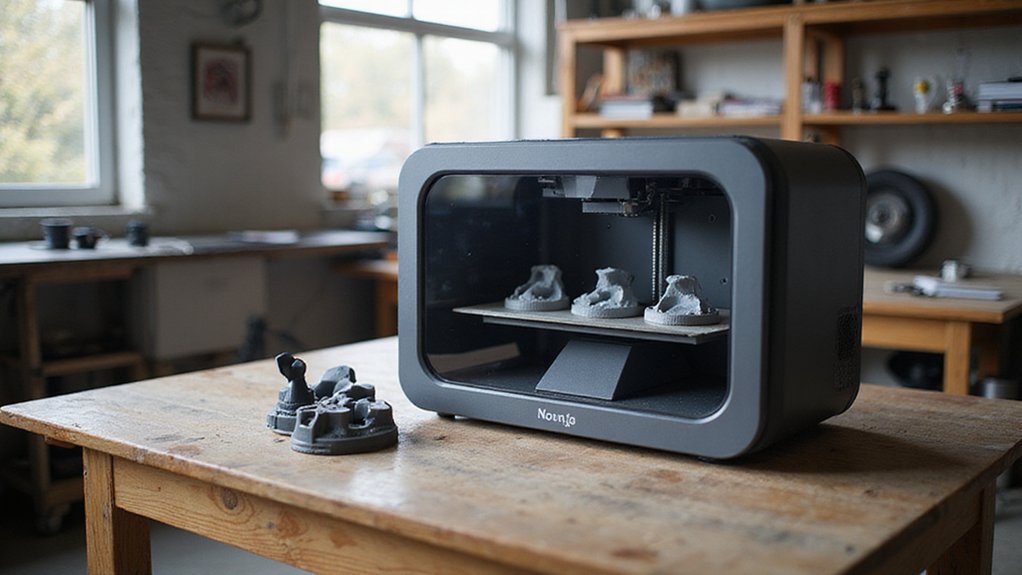
When choosing a 3D printer for car parts, you’ll want to think about material compatibility, especially if you need things that can handle heat, like ABS or nylon, or more delicate filaments like TPU for flexible parts. Speed and build volume also matter—imagine waiting forever for a big part or not having enough space to print your latest project. And don’t forget about layer resolution and ease of assembly; high detail is great, but a complicated setup might make the process less enjoyable than it should be.
Material Compatibility
Ever wondered what makes a 3D printer truly suitable for crafting car parts? It’s all about material compatibility. You want a printer that supports strong, heat-resistant filaments like ABS, PETG, and TPU—these are mainstays for automotive parts because they withstand high temperatures and daily wear. Check its maximum extruder and hot bed temps; they should handle materials that need 250°C or more. Flexible filaments like TPU are essential for rubber-like parts, so make sure your printer can handle them. Pay attention to filament diameter—most use 1.75mm or 3mm—since compatibility impacts print quality. And if you aim for lightweight, reinforced parts, verify the printer’s ability to work with composite filaments. All these factors guarantee you craft durable, professional-grade car components.
Printing Speed
Getting the speed right when 3D printing car parts is a balancing act. Faster speeds can drastically cut down production times, especially for large or complex components. But push too hard, and you’ll risk layer misalignments or surface imperfections — no one wants a shiny surface with visible flaws. Some printers with dual extruders or multi-material capabilities can maintain high speeds while adding detailed, colorful touches to your parts.
Build Volume Size
Choosing the right build volume for your 3D printer is like picking the perfect-sized cake pan—you want enough space to fit your creations without wasting room or making your setup unwieldy. For car parts, a larger build volume means you can print bigger components like panels or engine parts in one go, avoiding joins that could weaken the final piece. A minimum of 300mm on each axis is recommended for full-scale parts, but keep in mind that bigger usually means pricier and bulkier equipment. Smaller build volumes might force you to print in sections and assemble later, which isn’t ideal if you’re after strength. Balancing size, cost, and workspace helps you choose a printer that matches your needs without becoming a cluttered garage centerpiece.
Layer Resolution Quality
When it comes to 3D printing car parts, layer resolution plays a crucial role in guaranteeing your parts look sharp and fit perfectly. Basically, layer resolution measures how thin each layer of material is, usually between 50-100 microns for high-quality outputs. Finer layers mean smoother surfaces and greater detail, which matters when accuracy is key. But be careful—going too low (say, below 50 microns) can increase print time and might cause issues with surface finish, while too high can make parts look rough and less durable. Consistent layer height ensures parts stay true to size and fit snugly in your vehicle. You want a printer that maintains precise layer thickness because, in the end, quality and appearance depend on it!
Ease of Assembly
As you start exploring 3D printers for making car parts, ease of assembly becomes a key factor in how smoothly your project will go. A mostly pre-assembled setup cuts down on the time and effort needed to get started. Features like auto-leveling and quick bed leveling knobs make calibration straightforward, perfect if you’re new to the game. Modular components and clear instructions help speed up the building process, which is especially helpful when printing precise car parts. Plus, a sturdy, stable frame means less fiddling and more reliable results. And if the interface is user-friendly with minimal assembly steps, you’ll be up and running faster, turning complex prints into achievable projects. All these factors really make a difference in your overall experience.
Multi-Color Capabilities
Having multi-color capabilities in a 3D printer can truly elevate your car parts projects, especially if you want both style and function. This feature lets you create detailed, eye-catching components without extra painting or finishing. With dual-extrusion systems or multiple filament feeders, you can print different sections or features in various colors within one print, saving you a lot of time and effort. Just keep in mind, for seamless results, precise color registration and layer alignment are key. Plus, multi-color printers support a wide range of filament materials like PLA, ABS, PETG, and TPU, giving you flexibility for realistic and functional car parts. If color detail matters to your project, investing in a printer with this feature is definitely worth considering.
Auto Leveling Features
Auto leveling features are a game-changer when it comes to making precise, high-quality car parts with your 3D printer. They guarantee the print bed is perfectly calibrated before every print, which means fewer errors and better first layer adhesion—crucial for detailed, functional parts. Advanced auto leveling uses AI cameras and sensors for quick, consistent measurements, cutting down setup time. Some printers go even further with multi-point or mesh auto leveling, creating a detailed surface map for more accurate adjustments across the entire bed. This reduces manual calibration skills, making it easier for you to get perfect parts every time. Auto leveling is especially essential when printing complex or large car components, where uneven surfaces can ruin the accuracy and finish. It’s a feature no enthusiast should overlook!
Noise Levels
Choosing a 3D printer for car parts means paying attention to noise levels, especially if your workspace isn’t a dedicated hobby room. A quieter printer makes your projects more enjoyable and keeps noise from disturbing others. Some advanced models use step-servo motors and balanced fans to cut down noise, so they run smoothly and quietly. Enclosed or shielded designs also help contain noise, making your setup more peaceful.
Vibrations caused by unstable or poorly mounted printers crank up the noise, so a sturdy frame is a smart investment. Look for a printer that operates below 50 decibels—that’s about the level of a quiet conversation. Less noise means better focus and less fatigue as you customize your car parts!