Did you know that not all 3D printers handle flexible TPU filament well? Some models struggle with precision or filament jams, which can turn a simple project into a frustrating puzzle. Luckily, certain printers combine features like auto bed calibration, removable flexible beds, and direct drive extruders that reach temperatures of 230°C or higher—crucial for smooth TPU extrusion. Whether you’re a beginner or a seasoned enthusiast, finding the right match enhances both quality and ease, so let’s explore what makes these six top picks stand out.
| ELEGOO Centauri Carbon 3D Printer with Auto Calibration | 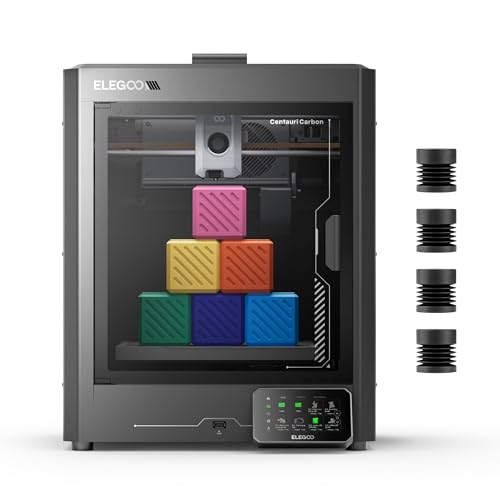 | High-Speed Professional | Build Volume: 256x256x256 mm | Auto Calibration: Yes | Filament Compatibility: PLA, Carbon fiber, reinforced | VIEW LATEST PRICE | Read Our Analysis |
| Portable 3D Printer with 4-Color PLA Filament |  | Compact Hobbyist | Build Volume: 100x100x100 mm | Auto Calibration: Yes | Filament Compatibility: PLA, TPU | VIEW LATEST PRICE | Read Our Analysis |
| FLASHFORGE AD5M 3D Printer with Auto Calibration |  | User-Friendly Precision | Build Volume: 220x220x220 mm | Auto Calibration: Yes | Filament Compatibility: PETG, Various filaments | VIEW LATEST PRICE | Read Our Analysis |
| FLASHFORGE AD5X Multi-Color 3D Printer |  | Multi-Color Versatility | Build Volume: 220x220x220 mm | Auto Calibration: Yes | Filament Compatibility: Multi-color, Various filaments | VIEW LATEST PRICE | Read Our Analysis |
| FLASHFORGE Adventurer 3D Printer with Auto Leveling |  | Fast-Reliable Performance | Build Volume: 220x220x220 mm | Auto Calibration: Yes | Filament Compatibility: PLA, Flexible filaments | VIEW LATEST PRICE | Read Our Analysis |
| Portable 3D Printer with Removable Build Plate |  | Portable Convenience | Build Volume: 100x100x100 mm | Auto Calibration: Yes | Filament Compatibility: PLA, TPU | VIEW LATEST PRICE | Read Our Analysis |
More Details on Our Top Picks
ELEGOO Centauri Carbon 3D Printer with Auto Calibration
If you’re after a high-speed professional 3D printer that can handle flexible filaments like TPU with ease, the ELEGOO Centauri Carbon is a great choice. It arrives fully assembled and pre-calibrated, so you can start printing right away — no fuss, no confusion. The auto bed leveling makes setup quick, while the intuitive touchscreen puts control at your fingertips. Its sizable build volume of 10 inches on each side means you can print bigger projects or multiple pieces simultaneously. Designed for precision and speed, it’s ideal for creating durable, lightweight parts with complex details, perfect whether you’re into prototypes, hobby projects, or professional builds.
- Build Volume:256x256x256 mm
- Auto Calibration:Yes
- Filament Compatibility:PLA, Carbon fiber, reinforced
- Nozzle Size Options:Brass-hardened steel, up to 320°C
- Connectivity Options:Camera, touchscreen, remote monitoring
- Speed Capabilities:Up to 500 mm/s
- Additional Feature:Real-time print monitoring camera
- Additional Feature:Automatic vibration compensation
- Additional Feature:Supports advanced filaments (carbon fiber)
Portable 3D Printer with 4-Color PLA Filament
Looking for a compact hobbyist 3D printer that’s perfect for creative projects on the go? This portable 3D printer with 4-color PLA filament might be what you need. Weighing just 2.6 pounds and measuring 6.9 by 6.1 by 8.3 inches, it’s easy to carry around. The removable platform makes removing finished models quick and simple, while the 0.4mm nozzle and FDM technology ensure precise details. Supporting a build volume of 100x100x100mm, it can handle small, colorful projects smoothly. With compatibility for Windows and Mac, plus features like TF card support, it’s a versatile companion for your creative adventures anywhere you go.
- Build Volume:100x100x100 mm
- Auto Calibration:Yes
- Filament Compatibility:PLA, TPU
- Nozzle Size Options:0.4mm (adjustable to 0.25/0.6/0.8mm)
- Connectivity Options:TF card, USB
- Speed Capabilities:40 mm/s
- Additional Feature:Multiple filament colors included
- Additional Feature:TF card offline operation
- Additional Feature:Lightweight and compact design
FLASHFORGE AD5M 3D Printer with Auto Calibration
The FLASHFORGE AD5M 3D printer is a fantastic choice if you want user-friendly precision, especially when working with flexible filaments like TPU. It features automatic calibration, meaning no manual fuss—just press a button and get accurate leveling in about 3 seconds. You’ll love the tool-free nozzle swapping, which makes switching between different diameters quick and painless. The all-metal CoreXY structure guarantees high-speed, reliable printing—up to 600mm/s—without sacrificing quality. With a 220x220x220mm build volume, remote monitoring through the Flash Maker app, and easy print removal thanks to the PEI steel plate, this machine makes TPU printing straightforward.
- Build Volume:220x220x220 mm
- Auto Calibration:Yes
- Filament Compatibility:PETG, Various filaments
- Nozzle Size Options:0.25/0.4/0.6/0.8 mm (swap)
- Connectivity Options:Network, remote control via app
- Speed Capabilities:Up to 600 mm/s
- Additional Feature:Batch file transmission support
- Additional Feature:Multi-printer network monitoring
- Additional Feature:Tool-free nozzle swaps
FLASHFORGE AD5X Multi-Color 3D Printer
The FLASHFORGE AD5X is perfect if you want a multi-color 3D printer that handles TPU with impressive versatility. Its CoreXY motion system makes complex multi-color prints a breeze, supporting up to four colors at once. With a build volume of 220x220x220mm, it’s compact yet capable of larger projects. The 300°C direct drive extruder ensures flexible filament compatibility, including TPU. Features like one-click auto leveling, automatic filament feeding, and remote control make operation smooth. Plus, thanks to its high-speed printing up to 600mm per second and advanced cooling systems, you get high-quality, vibrant results in less time—creating stunning multi-colored TPU masterpieces has never been easier.
- Build Volume:220x220x220 mm
- Auto Calibration:Yes
- Filament Compatibility:Multi-color, Various filaments
- Nozzle Size Options:0.25mm, 0.4mm, 0.6mm, 0.8mm
- Connectivity Options:Remote app, offline
- Speed Capabilities:Up to 600 mm/s
- Additional Feature:Supports up to 4 colors
- Additional Feature:Dual-channel cooling system
- Additional Feature:Automatic filament feeding
FLASHFORGE Adventurer 3D Printer with Auto Leveling
Ever wonder how you can get fast, reliable performance when printing with flexible materials like TPU? The FLASHFORGE Adventurer 3D Printer with Auto Leveling might be just what you need. It features one-click automatic bed leveling, ensuring a perfect first layer every time—say goodbye to manual adjustments. With a 220x220x220mm print volume and a hotend that reaches 280°C, it handles tough-to-print materials easily. Plus, the special dual-fan nozzles, vibration compensation, and quick warm-up at 35 seconds stabilize high-speed printing. Overall, this compact, user-friendly machine offers efficiency, stability, and versatility for your flexible filament projects.
- Build Volume:220x220x220 mm
- Auto Calibration:Yes
- Filament Compatibility:PLA, Flexible filaments
- Nozzle Size Options:0.25mm, 0.4mm, 0.6mm, 0.8mm
- Connectivity Options:Remote monitoring, app
- Speed Capabilities:Up to 600 mm/s
- Additional Feature:Rapid warm-up time
- Additional Feature:High-flow nozzle option
- Additional Feature:Remote control via app
Portable 3D Printer with Removable Build Plate
If you want a 3D printer that combines portable convenience with flexible filament options, this model is a great pick. Its compact size, measuring just 6.8 by 6.1 by 8.3 inches, means you can take it anywhere—perfect for small projects or classroom use. The removable build plate makes model removal a breeze and speeds up your workflow. It works well with PLA and flexible TPU filaments thanks to a reliable 0.4mm nozzle and layer thickness of 0.05 to 0.3mm. This beginner-friendly printer is easy to assemble with quick tutorials, includes everything needed like filament and tools, and guarantees dependable performance on every print.
- Build Volume:100x100x100 mm
- Auto Calibration:Yes
- Filament Compatibility:PLA, TPU
- Nozzle Size Options:0.4mm (standard)
- Connectivity Options:Manual, simple interface
- Speed Capabilities:Not specified (implied standard)
- Additional Feature:Removable build plate
- Additional Feature:Easy assembly with tutorials
- Additional Feature:Suitable for educational uses
Factors to Consider When Choosing a 3D Printer for TPU
When choosing a 3D printer for TPU, you’ll want to pay close attention to extruder compatibility and the right temperature range—TPU needs higher temps to flow smoothly without clogging. Consider if the build volume matches the size of your projects because flexible filaments can be tricky to handle in cramped spaces. And don’t forget about ease of use and maintenance; a machine that’s straightforward to operate means fewer headaches and more successful prints.
Extruder Compatibility and Temperature
Choosing the right extruder for printing with TPU isn’t just about compatibility — it’s about giving yourself smoother, more reliable prints. A direct drive extruder works best because it provides better filament control and handles flexible materials like TPU with ease. Make certain your extruder can reach at least 230°C, since TPU typically prints between 210°C and 230°C. Geared or planetary gear extruders are ideal because they ensure consistent extrusion, preventing jams. Also, look for an extruder with a heated block that has good thermal insulation — this prevents heat creep and filament jams. Stable, precise temperature control is key — it cuts down stringing, blobs, and uneven layers. When all these elements are in sync, your TPU prints will come out cleaner and stronger.
Build Volume Flexibility
Having the right build volume for your TPU projects makes a big difference in how smoothly your prints come out, especially when working with larger or more complex models. If your printer has a big enough space, you can print larger objects without the need to segment or piece them together later—saving time and avoiding weak spots. Smaller build volumes might mean you have to print in sections or settle for smaller models, which isn’t always ideal. Look for models with modifiable or removable plates—these make handling big, flexible TPU prints way easier. Also, a consistent, precise bed leveling system is a must, especially over larger areas, to prevent warping. And don’t forget: the motion system should support smooth, accurate movement across the entire build volume for exceptional results!
Material Handling and Compatibility
Ever wondered why some 3D printers handle flexible filaments like TPU better than others? It’s mainly about material handling. You want a printer with a direct drive extruder, since it feeds flexible filament more smoothly and reduces jams. Make sure the extruder can reach at least 230°C—TPU loves higher temps for proper flow. Check if the build platform makes removal easy—removable or flexible beds help avoid damaging delicate prints. Also, look at the filament path—no sharp bends or narrow channels, or your filament might get stuck. And flexible filament demands adjustable retraction and printing settings; these tweaks can prevent stringing and improve adhesion. Handling TPU well isn’t just about the hardware; it’s about compatibility and control, making your prints smoother and more successful!
Precision and Layer Resolution
If you want those smooth, detailed TPU prints, paying attention to the printer’s precision and layer resolution is *essential*—think of it as fine-tuning your build for the best possible output. A higher layer resolution, like 0.05mm, results in more detailed, smoother surfaces, especially in tricky sections. Precision extruder control and consistent filament flow are *vital*; even slight hiccups can mess up flexible filament layers. The Z-axis stability and bed leveling directly influence layer uniformity—wobbly axes mean uneven layers. Using multi-nozzle options or adjustable nozzles helps refine detail work, especially in tight spots. And don’t rush it—slower print speeds around 40mm/s improve layer adhesion and accuracy. Make these adjustments, and your TPU prints will thank you with crisp, professional results!
Ease of Use and Maintenance
When choosing a 3D printer for TPU, simplicity and ease of maintenance can make your printing experience much more enjoyable and less frustrating. Look for features like automatic bed leveling and quick nozzle changes—these save time and prevent headaches. A removable or flexible build plate makes removing those tricky flexible prints easier and safer. Think about a user interface that’s straightforward and easy to navigate—no need to fumble through confusing menus, especially during troubleshooting. Remote monitoring helps you keep an eye on prints without being glued to your desk. Also, choosing a printer that works well with open filament types and has simple maintenance routines ensures smoother filament feeding and adhesion. And don’t forget, reliable cooling and vibration control are essential to keep your TPU prints stable and consistent.