When you start exploring the best 3D printers for creating organs, you’re entering a frontier where precision medicine becomes a real possibility. These advanced models, with their ability to handle multiple materials and produce ultra-fine details, could revolutionize healthcare. From biocompatible filaments to rapid setup features, choosing the right machine can seem intimidating—but knowing what to look for makes it clearer. And once you grasp these essentials, the potential for breakthrough applications in tissue engineering might just surprise you.
| AOSEED 3D Printer for Kids with 8 Filaments |  | Best Educational Toy | Build Volume: Not specified | Speed: Up to 400mm/s | Auto Calibration: Leveling-free | VIEW LATEST PRICE | Read Our Analysis |
| FlashForge Adventurer 5M Pro 3D Printer |  | Premium Performance | Build Volume: 220x220x220mm | Speed: 600mm/s | Auto Calibration: Automatic bed leveling | VIEW LATEST PRICE | Read Our Analysis |
| FLASHFORGE AD5M 3D Printer with Auto Calibration |  | Professional Grade | Build Volume: 220x220x220mm | Speed: 600mm/s | Auto Calibration: Auto-leveling, one-click | VIEW LATEST PRICE | Read Our Analysis |
| FLASHFORGE AD5M 3D Printer with Auto-Leveling |  | High-Speed Efficiency | Build Volume: 220x220x220mm | Speed: 600mm/s | Auto Calibration: Auto-leveling, pressure sensor | VIEW LATEST PRICE | Read Our Analysis |
| Anycubic Kobra X 3D Printer with Multi-Color Printing |  | Versatile Creativity | Build Volume: 260x260x260mm | Speed: Up to 600mm/s | Auto Calibration: Automatic bed leveling | VIEW LATEST PRICE | Read Our Analysis |
| Entina Tina2C 3D Printer for Kids & Beginners |  | Beginner’s Friendly | Build Volume: 3.9×3.9×3.9 inches (~99x99x99mm) | Speed: Not specified | Auto Calibration: Automatic bed leveling | VIEW LATEST PRICE | Read Our Analysis |
| FLASHFORGE Adventurer 5M 3D Printer with Auto-Leveling |  | Seamless User Experience | Build Volume: 220x220x220mm | Speed: 600mm/s | Auto Calibration: Auto-leveling | VIEW LATEST PRICE | Read Our Analysis |
More Details on Our Top Picks
AOSEED 3D Printer for Kids with 8 Filaments
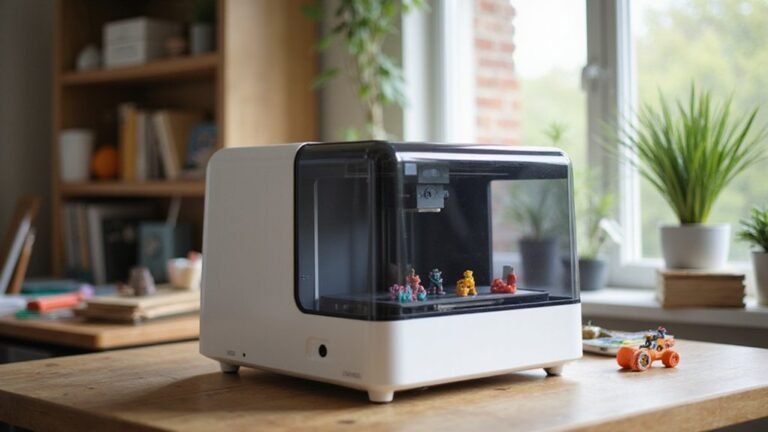
Looking for an engaging and educational toy that sparks creativity and helps kids learn STEM skills? The AOSEED 3D Printer for Kids with 8 Filaments is a great choice. It’s fully assembled, safe, enclosed, and super easy to use. With high-speed printing and precision down to 0.05 mm, kids can create small models in about 20 minutes. Plus, it comes with 8 colorful PLA filaments, tools, a magnetic build plate, and fun stickers for customization. Kids can explore over 8,000 digital models and craft their own with AI-powered features like voice and image prompts. It’s an exciting way to get young minds thinking about design and technology.
- Build Volume:Not specified
- Speed:Up to 400mm/s
- Auto Calibration:Leveling-free
- Connectivity:Wi-Fi, app control
- Filament Compatibility:PLA (TÜV-tested)
- Safety Features:Enclosed, pinch-resistant
- Additional Feature:AI voice prompts
- Additional Feature:Real-time camera monitoring
- Additional Feature:Quick filament change
FlashForge Adventurer 5M Pro 3D Printer
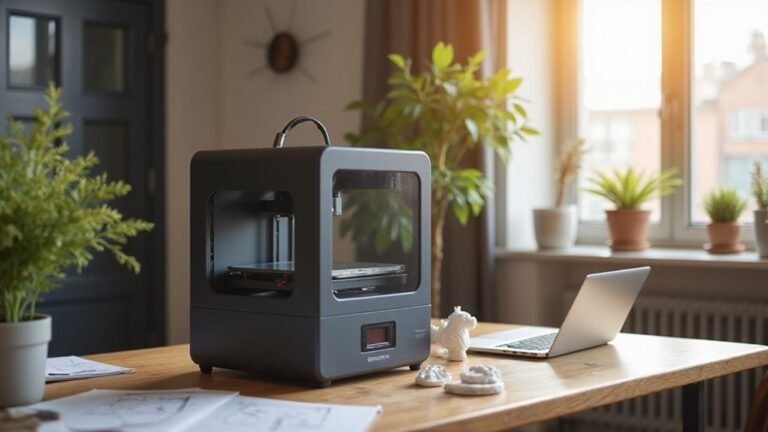
If you’re serious about tissue engineering, the FlashForge Adventurer 5M Pro stands out with its premium performance that meets the demands of creating complex organ models. It’s fast, with a travel speed of 600mm/s and accelerates up to 20,000mm/s², so you won’t waste time waiting for prints. The all-metal frame and Core XY structure keep things stable during high-speed moves, ensuring detailed, precise results. And with automatic bed leveling, dual-sided PEI platform, and compatibility with diverse materials like PLA and PETG, it simplifies complex printing. Connect easily via the mobile app to monitor progress, adjust settings, and keep your workflow smooth from start to finish.
- Build Volume:220x220x220mm
- Speed:600mm/s
- Auto Calibration:Automatic bed leveling
- Connectivity:Wi-Fi, mobile app
- Filament Compatibility:PLA, ABS, PETG, TPU, PC, etc.
- Safety Features:Not specified
- Additional Feature:Smart management app
- Additional Feature:Multiple nozzle sizes
- Additional Feature:Auto shutdown feature
FLASHFORGE AD5M 3D Printer with Auto Calibration
The FLASHFORGE AD5M 3D printer is a professional-grade machine that makes creating detailed, precise models easier than ever. With its automatic calibration, you won’t spend ages tinkering with manual leveling. Instead, it takes just 3 seconds to measure and set the nozzle-to-build plate distance with one click. Whether you’re working with PETG or other materials, the double-sided PEI steel print plate ensures models come off easily and cleanly. Its durable CoreXY structure supports speeds up to 600 millimeters per second without sacrificing quality. Plus, with cloud monitoring, remote management, and the handy resume feature, it’s reliable and user-friendly—perfect for turning ideas into physical models fast.
- Build Volume:220x220x220mm
- Speed:600mm/s
- Auto Calibration:Auto-leveling, one-click
- Connectivity:App control, remote monitoring
- Filament Compatibility:Various filament sizes/materials
- Safety Features:Not specified
- Additional Feature:Batch file transmission
- Additional Feature:Multi-printer monitoring
- Additional Feature:Low-noise operation
FLASHFORGE AD5M 3D Printer with Auto-Leveling
If you’re aiming for high-speed efficiency in creating complex biological structures, the FlashForge AD5M 3D printer is a strong contender. Its auto-leveling feature takes the hassle out of calibration, so your first layer will always stick just right. This means less wasted time fixing misprints and more focus on designing intricate organs. With a 220×220×220mm build volume, it handles a variety of project sizes. The fast speeds—up to 600mm/s—and support for multiple nozzle sizes let you balance speed and detail perfectly. Plus, remote monitoring and quick-swap nozzles keep your workflow smooth, making organ prototypes more achievable than ever.
- Build Volume:220x220x220mm
- Speed:600mm/s
- Auto Calibration:Auto-leveling, pressure sensor
- Connectivity:Wi-Fi, app control
- Filament Compatibility:Multiple filaments, high-temp extruder
- Safety Features:Not specified
- Additional Feature:Enclosure option available
- Additional Feature:Open-source hardware
- Additional Feature:Filament runout detection
Anycubic Kobra X 3D Printer with Multi-Color Printing
For creating intricate, multi-color structures with consistent detail, the Anycubic Kobra X 3D printer shines as a versatile tool for builders passionate about craftsmanship. Its large build volume of 260x260x260mm lets you design bigger, more complex objects—perfect for multi-material projects like organs. Supporting up to four colors, expandable to 19 with the ACE 2 Pro system, it allows vibrant, realistic results. With features like automatic bed leveling and vibration compensation, setup is quick and reliable. Plus, the AI-powered monitor and filament sensors keep things running smoothly. Easy to use and packed with smart tools, it’s a superb choice for anyone serious about multi-color, precise printing.
- Build Volume:260x260x260mm
- Speed:Up to 600mm/s
- Auto Calibration:Automatic bed leveling
- Connectivity:Wi-Fi, app control
- Filament Compatibility:PLA, PETG, TPU, PVA, ASA
- Safety Features:Quiet operation, sensors
- Additional Feature:Vibrations compensation
- Additional Feature:4-19 color expansion
- Additional Feature:Self-calibration system
Entina Tina2C 3D Printer for Kids & Beginners
Looking for a 3D printer that’s perfect for beginners and kids alike? The Entina Tina2C is just that. Compact at 8 by 6.5 by 10 inches, it’s easy to fit into any space. Its build volume is 3.9 inches on each side, perfect for small projects. It runs quietly, has rounded edges for safety, and LED lights so you can see every detail. Setup takes roughly eight minutes, thanks to the guided Poloprint Cloud app. Features like automatic bed leveling, easy model removal, and support for WiFi or offline printing make it user-friendly. Plus, with a library of 3000+ models and STEM modules, it sparks both creativity and learning!
- Build Volume:3.9×3.9×3.9 inches (~99x99x99mm)
- Speed:Not specified
- Auto Calibration:Automatic bed leveling
- Connectivity:Wi-Fi, app
- Filament Compatibility:Compatible with standard filaments
- Safety Features:Low-noise, safety design
- Additional Feature:ARM-powered slicing software
- Additional Feature:Magnetic removable bed
- Additional Feature:Self-cleaning nozzle
FLASHFORGE Adventurer 5M 3D Printer with Auto-Leveling
The FLASHFORGE Adventurer 5M makes creating complex structures smooth and straightforward with its seamless user experience. Its fully automatic bed leveling, which means no manual adjustments, saves you time and hassle. The CoreXY metal frame offers durability and stability, perfect for precise, detailed prints, especially in medical applications like organ modeling. With a print volume of 220x220x220mm and a 280°C direct extruder with a detachable nozzle, you can handle various materials. Plus, it hits ultra-fast speeds of 600mm/s and cool features like remote monitoring via an app. If you want efficiency combined with reliability, this one’s a solid choice.
- Build Volume:220x220x220mm
- Speed:600mm/s
- Auto Calibration:Auto-leveling
- Connectivity:Remote monitoring, app control
- Filament Compatibility:Various filaments supported
- Safety Features:Fully enclosed, safety focus
- Additional Feature:Rapid repeatability
- Additional Feature:Dual-fan cooling
- Additional Feature:Detachable nozzle
Factors to Consider When Choosing a 3D Printer for Organs
When choosing a 3D printer for organs, the materials it can work with matter a lot because biocompatible and printable substances vary widely. You’ll also want to pay attention to resolution and precision—higher detail means more accurately shaped organs, which is pretty important. And don’t overlook software usability and print speed since efficient, user-friendly options can make all the difference in your workflow!
Printing Material Compatibility
Ever wonder how to make sure your 3D printer can handle the complexities of organ printing? It’s all about printing material compatibility. Your printer needs to support biocompatible and medical-grade materials like PLA, PETG, or hydrogels that mimic real tissues. Plus, having the ability to work with high-temperature filaments such as ABS makes creating sturdy, functional scaffolds possible. Many organs require multi-material printing because biological tissues are intricate, layered puzzles. To get the best results, choose a printer that offers:
- Precise layer resolution around 0.05 mm for detail
- Support for materials with specific flow and viscosity for cell health
- Compatibility with a wide variety of materials to replicate complex tissue structures.
Getting these right means your organ models will be as accurate and viable as possible!
Resolution and Precision
Achieving excellent resolution and precision is absolutely critical when choosing a 3D printer for organ creation. You’ll want a printer capable of layer resolutions of 0.05 mm or better—think ultra-fine layering that captures every tiny detail. This helps create smooth surfaces, which are key for medical visualization and surgical planning. Precision in movement systems, like core XY or Cartesian frameworks, boosts internal accuracy—crucial for realistic internal features. Reliable extrusion and minimal material shrinkage keep the dimensions accurate, preventing distorted or misshapen organs. Regular calibration and high-quality nozzles aren’t just maintenance chores—they’re your secret weapons for consistent, detailed printing. Remember, fine layer heights and precise mechanics aren’t luxury features—they’re essentials for capturing the complexity of organs in 3D.
Biocompatibility Features
Have you ever wondered how to make sure that a 3D-printed organ model is truly safe for medical use? Well, it all comes down to biocompatibility features. Choosing a printer that uses materials meeting strict standards like ISO 10993 is a smart move. These materials, such as medical-grade resins and PLA, are specifically tested to prevent adverse reactions, toxicity, or irritation when in contact with human tissues. And when selecting your printer, prioritize high-resolution models with precise control over temperature and extrusion—this guarantees your complex organ models stay pure and safe. Certification of biocompatible materials is essential for legal and safety reasons, helping you develop reliable, safe implants or tissue scaffolds. In short, focus on materials and printer quality for organs that are both functional and genuinely safe.
Print Speed and Efficiency
When choosing a 3D printer for creating complex organ models, speed and efficiency should be at the top of your list. Fast printers, capable of reaching speeds up to 600mm/s, drastically cut down build times, letting you move on to the next project sooner. Rapid heating and extrusion — like nozzle warm-up in seconds — mean less waiting around before starting your print. It’s also worth considering how well the printer optimizes acceleration and movement; this ensures precise layer placement even at high speeds, so your models stay detailed and accurate. Plus, efficient printers minimize filament waste and reduce energy use, making the whole process more sustainable. Remember, faster doesn’t mean sacrificing quality—balance speed with precision for the best organ modeling results.
Software and Usability
Choosing the right software can make or break your 3D printing experience, especially when creating complex organ models. You need software that’s compatible with advanced modeling tools, allowing precise design, slicing, and customization. Keep an eye out for user-friendly interfaces—think intuitive apps or simplified workflows—that make life easier for medical pros and researchers alike. Compatibility with specialized medical CAD software is also *vital*, especially when importing detailed digital models of tissues. Don’t forget to check for firmware updates and ongoing support—you want your software to keep pace with evolving needs. And if you’re aiming for multilayer or multi-material prints to mimic organ intricacies, choose software that can handle these complex structures seamlessly. In short, good software makes all the difference!