If you’re looking to simplify aluminum marking, choosing the right fiber laser engraver matters. From compact 30W models to powerful 100W systems, the options are impressive—and each offers unique advantages for accuracy, speed, and project size. Whether you need a machine with a rotary axis for cylindrical pieces or adjustable power for fine detail, understanding these key features can make all the difference. Ready to find the perfect fit? Let’s explore the best options that combine performance with accessibility.
| Ovsuqu 100W Fiber Laser Engraver with Rotary Axis |  | Deep Engraving Power | Laser Power: 100W (MOPA fiber laser) | Work Area: 300x300mm | Rotary Axis Included: Optional (80D rotary axis) | VIEW LATEST PRICE | Read Our Analysis |
| 50W JPT Fiber Laser Engraver with Rotary Axis | 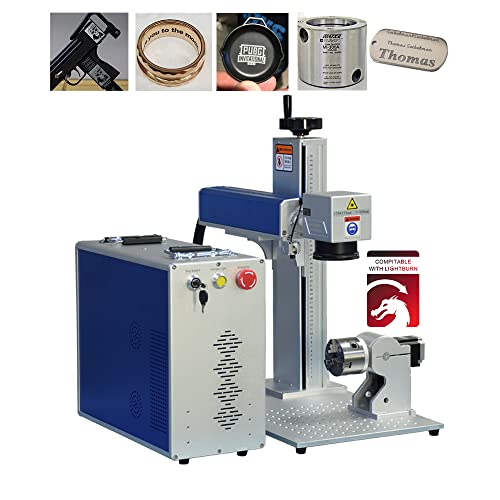 | Compact Precision | Laser Power: 50W (JPT fiber laser) | Work Area: 175x175mm | Rotary Axis Included: Included (80mm rotary axis) | VIEW LATEST PRICE | Read Our Analysis |
| GWEIKE G2 Max 50W Fiber Laser Engraver |  | High-Speed Accuracy | Laser Power: 50W (fiber laser) | Work Area: 150x150mm | Rotary Axis Included: Not specified | VIEW LATEST PRICE | Read Our Analysis |
| Vevor 30W Fiber Laser Marking Machine with Work Area | 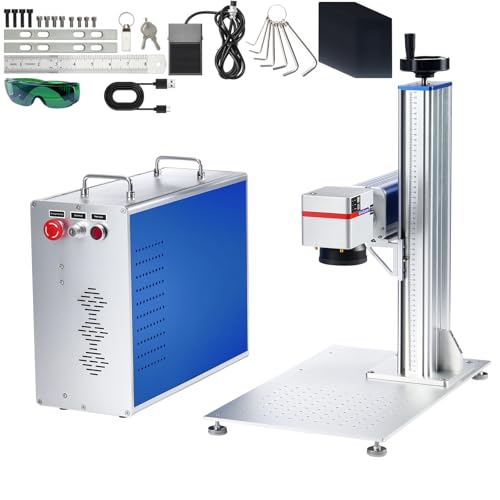 | Versatile Marking | Laser Power: 30W (fiber laser) | Work Area: 5.9×5.9 inches (approximately 150x150mm) | Rotary Axis Included: Not included | VIEW LATEST PRICE | Read Our Analysis |
| 100W MOPA Fiber Laser Marking Machine with Rotary |  | Large-Area Performance | Laser Power: 100W (MOPA fiber laser) | Work Area: 300x300mm | Rotary Axis Included: Included (rotary axis) | VIEW LATEST PRICE | Read Our Analysis |
More Details on Our Top Picks
Ovsuqu 100W Fiber Laser Engraver with Rotary Axis
If you’re looking for a fiber laser engraver with impressive deep engraving power, the Ovsuqu 100W model is a stellar choice. With its powerful JPT MOPA laser source that offers wide frequency control from 1 to 4000 kHz, you get precise, deep carvings on metals like stainless steel, copper, and even gold. Its 300x300mm work area is perfect for most projects, and the optional rotary axis helps you engrave on cylindrical objects with ease. Plus, it’s compatible with user-friendly software like Lightburn. This machine combines speed, precision, and reliability—making it a great investment for detailed, deep engraving work.
- Laser Power:100W (MOPA fiber laser)
- Work Area:300x300mm
- Rotary Axis Included:Optional (80D rotary axis)
- Material Compatibility:Metals, some non-metals
- Software Compatibility:Lightburn
- Power Supply/Source:JPT MOPA laser source
- Additional Feature:Deep engraving capability
- Additional Feature:Rotary axis optional
- Additional Feature:Compatible with Lightburn software
50W JPT Fiber Laser Engraver with Rotary Axis
Looking for a compact precision tool perfect for detailed metal and non-metal engraving? The 50W JPT Fiber Laser Engraver with Rotary Axis is an excellent choice. Its 50W laser power makes it ideal for marking metals like aluminum, stainless steel, and brass, plus some non-metals like nylon and ABS. The 175x175mm marking area and rotary axis let you engrave cylindrical objects with precision—up to 0.002 mm re-position accuracy. Compatible with EZCAD2 and Lightburn software, it’s easy to set up on Windows. Plus, its stable performance and 2-year warranty give you confidence that this machine’s built to last while making your projects shine.
- Laser Power:50W (JPT fiber laser)
- Work Area:175x175mm
- Rotary Axis Included:Included (80mm rotary axis)
- Material Compatibility:Metals, some non-metals
- Software Compatibility:EZCAD2, Lightburn
- Power Supply/Source:JPT LP+ series
- Additional Feature:Re-position accuracy 0.002 mm
- Additional Feature:US-based after-sales support
- Additional Feature:Compact size with silver finish
GWEIKE G2 Max 50W Fiber Laser Engraver
The GWEIKE G2 Max 50W fiber laser engraver is perfect if you’re after high-speed accuracy in your engraving projects. With a blazing speed of up to 15,000 mm/s and precision of 0.001 mm, it’s designed to handle intricate designs and deep metal engravings easily. Its powerful 50W laser can cut and engrave on metals like stainless steel and titanium, supporting detailed 8K HD resolution. And, the adjustable electric lift, dual red lights, and WiFi/USB connectivity make setup and positioning a breeze. Compact and portable, it’s ideal if you want professional results nearly anywhere while keeping safety front and center.
- Laser Power:50W (fiber laser)
- Work Area:150x150mm
- Rotary Axis Included:Not specified
- Material Compatibility:Metals, plastics, ceramics
- Software Compatibility:Not specified, but supports high-res engraving
- Power Supply/Source:50W fiber laser
- Additional Feature:HD 8K resolution
- Additional Feature:Electric focus adjustment
- Additional Feature:Dual red light positioning
Vevor 30W Fiber Laser Marking Machine with Work Area
The Vevor 30W Fiber Laser Marking Machine is a versatile tool perfect for those who need precise, deep, and quick engravings on various materials. With a 5.9 by 5.9 inch work area, you get ample room to mark metals, plastics, ceramics, and jewelry—making it ideal for everything from customizing jewelry to detailed industrial projects. Its solid-state fiber laser promises up to 100,000 hours of service, while rapid marking speeds of up to 4000 mm per second keep productivity high. Features like adjustable focus, built-in grids, and compatibility with macOS and Windows make operation straightforward. Plus, its accuracy down to 0.01 mm guarantees your engravings are consistently sharp.
- Laser Power:30W (fiber laser)
- Work Area:5.9×5.9 inches (approximately 150x150mm)
- Rotary Axis Included:Not included
- Material Compatibility:Metals, plastics, ceramics
- Software Compatibility:LightBurn
- Power Supply/Source:Solid-state fiber laser
- Additional Feature:Focus adjustment system
- Additional Feature:External laser locator
- Additional Feature:Supports multiple image formats
100W MOPA Fiber Laser Marking Machine with Rotary
If you need a fiber laser engraver that handles large-area performance without sacrificing precision, the 100W MOPA Fiber Laser Marking Machine with Rotary is a smart choice. Its 100W laser source and 300 by 300mm marking area make quick work of big projects, like marking aluminum or stainless steel. Plus, the 80mm rotary axis means you can easily engrave on round objects. With fast speeds up to 7 meters per second and a resolution of 0.002mm, you get detailed, high-quality marks every time. And with adjustable power and pulse settings, it’s versatile enough for metals, plastics, and sensitive materials.
- Laser Power:100W (MOPA fiber laser)
- Work Area:300x300mm
- Rotary Axis Included:Included (rotary axis)
- Material Compatibility:Metals, plastics, semiconductors
- Software Compatibility:Lightburn, TCP/IP, RS232
- Power Supply/Source:JPT MOPA M7 laser source
- Additional Feature:Elevated 800mm tower
- Additional Feature:Large 300x300mm area
- Additional Feature:Suitable for sensitive materials
Factors to Consider When Choosing a Fiber Laser Engraver for Aluminum
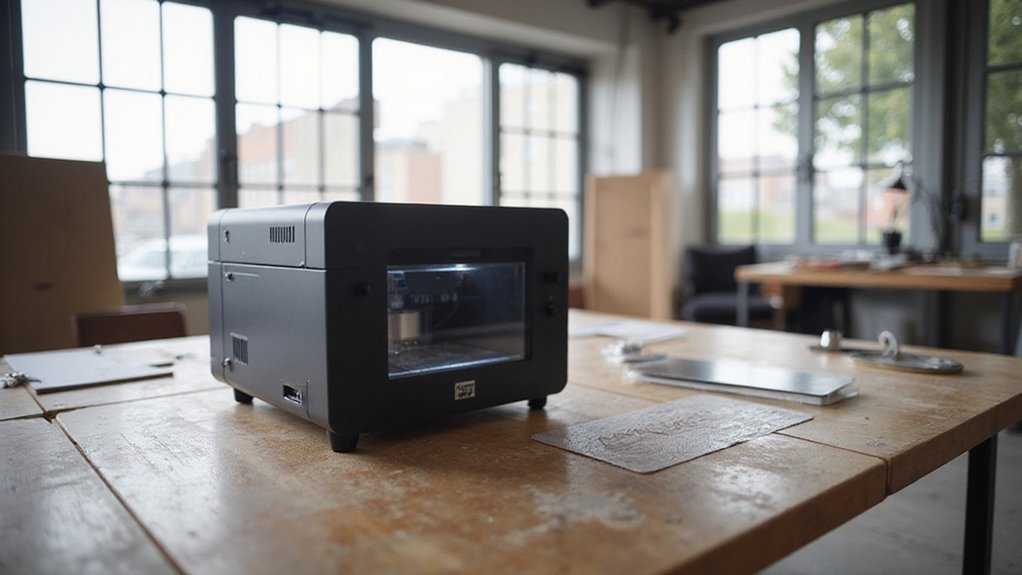
When selecting a fiber laser engraver for aluminum, you’ll want to think about power and efficiency—more watts mean faster, cleaner markings, but they can come at a higher cost. You should also consider the engraving depth you need, especially if you’re working on thicker aluminum pieces, and check if the machine is compatible with other materials you might use. And don’t forget about size and portability; depending on your workspace, a compact, easy-to-move machine could be a huge plus!
Power and Efficiency
Choosing the right fiber laser engraver for aluminum boils down to understanding power and efficiency. Higher laser power—think 50W or 100W—lets you carve deeper and work faster, making your workflow smoother. Plus, it helps you get precise, detailed engravings without damaging the surface. Efficiency, measured by electrical-optical conversion rates up to 70%, directly impacts how quickly and clearly you can mark aluminum. Efficient laser sources like MOPA or JPT optimize energy use, cutting operational costs and boosting productivity. When selecting your engraver, make sure the power settings are adjustable—this way, you can tailor the engraving depth and quality based on aluminum thickness and your desired finish. Balancing power and performance ensures you get professional results effortlessly.
Engraving Depth Range
The engraving depth you can achieve on aluminum hinges on several key factors, primarily laser power, pulse duration, and the type of laser you select. High-power machines can carve as deep as 2mm, giving you more room for detailed, lasting engravings. Shorter pulse durations tend to produce shallower, crisper markings but with better control. If you need deeper lines, lasers like MOPA platforms allow for more adjustable control over depth. The focal lens size also matters — smaller lenses reach deeper but over a smaller area, while larger lenses give you wider, more superficial engravings. To maximize depth, you’ll want to fine-tune your laser’s power, pulse rate, and focus settings according to aluminum’s specific heat and melting point. It’s all about balancing these factors to meet your project needs!
Material Compatibility
Understanding the material compatibility of a fiber laser engraver is key to making the most of your machine when working with aluminum. You want a laser that operates at about 1064nm wavelength, perfect for effectively marking or engraving aluminum without fuss. Check the maximum engraving depth—most machines reach up to 2mm—and guarantee it meets your project needs. The laser’s source needs to handle aluminum’s reflectivity and thermal conductivity; otherwise, you risk damage or poor results. Adjustable power and pulse settings are a must—they let you fine-tune the process for clean, crisp engravings. Also, consider specialized lenses and accessories designed specifically for aluminum; they improve precision and make your work easier. Basically, make sure your engraver checks all these boxes for smoother, better aluminum marking!
Precision and Speed
When it comes to engraving aluminum efficiently and precisely, speed and accuracy are your best friends. You want a laser that can move quickly, like 7 meters per second, to process surfaces faster without losing detail. Precision matters too—aim for a positioning accuracy of about 0.002 mm to guarantee your marks are sharp and detailed. The pulse duration, usually between 200 and 500 nanoseconds, also impacts the finish; shorter pulses give finer, deeper engravings. Plus, considering laser power helps: 50W can handle light work, while 100W dives into deeper engraving. Advanced galvo systems with high scanning speeds and excellent focus work together to deliver rapid and precise metal marking. Get these factors right, and your aluminum marking will be smooth, sharp, and fast!
Equipment Size and Portability
Choosing the right size and portability for your fiber laser engraver can make a big difference in your workflow. You’ll want to weigh your workspace—compact units fit smaller areas, while larger machines might be better if you have room to spare. Think about how often you’ll need to move it: Some models include handles or modular parts that make relocating within or outside your workshop simple and hassle-free. Features like detachable workbeds or foldable sides boost portability without sacrificing functionality. Also, keep your production volume in mind. If you’re doing small batches, a compact design might be perfect. But if high-volume engraving is your goal, size and auxiliary components—like rotary axes—must be factored in. Ultimately, choose a size that matches your space and your workload—balance is key.
Software Compatibility
Getting your fiber laser engraver to work smoothly with aluminum requires more than just choosing the right machine — software compatibility plays a crucial role. You’ll want to make sure your laser can sync seamlessly with popular programs like Lightburn or EZCAD2 for easier design creation and operation. Compatibility across Windows and macOS is a bonus, especially if you switch between computers.
Look for software that supports complex design editing, deep engraving controls, and adjustments suited for metal marking. File formats matter too—BMP, JPG, and GIF support give you flexibility for importing images. And don’t forget real-time previews and parameter adjustments—they help you tweak settings on the fly for top-quality results on aluminum surfaces.
Rotary Axis Options
Adding a rotary axis to your fiber laser engraver opens up a whole new world of possibilities, especially if you plan to work with round objects like bottles, rings, or cylindrical tags. The rotary axis rotates your items, making deep, consistent engravings on curved surfaces possible. You can choose from options like 80mm, 80D, or extended towers, which suit different object sizes. Larger diameters mean you can work on bigger items, but calibration is key to avoiding distortions. With the right rotary setup, you’ll easily tackle projects involving cylindrical shapes, ensuring precise, deformation-free markings. Just remember, different sizes and configurations cater to various project needs—so pick one that matches the size and scope of your work.
Safety and Reliability
When working with aluminum using a fiber laser engraver, safety and reliability should be at the top of your checklist. Make certain your machine has safety features like an enclosed design, protective glasses, and emergency stop buttons — these keep you protected from unexpected laser exposure. Check the laser class; Class 1 or II are safer options for everyday use than higher classes. Reliability matters too: look for laser sources and components rated for nonstop operation to prevent malfunctions that could risk safety or ruin your work. Also, verify compliance with industry standards like safety labels or certifications. And don’t forget a sturdy build — protective covers and robust construction help prevent accidents and ensure your engraver keeps running smoothly over time.